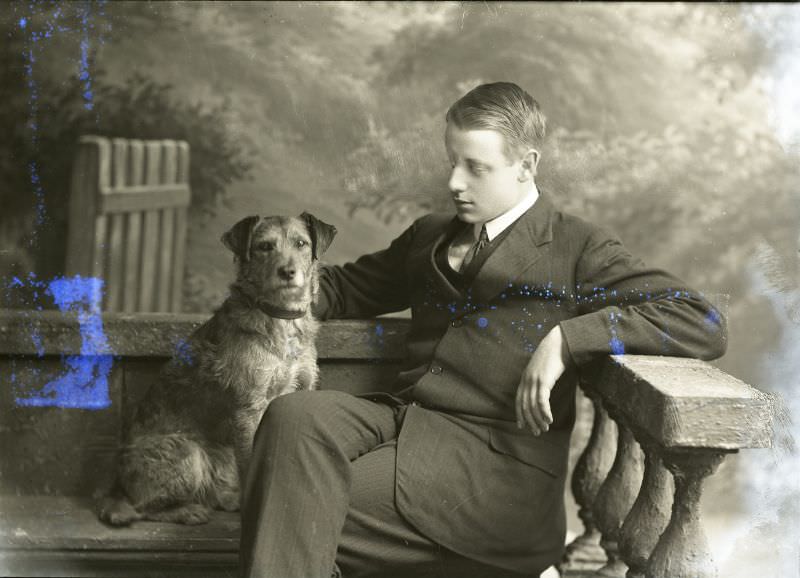
Leaning back on a rustic wooden bench, a well-dressed teenage boy embodies Edwardian self-assurance with his neatly parted hair, crisp collar, and dark three-piece suit. The cut is structured but not stiff, with a fitted jacket and waistcoat that signal the period’s preference for tidy lines and a grown-up silhouette even for younger wearers. His relaxed posture suggests a moment staged for the camera yet meant to feel effortless—an early-20th-century ideal of youthful polish.
At his side sits a wiry terrier-type dog, alert and steady, turning the portrait into a small scene of companionship rather than mere display. The boy’s arm rests comfortably along the bench, close enough to imply familiarity, while the dog’s calm gaze anchors the composition. Behind them, a soft studio-style painted backdrop and the hint of a fence-like prop blur the boundary between outdoors and atelier, a common photographic approach that lent everyday subjects a touch of pastoral charm.
Edwardian teenage boys’ fashion often mirrored adult menswear, and this image highlights how quickly young men were expected to adopt the uniform of respectability: suit, tie, and carefully arranged grooming. Details like the high shirt collar and layered tailoring speak to a culture that treated clothing as a marker of discipline, class aspiration, and modern identity. As a piece of fashion and culture history, the photograph offers more than a look at “dapper” style—it preserves a quiet snapshot of adolescence poised on the edge of adulthood.