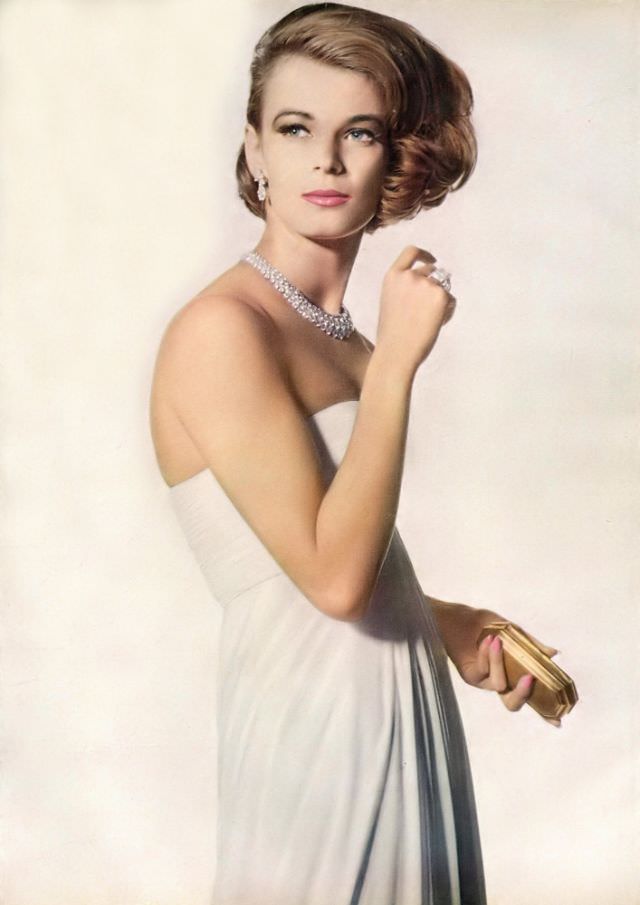
Anne de Zogheb stands poised in a full-length white silk jersey gown by Grès, the fabric falling in clean, liquid lines before gathering into sculptural drapery that hints at a small train behind. The lifted waistline creates a softly elongated silhouette—minimal at first glance, yet unmistakably couture in the way it controls volume and movement. Against a pale studio backdrop, the dress reads like modern classicism, a study in restraint that still commands attention.
Guillaume’s coiffure crowns the look with a carefully shaped, side-swept wave that frames the face and amplifies the early-1960s polish Vogue helped define. Sparkling jewelry—a bright necklace and earrings—adds a crisp, editorial note, while the model’s turned shoulder and raised arm give the pose a quiet drama. Even the small gold clutch, held with immaculate composure, supplies a warm counterpoint to the cool whiteness of the gown.
Published in Vogue on November 1, 1961, the photograph captures the era’s fascination with eveningwear that could appear effortless while remaining meticulously engineered. Grès’s mastery of drape and jersey construction is the real headline here, translating ancient, statue-like elegance into mid-century fashion culture. For anyone searching vintage Vogue style, 1960s couture, or classic white evening gowns, this image endures as a blueprint for timeless glamour.