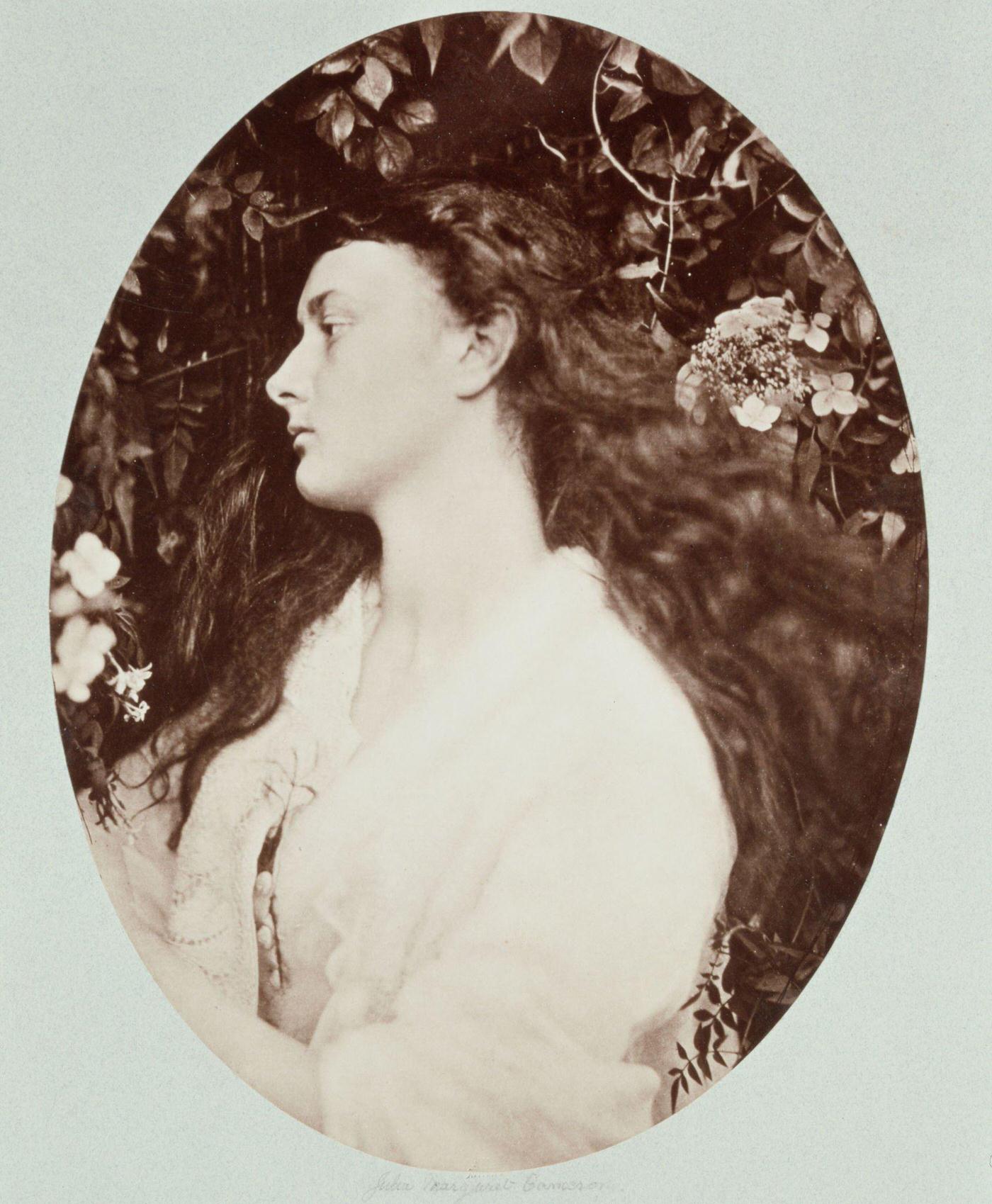
Alethea (Alice Liddell) appears in refined profile, her gaze turned away from the viewer as if caught in a private moment rather than a formal sitting. The oval framing lends the portrait a cameo-like elegance, while the soft tonal range and gentle focus flatter the curve of cheek and throat. Around her, foliage and blossoms form a dark, textured backdrop that makes her pale dress and skin seem almost luminous.
Most striking is the hair: long, abundant, and released in thick waves that spill across the composition, a romantic counterpoint to the more controlled styles often associated with Victorian respectability. The look suggests an aesthetic taste for natural beauty, with a hint of Pre-Raphaelite influence in the way hair becomes both subject and symbol. Fine details—loose tendrils, subtle highlights, and the airy fabric at her shoulders—help this 1872 image read as fashion and culture as much as portraiture.
In the broader history of women’s hairstyles of the Victorian era, the portrait sits at an interesting intersection between restraint and expressiveness, emphasizing length and texture over strict arrangement. It also reflects how nineteenth-century photography could borrow from painting and poetry, using botanical settings and graceful poses to craft an idealized femininity. For modern viewers searching for Victorian hair inspiration, Alice Liddell’s flowing style and the image’s garden-like atmosphere offer a memorable snapshot of period aesthetics.