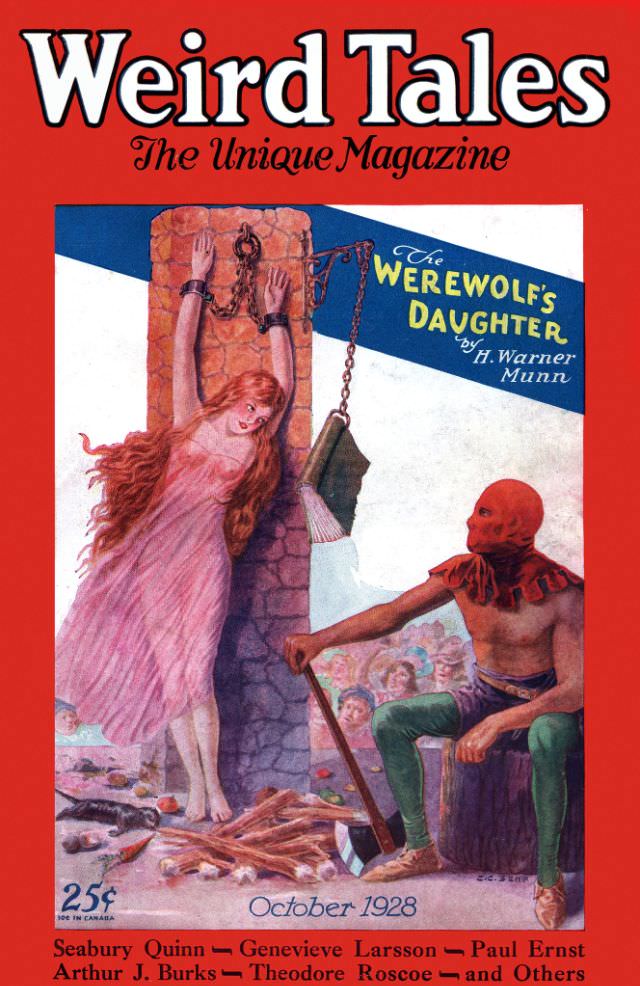
Weird Tales splashes across the top in bold lettering, promising “The Unique Magazine” and the kind of lurid thrills that made pulp fiction a cultural force. The October 1928 cover art leans into high drama: a red‑haired woman in a gauzy pink dress is shackled upright against a rough stone pillar, arms stretched overhead, her expression caught between fear and defiance. Below her, a scatter of bones and debris hints at danger already visited on this shadowy, dungeon-like setting.
A masked figure dominates the right side, seated and watchful, wearing a vivid red hood and tight green leggings that pop against the pale background. An axe rests at his side, and a hanging chain and broom add to the unsettling mix of captivity, menace, and ritualized staging. The composition pulls the eye from the bright title band diagonally down toward the prisoner and then back to the looming captor, a classic pulp illustration trick designed to stop readers at the newsstand.
Along the diagonal banner, the featured story title “The Werewolf’s Daughter” is clearly advertised, grounding the cover in early horror and weird fiction marketing. Pricing and contributor lines at the bottom reinforce the magazine’s mass-market identity, while the saturated colors and theatrical poses reflect the era’s taste for sensational imagery. For collectors and fans of vintage pulp magazines, this Weird Tales October 1928 cover is a vivid snapshot of how horror art and adventure storytelling were packaged for a curious, thrill-seeking audience.