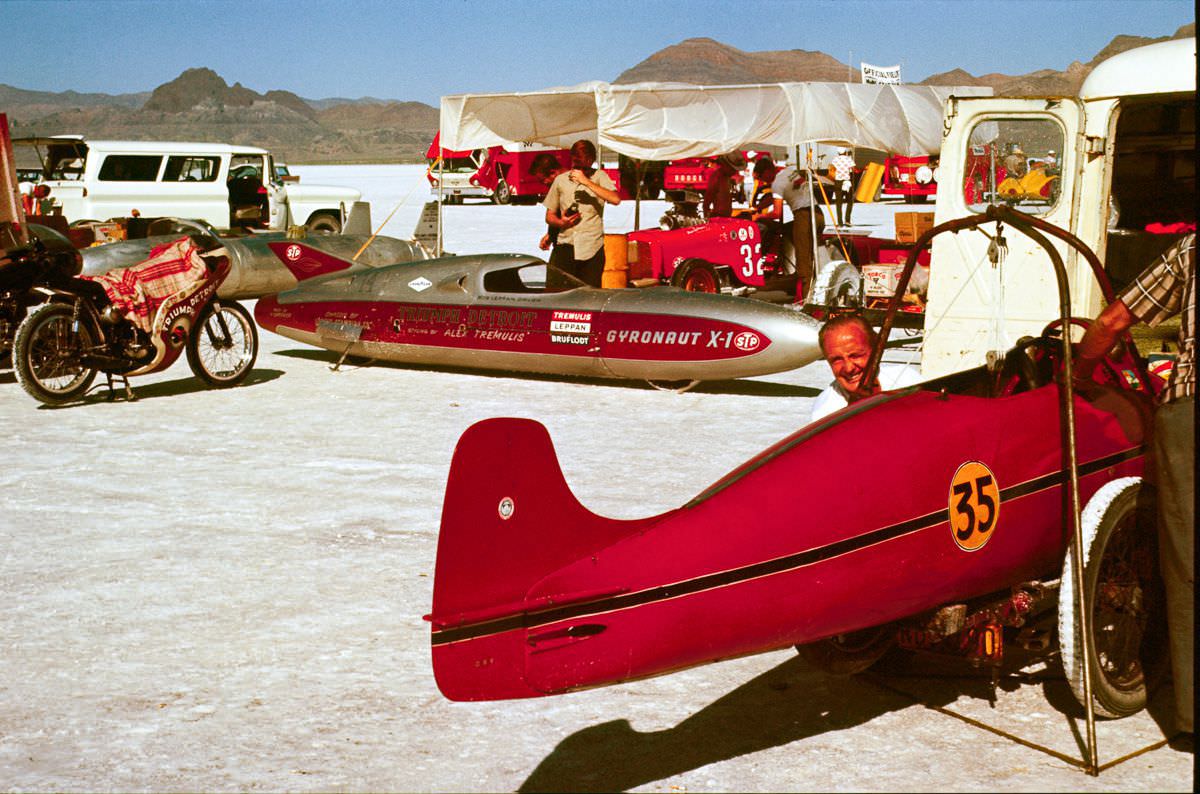
Salt glare and mountain silhouettes set the stage for a classic scene from the Bonneville Salt Flats speed trials, where ingenuity mattered as much as horsepower. In the foreground, Bert Munro is bent to the practical work of tuning his streamlined Indian Scout, the kind of hands-on preparation that defined grassroots land-speed racing. Tents, support trucks, and clusters of racers underline the temporary “pit city” that sprang up on the salt each meet.
Behind Munro’s motorcycle sits a low, silver streamliner bearing the words “Gyronaut X-1,” an Alex Tremulis–designed machine that looks more aircraft than motorcycle. Its smooth bodywork and purposeful stance contrast with the more exposed, personal-built feel of Munro’s setup, capturing two parallel paths toward the same goal: slicing through air at ever higher speeds. Together, they hint at the era’s blend of backyard perseverance and ambitious industrial design.
Details in the frame—race numbers, sponsor markings, and the improvised shade—evoke the rhythm of a day measured in quick repairs and long waits for the right run conditions. For readers searching Bonneville history, land speed records, or Bert Munro’s legacy, the photo distills why the salt flats became a proving ground for both dreamers and engineers. It’s a reminder that record attempts are often made not in dramatic moments on the course, but in the patient, oil-stained minutes spent getting a machine ready to fly across white desert.