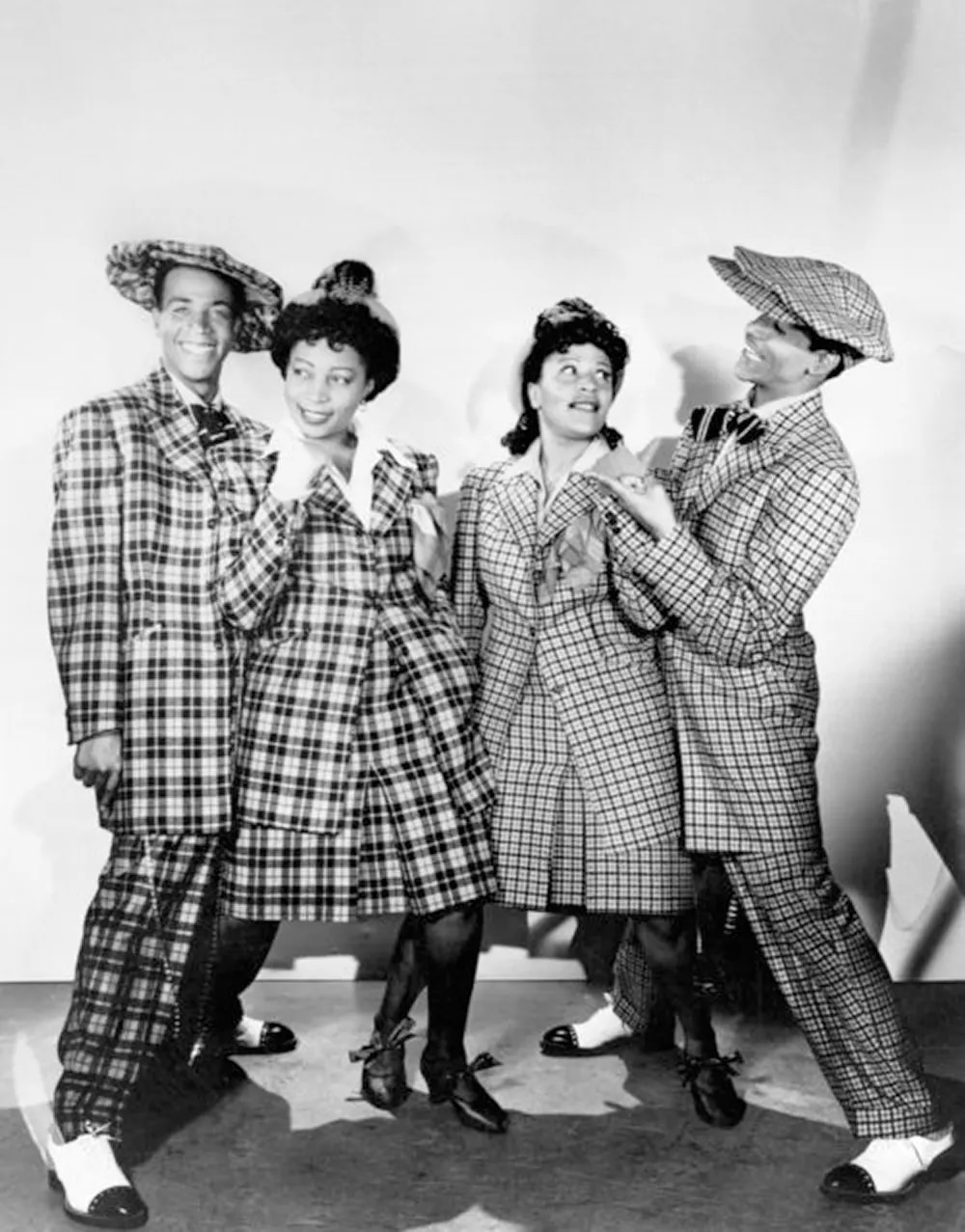
Four entertainers pose like a tight-knit stage act, their faces turned toward one another in a playful exchange that feels mid-joke. Matching plaid zoot suits dominate the frame—long, roomy jackets, boldly patterned fabric, and exaggerated proportions that were meant to be seen from the back row. Wide-brim hats and jaunty angles add to the show-business swagger, while the plain studio backdrop keeps every eye on the clothes and the performers’ animated chemistry.
Plaid upon plaid creates a visual rhythm, and the styling leans into zoot suit fashion at its most theatrical: sharp lapels, oversized shoulders, and trousers that hang loose before narrowing toward the ankle. The women’s tailored coats and curled hair echo the men’s silhouettes, suggesting a coordinated wardrobe designed for a “Hit Parade of 1943” publicity moment rather than everyday streetwear. Even the stance—knees bent, bodies tilted, hands gesturing—reads like choreography paused for the camera.
Wartime America made clothing a political talking point, and the zoot suit became a flashpoint where youth culture, race, labor, and patriotism collided in public debate. As entertainment and fashion crossed paths, these suits signaled confidence and modern style, but they also drew criticism for their fabric-heavy cut during an era of rationing, helping set the stage for the cultural backlash remembered as the Zoot Suit Riots. Seen through that lens, the image works as both a glamorous promotional portrait and a snapshot of how style can ignite controversy far beyond the spotlight.