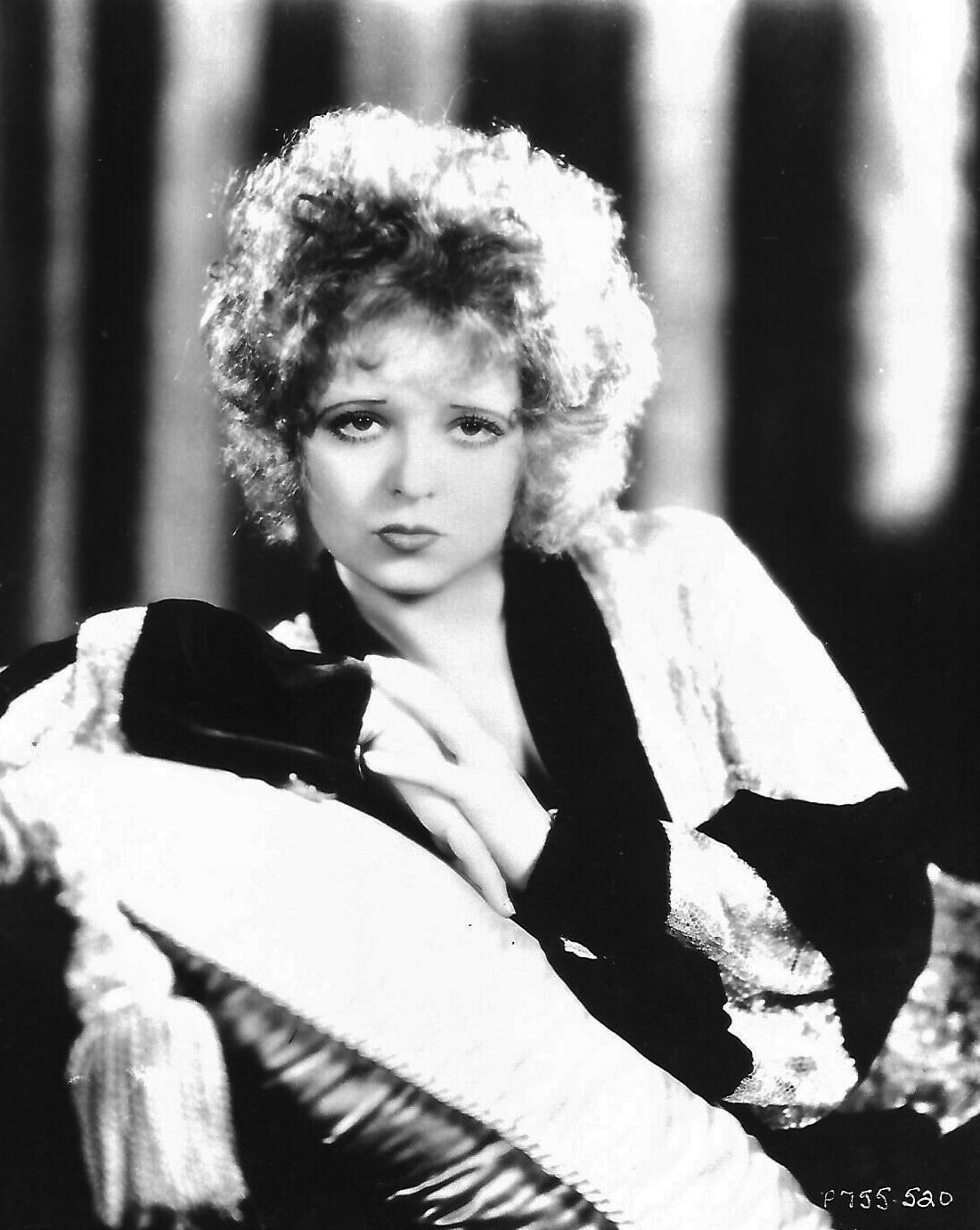
Glamour and unease share the frame as Clara Bow reclines against a plush cushion, her gaze fixed forward with a guarded, almost questioning calm. Soft studio lighting skims across her curled hair and carefully made-up eyes, while the dark-and-light contrast of her outfit and surroundings heightens the drama. Even without motion, the pose reads like a pause between scenes—an actress holding the room with expression alone.
Tied to the title “Her Wedding Night” (1930), the portrait hints at the era’s fascination with romance told through sophisticated, suggestive imagery rather than explicit detail. The blurred vertical backdrop and theatrical composition feel distinctly of early Hollywood publicity work, where mood did as much storytelling as plot. Bow’s face carries the tension that studios loved to sell: vulnerability edged with independence, an emotional hook for audiences flipping through newspapers or lobby displays.
For collectors and film history readers, this is a striking example of classic cinema portraiture at the turn of the 1930s, when screen style leaned into bold lighting, luxurious textures, and star-centered framing. It’s also a reminder of how a single still could shape a movie’s identity, packaging longing, uncertainty, and allure into one unforgettable look. Fans searching Clara Bow photos, 1930 film memorabilia, or early Hollywood glamour will find plenty to linger over here.