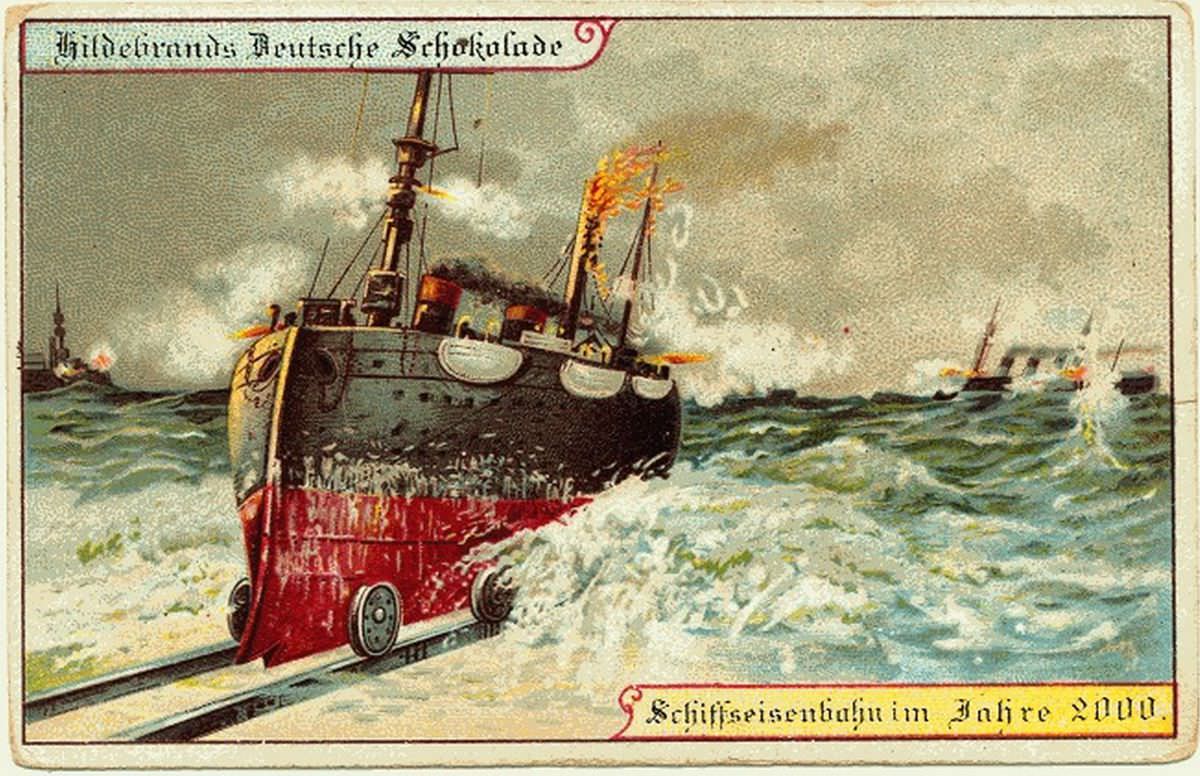
Steel meets surf in this wonderfully audacious illustration of a “hybrid railship,” a seagoing vessel imagined with railway wheels hugging a track that vanishes into rough water. The ship’s high bow shouldering waves, dark smoke pouring from funnels, and the rails cutting through foam all sell the fantasy with surprising conviction. A German caption along the top and bottom frames it like a period postcard or trade card—part advertisement, part prophecy.
What makes the scene so entertaining is the way it reflects an age obsessed with speed and engineering mashups, when inventors and illustrators alike loved to blur boundaries between ship, train, and future machine. The rail line suggests a guided ocean route, as if storms and currents could be tamed by the certainty of tracks, while distant ships on the horizon hint at a bustling maritime world watching this novelty charge ahead. Even without a precise place-name, the artwork leans into popular “tomorrow’s travel” imagery meant to amaze casual readers and spark conversation.
Paired with the title’s nod to tourist submarines, the post becomes a small gallery of retro-futurist travel dreams—vehicles designed more for wonder than practicality. These kinds of historical curiosities are perfect for anyone interested in early 20th-century imagination, transportation history, and the playful visual language of old promotional prints. Funny, yes, but also revealing: it shows how confidently the past pictured a future where leisure and technology would simply keep getting stranger.