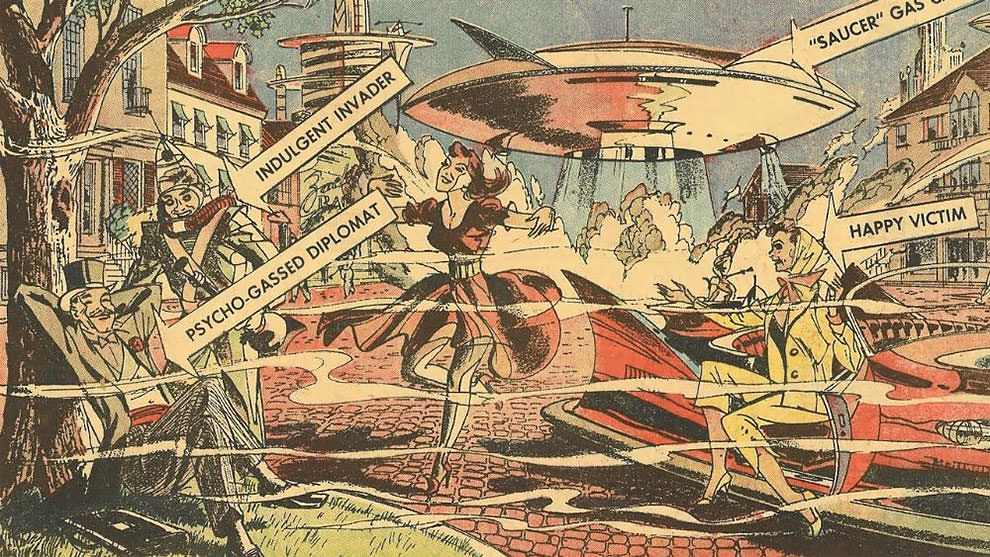
A flying saucer hangs low over a tidy town street while ribbons of gas curl across cobblestones and gardens, turning what should be a calm afternoon into a surreal invasion. The scene is drawn with the bright, mid-century flair of pulp illustration: sleek metal, swooping lines, and a theatrical panic that feels more like a stage set than a battlefield. In the middle of it all, ordinary people are caught between curiosity and dread, framed by quaint buildings that make the threat feel uncomfortably close to home.
What makes “Tranquilizer Warfare” memorable is the joke embedded in its labels—“SAUCER” GAS, “HAPPY VICTIM,” “PSYCHO-GASSED DIPLOMAT,” and even an “INDULGENT INVADER.” Instead of bullets and ruins, the weapon is mood itself, a cartoonish take on mind control and chemical anxiety that turns victims into grinning participants. The humor is pointed: by naming emotions like military targets, the artwork hints at how propaganda and fear can be administered as effectively as any physical force.
Beneath the laughs, this vintage sci‑fi satire reflects a real cultural tension, when flying saucers, secret weapons, and invisible clouds of influence haunted popular imagination. It’s a playful piece of historical art that still reads sharply today, pairing Cold War–style paranoia with a wink and a bright palette. For readers interested in retro futurism, UFO folklore, and the history of comic warfare metaphors, this image offers a compact, unforgettable story.