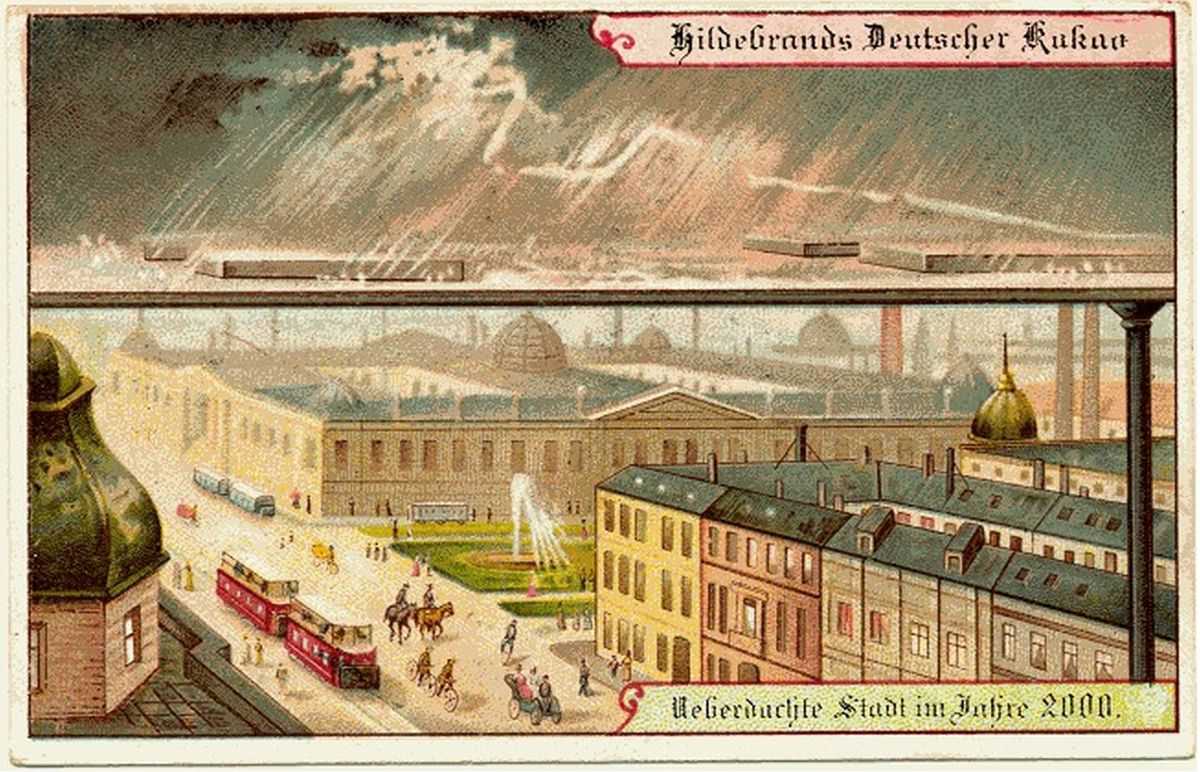
A rain-swept city square bustles below an audacious solution: a colossal roof stretched high over rooftops and streets, turning the open air into something like a civic living room. The artwork’s humor is immediate—tramcars glide along, pedestrians linger, and a fountain still throws its spray, as if weather itself has been politely pushed to the margins. From this elevated viewpoint, “Weather-proof city roofing” reads like a playful promise that modern engineering could tame even the sky.
Details reward a slower look, because the scene balances everyday life with futuristic infrastructure. The long canopy—supported by thick columns—suggests an early vision of urban climate control, the kind of grand municipal project imagined in an age intoxicated with progress. Seen against the soft colors and tidy façades, the roof becomes both a protective device and a symbol: a city claiming mastery over rain, wind, and inconvenience.
Hildebrand’s “German future” captioning frames the image as more than a joke; it’s a period glimpse into how people once pictured tomorrow’s streetscape. For readers interested in historical illustration, retro-futurism, and the history of city planning, this post offers a charming example of how “the future” was sold—with optimism, spectacle, and a wink. Whether you read it as satire or sincere aspiration, the idea of roofing an entire city remains a memorable, SEO-friendly curiosity in the story of urban imagination.