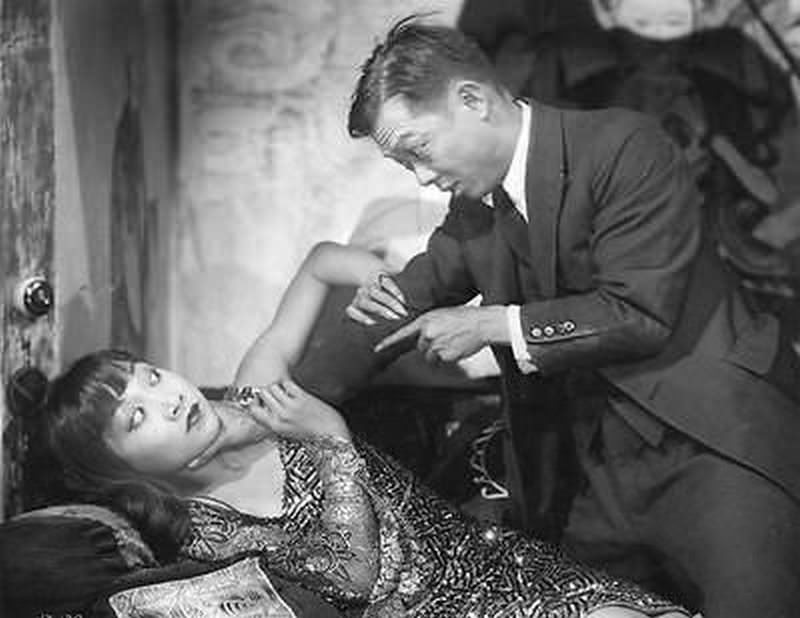
Under the glow of late-1920s glamour, Anna May Wong and King Hou Chang are framed in a tightly staged moment that feels torn from a dramatic scene. Wong reclines with an air of weary poise, her patterned dress and sleek bob catching the light, while Chang leans in sharply dressed, his attention fixed on her with an urgent, pointed gesture. The composition heightens the tension—two figures close together, a suggestion of confrontation or confession, and a theatrical backdrop that hints at performance as much as private life.
Piccadilly (1929) sits at an evocative crossroads of cinema history, when film publicity stills and set photography were crafted to sell mood, mystery, and star power in a single glance. The styling here leans into the era’s appetite for sophisticated intrigue: tailored menswear, shimmering textures, and a pose that implies narrative without spelling it out. For readers interested in classic movies and early screen iconography, the image offers a vivid reminder of how studios shaped stories through gesture, costume, and carefully controlled lighting.
Beyond its immediate drama, the pairing of Wong and Chang invites a closer look at how Asian performers were presented—and how they asserted elegance and presence despite the period’s narrow expectations. Their expressions and body language carry the scene: her guarded, sideways gaze; his intent, almost interrogative posture. As a historical photo tied to Piccadilly, it’s a striking snapshot of 1920s film culture, capturing the artistry of staged emotion and the enduring fascination of Anna May Wong on screen.