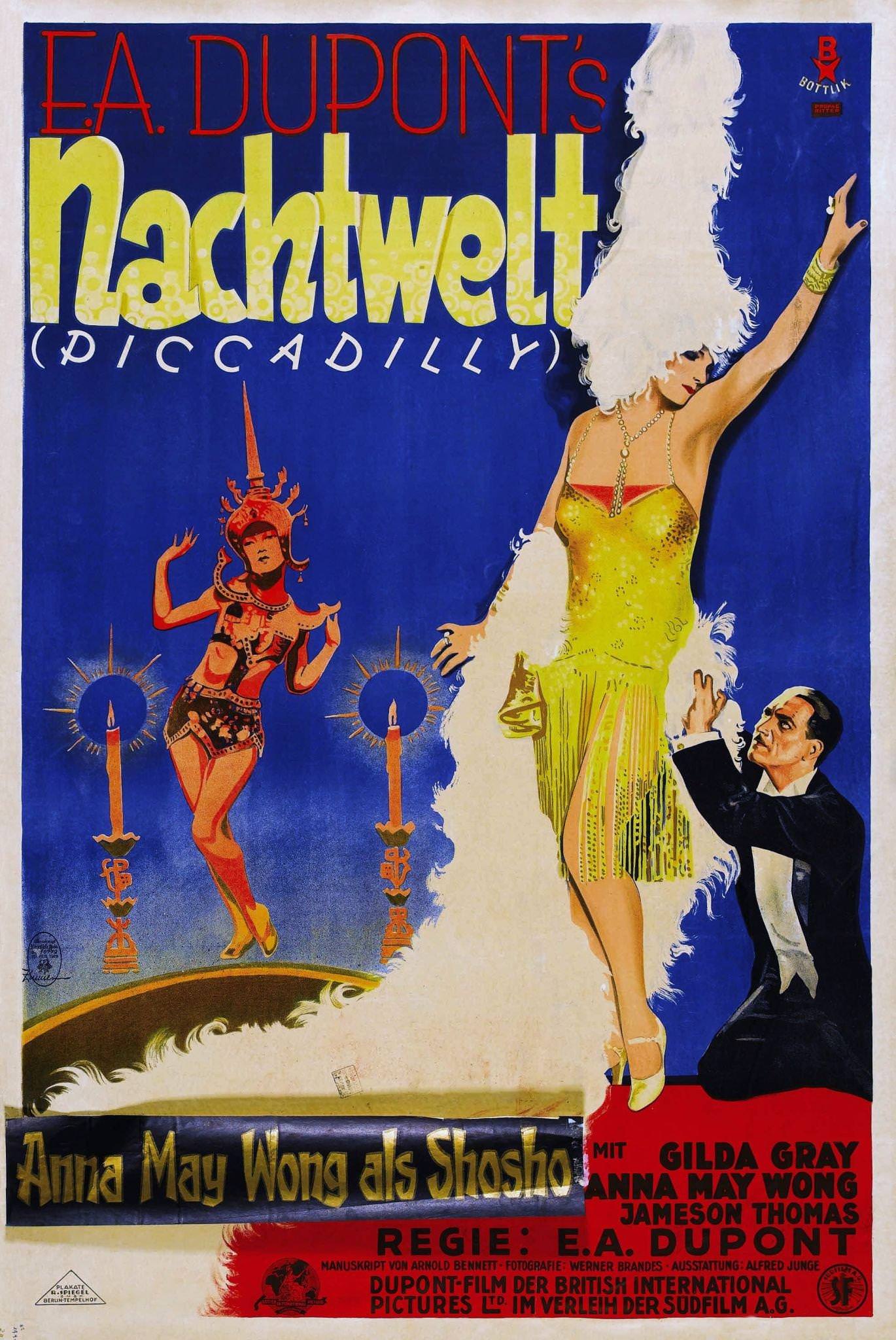
Bold lettering for “E.A. Dupont’s Nachttwelt (Piccadilly)” sprawls across a deep blue field, selling nightlife with the confidence of early cinema advertising. A towering showgirl in a glittering yellow dress and a plume of white feathers dominates the composition, while a tuxedoed man kneels at her side, turning glamour into drama at a single glance. The poster’s saturated colors and theatrical poses feel designed to stop passersby in their tracks—exactly the effect a Piccadilly poster would have wanted on a busy street.
Along the left, a second performer appears in an ornate, stylized costume, framed by candlelight motifs that hint at stage spectacle and exotic revue culture. The credits along the bottom spotlight Anna May Wong, and the design plays up star power with a visual hierarchy that makes the performers larger than life. Even without a precise date or venue spelled out, the mix of typography, illustration, and spotlighted names places this firmly in the era when movies and music-hall aesthetics fed each other.
Collectors and film-history readers will appreciate how this piece bridges silent-era/early sound-era marketing and the cosmopolitan mythology of Piccadilly as an entertainment district. It’s a vivid example of classic movie poster art: part advertisement, part fantasy, and part snapshot of shifting popular taste. For anyone browsing “Movies & TV” ephemera, “Piccadilly Poster” offers a colorful window into how cinema once promised nocturnal thrills long before trailers and streaming thumbnails did the job.