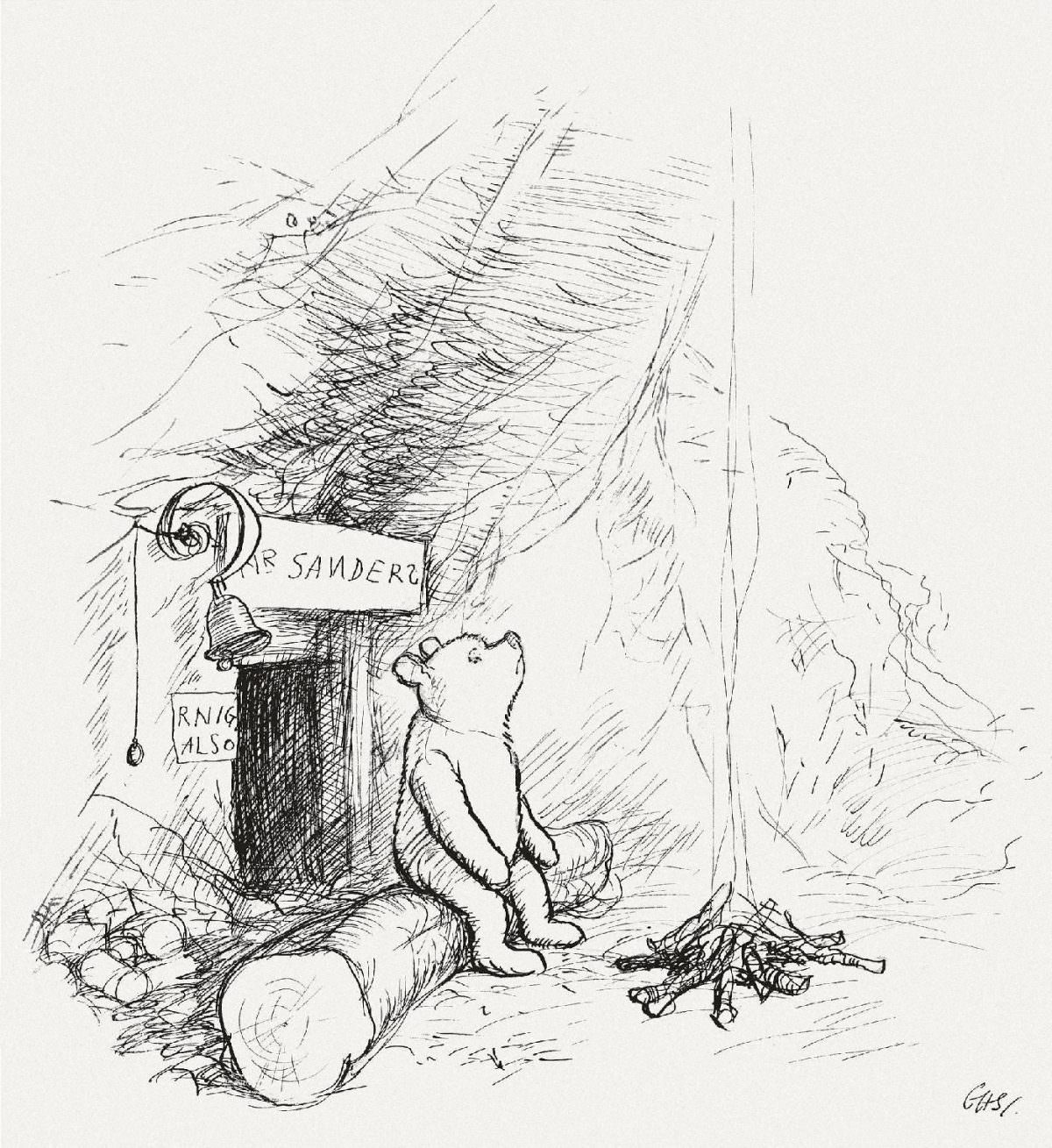
Drawn in quick, confident pen strokes, the scene settles at the root of a great tree where a small door sits half-hidden in bark and shadow. A bell and pull-cord hang by the entrance, and above it the sign reads “MR. SANDERS,” the famous little joke that explains what “under the name” means. Pooh stands outside with his head tipped up as if reading the letters, while logs, scattered sticks, and the suggestion of forest ground make the doorway feel like a real, lived-in corner of the Hundred Acre Wood.
The charm here is how much atmosphere is created with so little: crosshatching for the hollow’s darkness, airy lines for the tree’s sweep, and just enough detail to suggest a burrow turned home. That blend of simplicity and precision is the hallmark of classic children’s book illustration, where every line serves the story and nothing distracts from the gentle humor. Even the handwritten look of the sign reinforces the idea that names, doors, and meanings are part of the adventure.
For readers searching for Winnie-the-Pooh artwork, vintage book illustration, or A. A. Milne’s beloved forest world, this image offers a doorway into the earliest visual language of the tales. It’s a quiet, iconic moment: Pooh, the sign, and the forest all conspiring to turn an ordinary label into a lesson in words. As a historical piece of literary art, it reminds us how the stories were first experienced—not only as text, but as drawings that shaped generations of imagination.