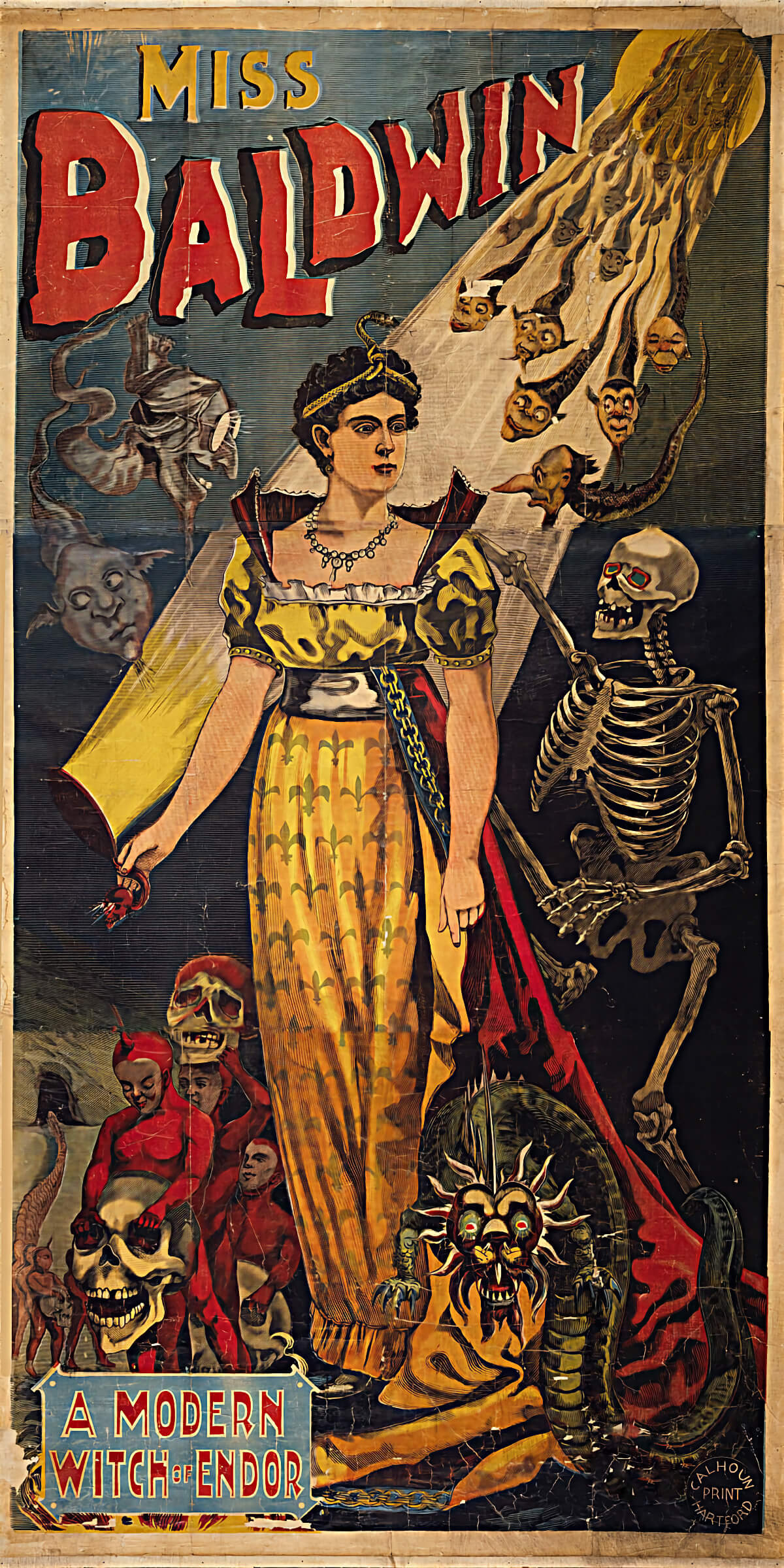
Bold lettering shouts “MISS BALDWIN” across the top, framing a theatrical cover art design that leans hard into the era’s taste for spectacle and sensation. At center stands a poised young woman in a yellow gown, her dark hair styled with a jeweled band, as if stepping onto a stage rather than into a scene of dread. The composition reads like a poster for a dramatic entertainment, using color, scale, and costume to make its star instantly memorable.
Around her, the supernatural press in from all sides: horned demons in red, grinning skulls, and a looming skeleton that feels half-companion, half-warning. A bright beam cuts through the darkness, catching a cascade of grotesque faces that seem to spill from the shadows like summoned visions. The artwork’s mix of menace and showmanship—equal parts gothic horror and promotional flair—suggests how “witchcraft” imagery was marketed to thrill audiences.
Titled “A Modern Witch of Endor,” the piece borrows biblical language to lend its chills an air of antiquity while presenting something decidedly modern in style and attitude. For collectors and readers interested in nineteenth-century visual culture, it offers a vivid example of how popular prints packaged fear, curiosity, and female mystique into a single striking image. Whether approached as occult-themed ephemera, theatrical advertising, or simply a masterclass in period illustration, this 1870 cover art still commands attention today.