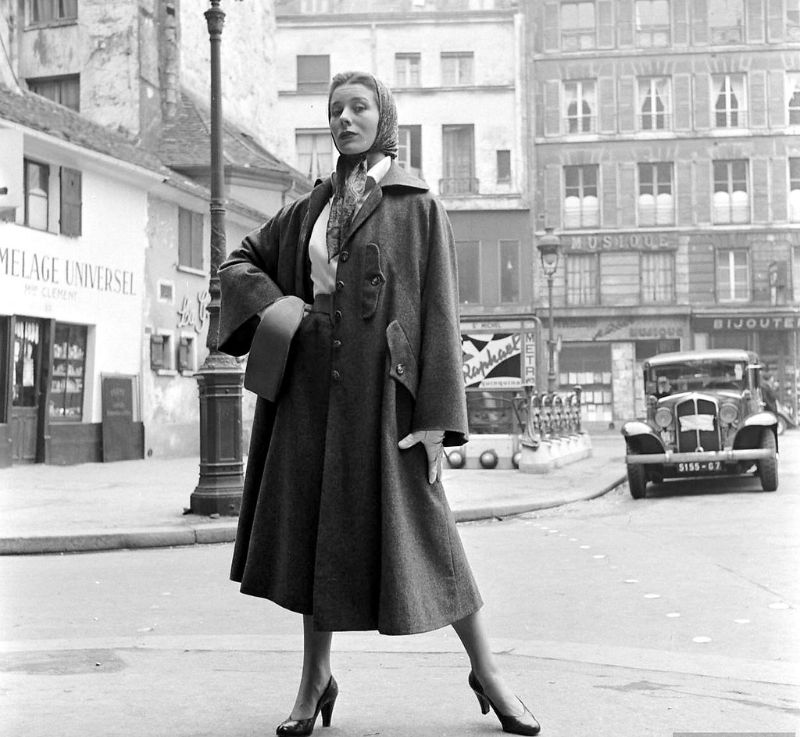
Bettina stands with a poised, almost theatrical confidence on a Paris street in February 1952, framed by tall façades and a quiet sense of morning traffic. Her Givenchy coat falls in a generous A-line, buttoned and structured yet softened by the way it swings around the calves, while high heels sharpen the silhouette into something unmistakably couture. The “lantern” scarf, tied close around the head, draws the eye to her face and turns an everyday accessory into a signature gesture of postwar elegance.
Behind her, the city reads like a documentary backdrop: worn plaster, shopfront lettering, and a lamppost rising like a stage prop. A period automobile idles along the curb, and the street markings lead toward a row of windows that feel both domestic and grand, the typical Parisian mix of commerce and residence. The photograph’s crisp contrast makes fabric, stone, and metal equally tactile, so the coat’s weight and the street’s damp chill seem to meet in the same frame.
Fashion historians often point to images like this when describing how the early 1950s reasserted refinement—practical warmth made luxurious, modest coverage made modern. Bettina’s stance is relaxed but commanding, suggesting the new power of the model as more than a mannequin: a personality who could sell a mood as effectively as a garment. As an SEO-friendly glimpse of Givenchy in Paris, 1952, the scene distills mid-century French style into one unforgettable street-couture moment.