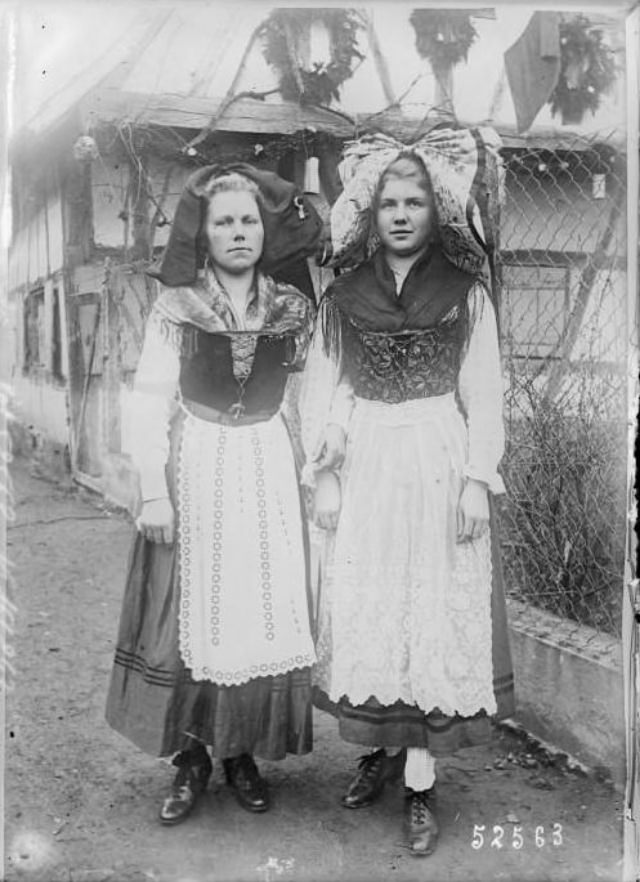
Two young Alsatian women stand side by side, meeting the camera with a calm, steady gaze that feels both formal and intimate. Their traditional dress—long skirts, fitted bodices, and neatly tied aprons—creates a strong silhouette typical of early 20th-century regional fashion. What draws the eye first, though, are the impressive headdresses: broad, structured bows and layered fabric that frame their faces like ceremonial crowns.
Behind them, a modest village backdrop of timber, fencing, and a shaded lane hints at everyday life rather than a studio setting. The clothing looks practical as well as decorative, with sturdy shoes and layered textiles suggesting garments meant to be worn, worked in, and proudly displayed on public occasions. Fine details—embroidery, patterned trim, and the contrast between dark bodice and pale apron—speak to the careful craftsmanship and social meaning woven into folk costume.
Alsace has long been a crossroads of language and tradition, and portraits like this helped define local identity in an era of rapid change. The headdress, in particular, functions as more than adornment: it signals community, custom, and belonging, turning dress into a readable form of cultural history. For anyone searching for early 1900s Alsatian costume, French regional attire, or European folk fashion and culture, this photograph offers a vivid, grounded glimpse into how heritage was worn as well as remembered.