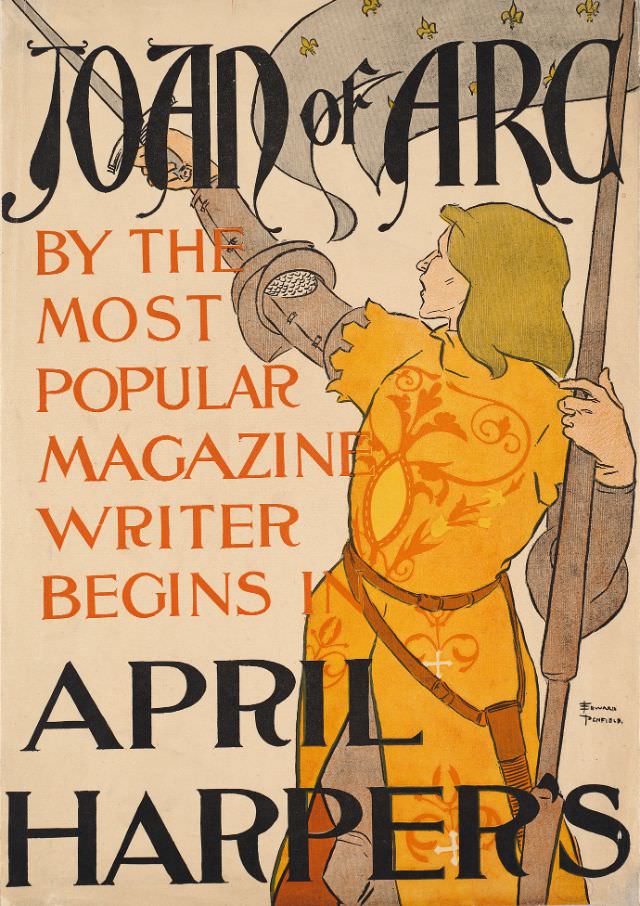
Bold, sweeping lettering crowns the cover with “JOAN of ARC,” setting a dramatic stage for a heroine caught mid-gesture. The figure turns in profile, gripping a tall banner while raising a sword, her gaze lifted as if answering a distant call. Ornamental patterns ripple across her tunic, and the limited palette—warm golds against dark type—pushes the medieval legend into the crisp, graphic language of late-19th-century illustration.
Across the center, the typography announces “BY THE MOST POPULAR MAGAZINE WRITER,” a line that reveals this is more than a decorative portrait—it’s a promise of a featured story and a marketing flourish typical of magazine cover art. “APRIL HARPER’S” anchors the bottom in large, confident capitals, balancing the composition with the same authority as the title at the top. The design combines poster-like clarity with narrative tension, inviting readers to imagine the clash of faith, duty, and spectacle associated with Joan’s myth.
For collectors and researchers of Harper’s magazine covers, Art Nouveau-era graphics, and Joan of Arc in popular culture, this 1895 cover offers a snapshot of how historical figures were repackaged for mass readership. The banner and sword function as instant symbols—patriotism, sanctity, defiance—rendered in a style meant to read quickly from a newsstand. As a piece of cover art, it bridges literature and illustration, showing how print culture helped keep medieval history vivid in the modern imagination.