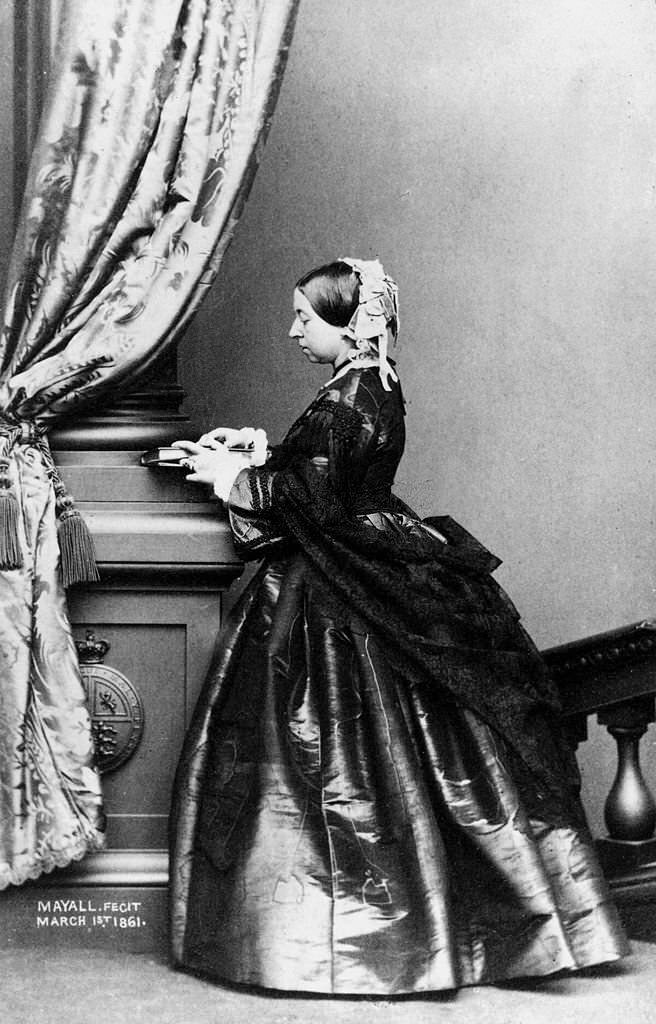
Profiled beside a heavy curtain and a formal cabinet, Queen Victoria is posed with a contained, almost domestic stillness, her hands resting near a small book or portfolio. The carte-de-visite format encourages intimacy, yet the setting remains unmistakably ceremonial, with carved woodwork and a polished studio arrangement framing her figure. Photographed by Mayall in 1861, the composition balances private poise with public authority, turning a quiet moment into a carefully managed statement of monarchy.
Fashion takes center stage in the unmistakable silhouette of crinolines, the wide bell of the skirt projecting out from the waist and creating a sculptural presence. The sheen of the fabric catches the light in broad highlights and deep folds, while darker bodice details and pale cuffs draw the eye back to her posture and profile. A ribboned cap and tidy hairstyle reinforce mid-19th-century ideals of propriety, presenting royal femininity as disciplined, structured, and visually legible.
Such studio portraits helped spread Victorian fashion and court culture far beyond palace circles, making royal imagery collectible and reproducible in an age hungry for photographs. The careful staging—drapery, furniture, and the controlled side view—shows how photography and power worked together, shaping how the era wanted to see itself. As a historical image of Queen Victoria in crinoline dress, it remains a vivid reference point for researchers of Victorian clothing, gendered display, and the visual language of the British monarchy.