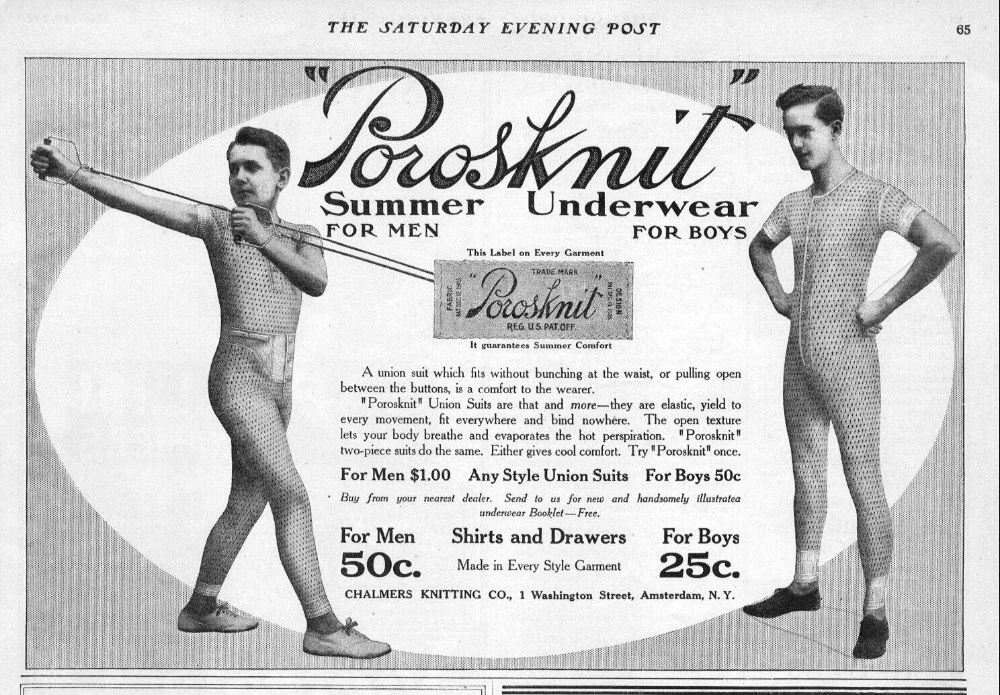
Bold script lettering for “Porosknit” stretches across a full-page magazine advertisement, flanked by two posed figures modeling close-fitting summer underwear. One stands in a dynamic athletic stance with an arm extended, while the other faces forward with hands on hips, turning undergarments into a display of health, movement, and modern comfort. The layout is clean and emphatic, using a large central oval to frame the brand name and sales copy, a classic early-1900s advertising approach meant to catch the eye quickly on a crowded page.
Marketing language leans hard on practicality: breathable knit, freedom from “bunching,” and fabric that helps the body stay cool in warm weather. The ad distinguishes styles and audiences—union suits for men and for boys—while listing prices in cents and dollars to signal affordability and everyday use. A small label illustration reinforces authenticity and brand recognition, reminding shoppers to look for the Porosknit mark on each garment.
Printed in The Saturday Evening Post, the piece offers a revealing snapshot of how men’s and boys’ fashion was sold at the time, when underwear could be promoted with the same confidence as outerwear. Athletic posing and tidy, patterned knitwear reflect a period fascination with vigor, cleanliness, and technological textiles, tying personal comfort to a broader ideal of modern life. For collectors and researchers of vintage ads, early 1900s fashion, and consumer culture, the page reads as both a sales pitch and a window into daily clothing habits.