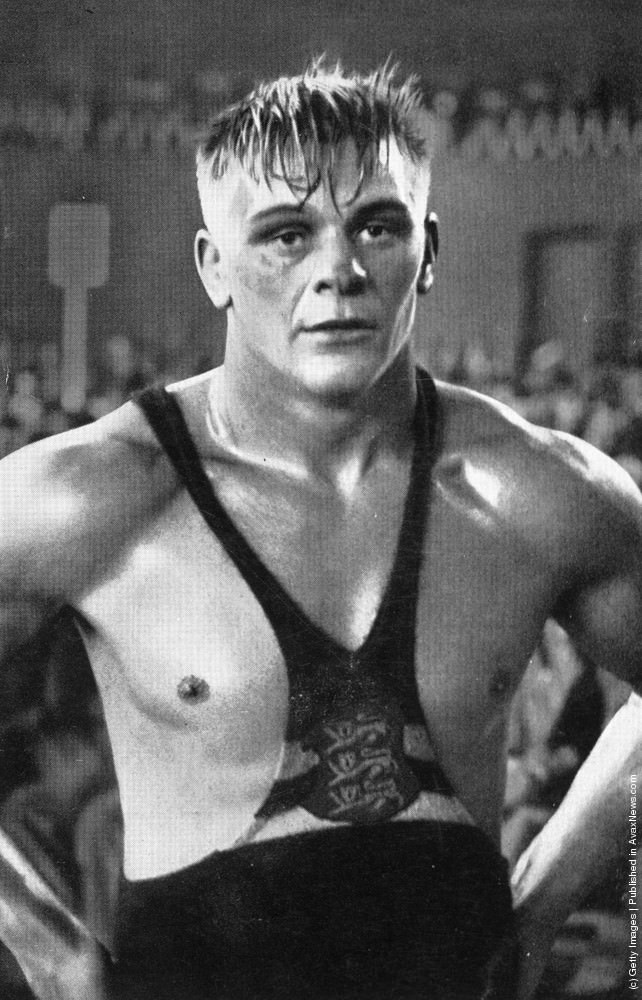
Kristjan Palusalu stands square to the camera in his wrestling singlet, shoulders broad and posture set with the calm of someone used to pressure. The close framing emphasizes the physical reality of the sport—corded muscles, a sheen of sweat, and a face marked by effort rather than theatrics. Behind him, the blurred crowd hints at a packed arena atmosphere, keeping the focus on the athlete while still placing him in the public spectacle of competitive wrestling.
Taken in 1936, the portrait feels like a statement about interwar athletics: discipline, strength, and national pride condensed into a single intense gaze. Palusalu’s expression is steady and unsmiling, more workmanlike than glamorous, as if the bout has just ended or is about to begin. Even without a visible medal or podium, the photograph conveys achievement through bearing alone—an iconic look for an Estonian sports figure of the era.
For readers interested in Olympic history, Estonian wrestling, or vintage sports photography, this image offers a compelling window into how champions were presented before the age of color broadcasts and branding. The grain and contrast of the print add texture that modern images often smooth away, making the moment feel immediate and hard-earned. As a historical photo, it preserves not only Palusalu’s likeness but also the visual language of 1930s sports culture—direct, physical, and unforgettable.