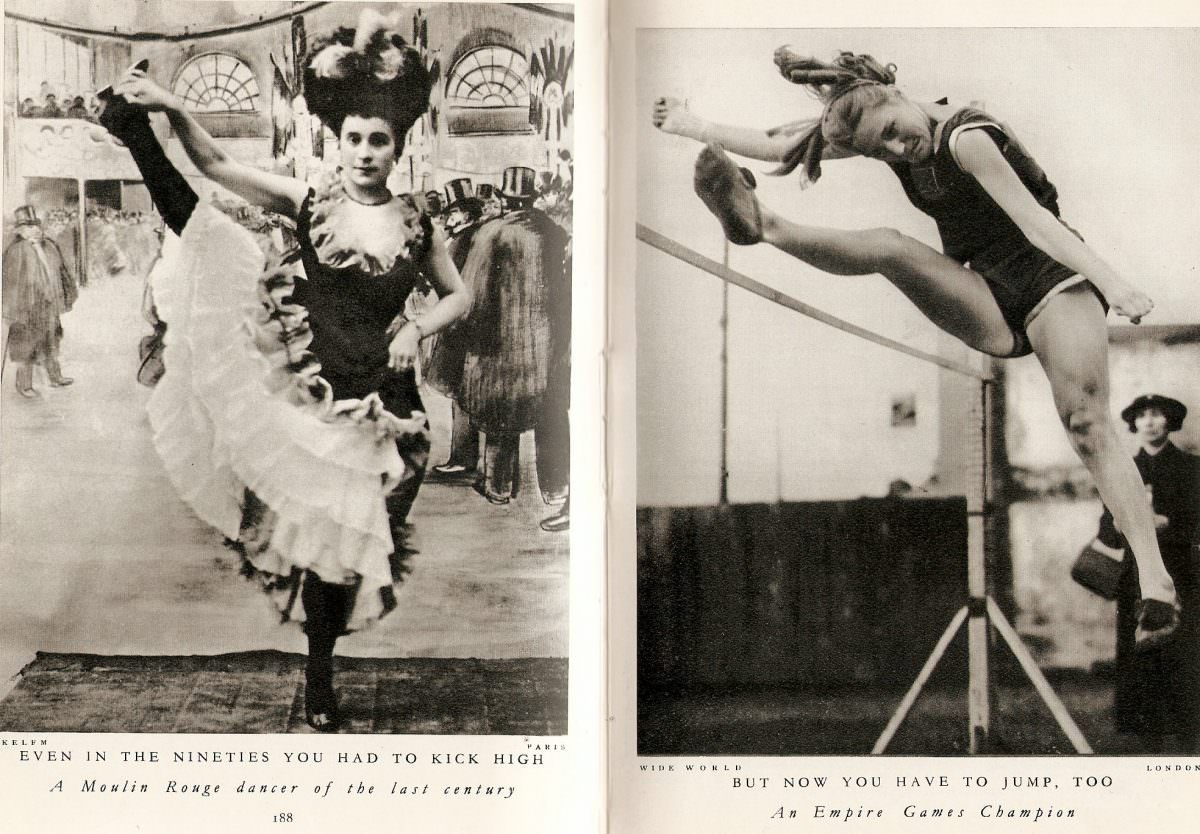
Feathered headpieces, ruffled skirts, and a leg thrown skyward—on the left page, a cabaret performer channels the bold showmanship associated with the Moulin Rouge, framed by a painted backdrop and onlookers in formal wear. The caption’s playful boast about having to “kick high” leans into the era’s fascination with spectacle, where dance was as much about attitude and silhouette as it was about steps. Every detail, from the layered costume to the poised arm, sells a stage-world of glamour and bravado.
Across the spread, the mood shifts from nightlife theatrics to athletic focus as a high jumper clears the bar mid-flight, hair and limbs caught in a split-second of controlled risk. The tagline—“but now you have to jump, too”—pairs neatly with the title’s promise of an Empire Games champion, highlighting how physical prowess was being celebrated in a different arena. Even without a named venue, the composition evokes an outdoor meet, with the uprights, crossbar, and distant spectators anchoring the action.
Placed together, these two historical photos make a witty comparison between performance and sport: both demand elevation, precision, and nerves, whether under stage lights or open sky. For readers searching for vintage Moulin Rouge dancer imagery, early 20th-century dance history, or classic high jump photography, this post offers a memorable side-by-side glimpse of bodies in motion and the culture that applauded them. It’s “funny” in the best way—because the joke lands on a genuine truth: style and strength have always shared the same stage.