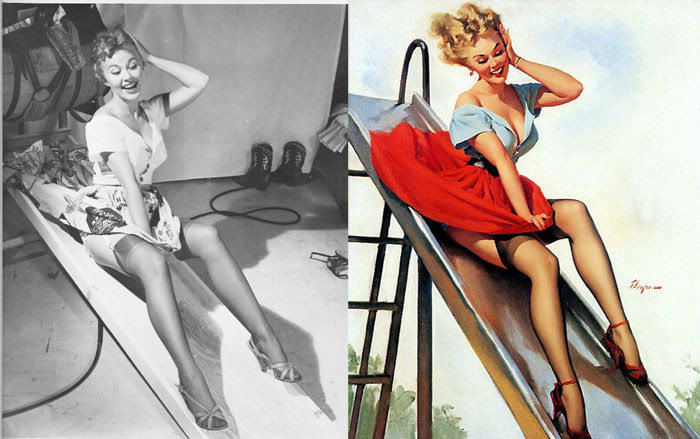
Studio lights, cables, and a casual prop set the scene on the left, where a smiling pin-up model poses with an easy confidence that feels candid and workmanlike at the same time. Her patterned dress, crossed legs, and playful hand-to-hair gesture read like a rehearsal for an illusion—part glamour, part careful staging. It’s a reminder that pin-up art often began not as fantasy, but as a real woman holding a pose in an ordinary room.
Across the split image, the same pose becomes a polished painting: skin softened, colors intensified, and details selectively emphasized to heighten charm and drama. The slide prop turns into a bright, stylized setting, with flowing fabric and a breezy sky backdrop replacing the clutter of production. Seeing the “before and after editing” side by side reveals how illustrators refined posture, expression, and wardrobe into the iconic pin-up look that defined a whole era of popular art.
Pin-up models before and after editing tells a broader story about process—how reference photos fed commercial illustration, calendars, and advertising with a carefully constructed idea of beauty. The contrast invites a closer look at what was kept true and what was transformed, highlighting both the artistry of the final painting and the human reality behind it. For readers interested in vintage pin-up history, classic illustration techniques, and the real women behind famously beautiful artworks, this comparison is as instructive as it is fascinating.