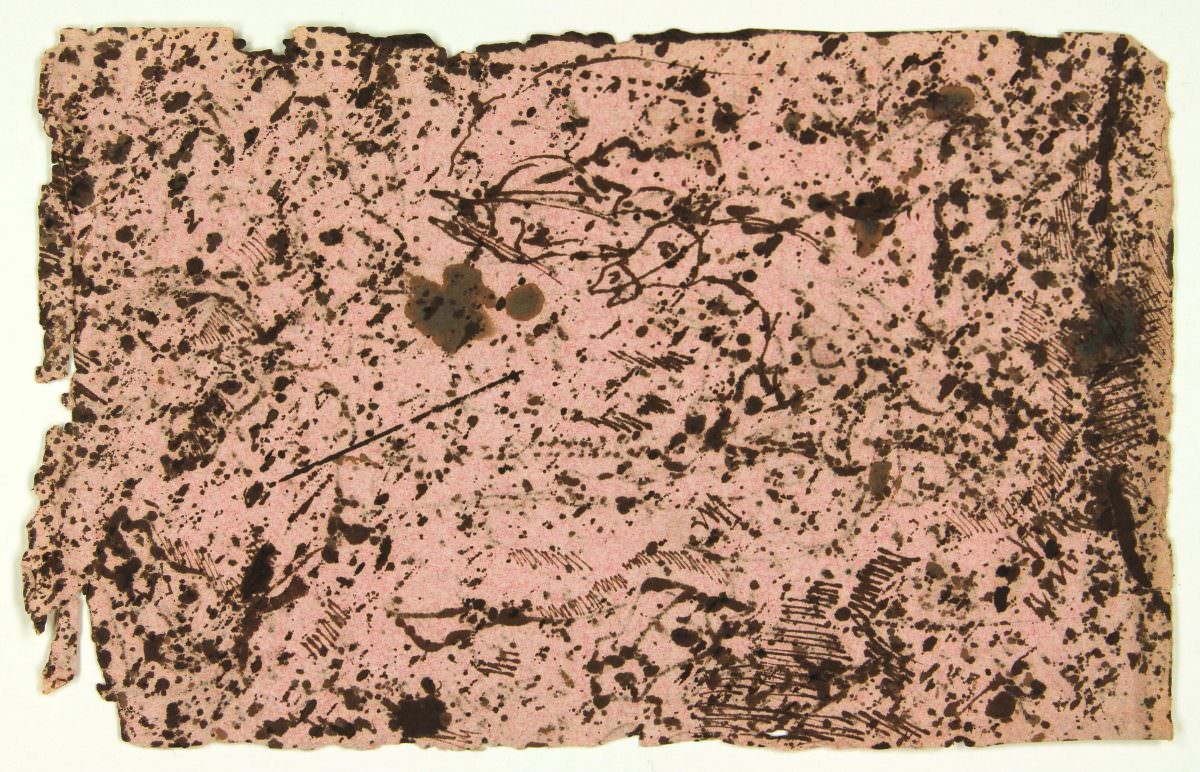
Marked “Wednesday 1st August 1832,” this small sheet of blotting paper preserves a handful of pen-and-ink studies of horses’ heads, dashed off with quick confidence and a practiced eye. The paper itself—pinked by age and peppered with ink splatter—feels less like a formal drawing support and more like a working surface, the sort of place an artist tests a line, wipes a nib, and returns to the subject again.
Look closely and you can sense the method: repeated outlines, abbreviated muzzles, and lightly suggested manes, with cross-hatching and scratch marks gathering where the hand lingered. The irregular, torn edges and blotting patterns become part of the story, hinting at a busy desk or studio routine where observation and experimentation mattered more than polish.
For anyone interested in nineteenth-century drawing practice, equine art, or the everyday material culture of artists, these 1832 sketches offer a vivid glimpse into process. They read like visual notes—training the eye to capture anatomy and character—while the date in the title anchors the work in time without demanding a specific place or maker. As a historical artwork, it’s a reminder that even the most informal scraps can carry the immediacy of a moment preserved in ink.