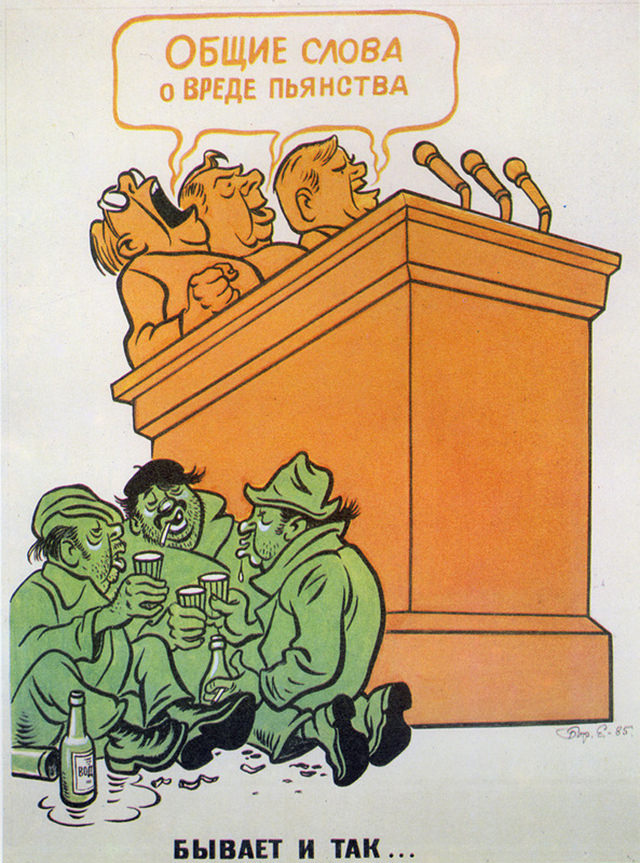
Against a towering podium with clustered microphones, a solemn trio leans into a public address while a speech bubble in Russian proclaims “General words about the harm of drunkenness.” The composition is sharply cartooned, using warm oranges for the official stage and cooler greens below, turning the lectern into a literal platform of authority. That split in color and scale sets the tone for the post title, “It also happens,” hinting at the gap between what is said in public and what unfolds in everyday life.
Down at the base of the dais, several disheveled men sit on the ground sharing drinks, surrounded by bottles and small scraps that read as debris or discarded wrappers. Their slumped postures and animated faces suggest camaraderie, fatigue, and resignation all at once—an unvarnished counterpoint to the moral lecture above. The irony is immediate: temperance rhetoric floats overhead, while the consequences (and persistence) of drinking occupy the foreground.
As a piece of historical satire and propaganda-style artwork, the image plays on hypocrisy, performative messaging, and the limits of official campaigns to reshape behavior. Russian text anchors it in a Soviet-era visual language without requiring a precise date or place to appreciate its bite. For readers searching for “Soviet caricature,” “anti-alcohol poster,” or “Russian political cartoon,” this post offers a vivid example of how humor and critique were packaged into deceptively simple illustrations—because, as the title says, it also happens.