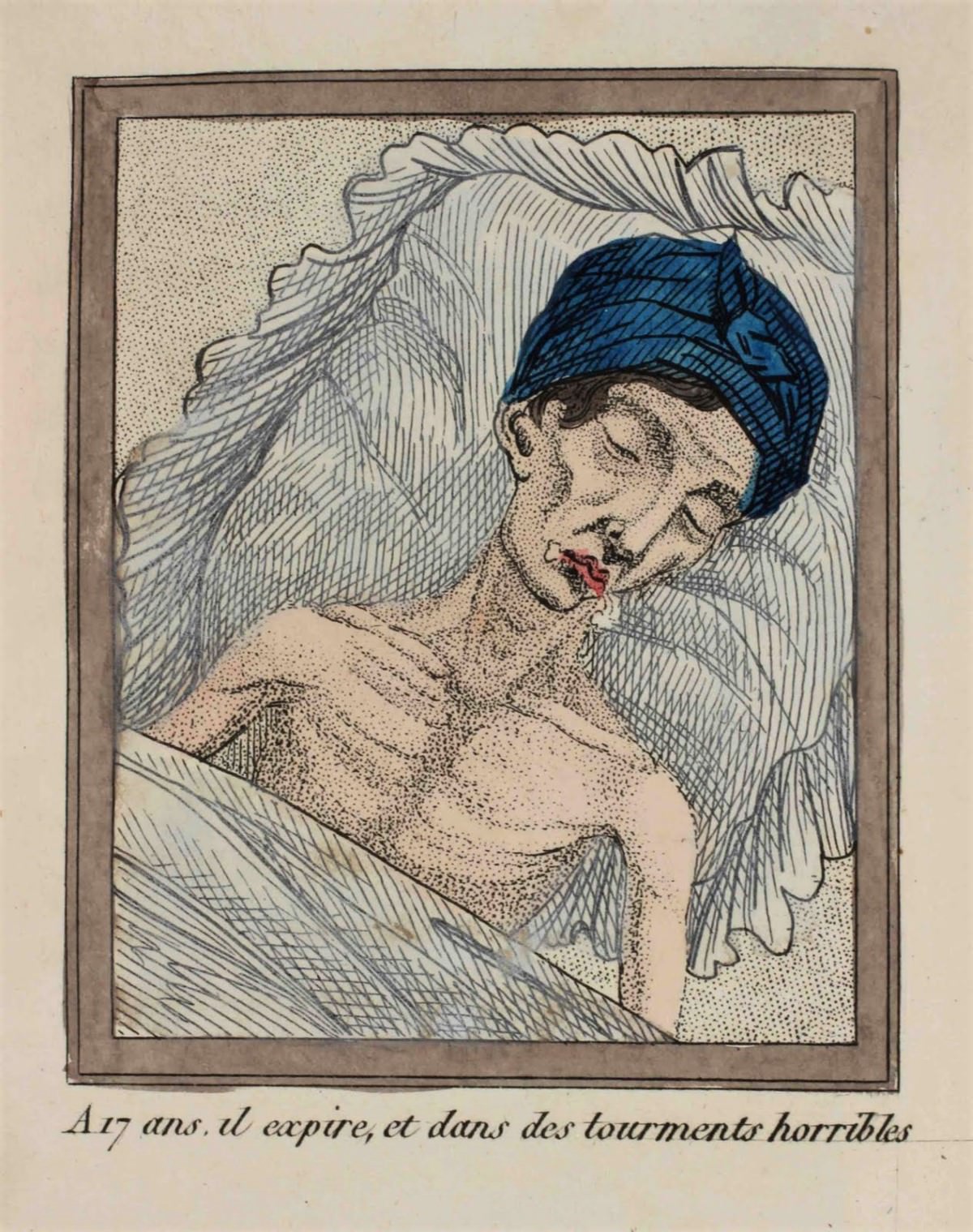
A stark, hand-colored illustration confronts the viewer with a youth laid out on a pillow, eyes closed, skin rendered in thin, stippled lines that suggest both fragility and finality. A deep blue cap frames the face, while a small, vivid trace of red at the mouth pulls the gaze to the body’s last moment, making the scene feel uncomfortably intimate. Beneath the image, a French caption echoes the post title’s grim declaration, underscoring how readily such works turned private suffering into public narrative.
Drawn like an exhibit for the reader’s moral imagination, the composition balances tenderness and spectacle: soft bedding and careful shading contrast with the blunt message of death “at seventeen.” The spareness of the setting—no mourners, no room details—heightens the sense of isolation, as if the viewer has arrived after everything has already happened. In the world that produced prints like this, sentiment and sensationalism often shared the same frame, and the tragedy of youth became a powerful hook for attention, sympathy, and instruction.
For anyone searching for historical artwork that explores mortality, illness, and the rhetoric of melodrama, this piece offers a concentrated example of how graphic storytelling functioned on the printed page. Its controlled palette, clear linework, and caption-driven punch reveal an era’s appetite for cautionary tales and emotional shocks, especially when centered on the untimely death of the young. As a WordPress feature, it invites closer looking—not only at the image’s details, but at the culture that found meaning, warning, or even entertainment in “dead at seventeen” lamentations.