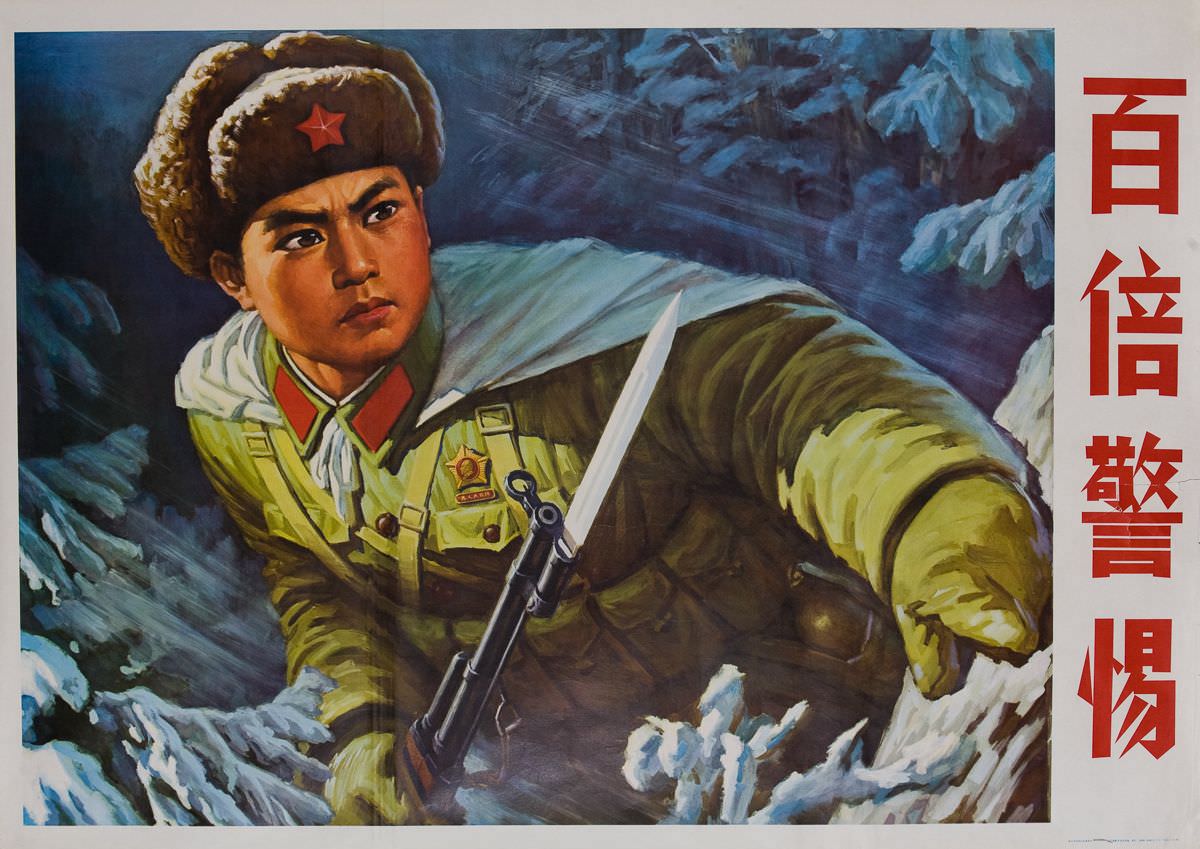
Urgency radiates from this 1970 artwork titled “Be on Guard, 100 Times Alert,” where a bundled soldier pushes forward through a harsh, wintry landscape. A fur hat marked with a red star and the sharp angle of a fixed bayonet signal military readiness, while the figure’s tense posture and watchful eyes suggest a moment of imminent danger. Cold blues and grays swirl behind him like wind and shadow, heightening the sense of vigilance and isolation.
On the right margin, bold vertical Chinese characters reinforce the poster’s command-like tone, turning the image into more than a scene and into a directive. The composition is built for impact: the soldier’s outstretched arm leads the viewer into the frame, and the contrast between warm flesh tones and icy surroundings keeps attention locked on his expression. Small uniform details—badges, straps, and the sheen of metal—add credibility and texture, typical of propaganda-style visual storytelling.
As a piece of historical poster art, it reflects how governments used heroic realism to shape public mood, emphasizing discipline, alertness, and sacrifice. Collectors and researchers of 1970s political graphics, Cold War-era visual culture, and Chinese propaganda posters will recognize the blend of dramatic action and simplified moral clarity. For a WordPress archive focused on artworks and historical imagery, this print offers a vivid example of how message, mood, and design combine to make vigilance feel like a personal duty.