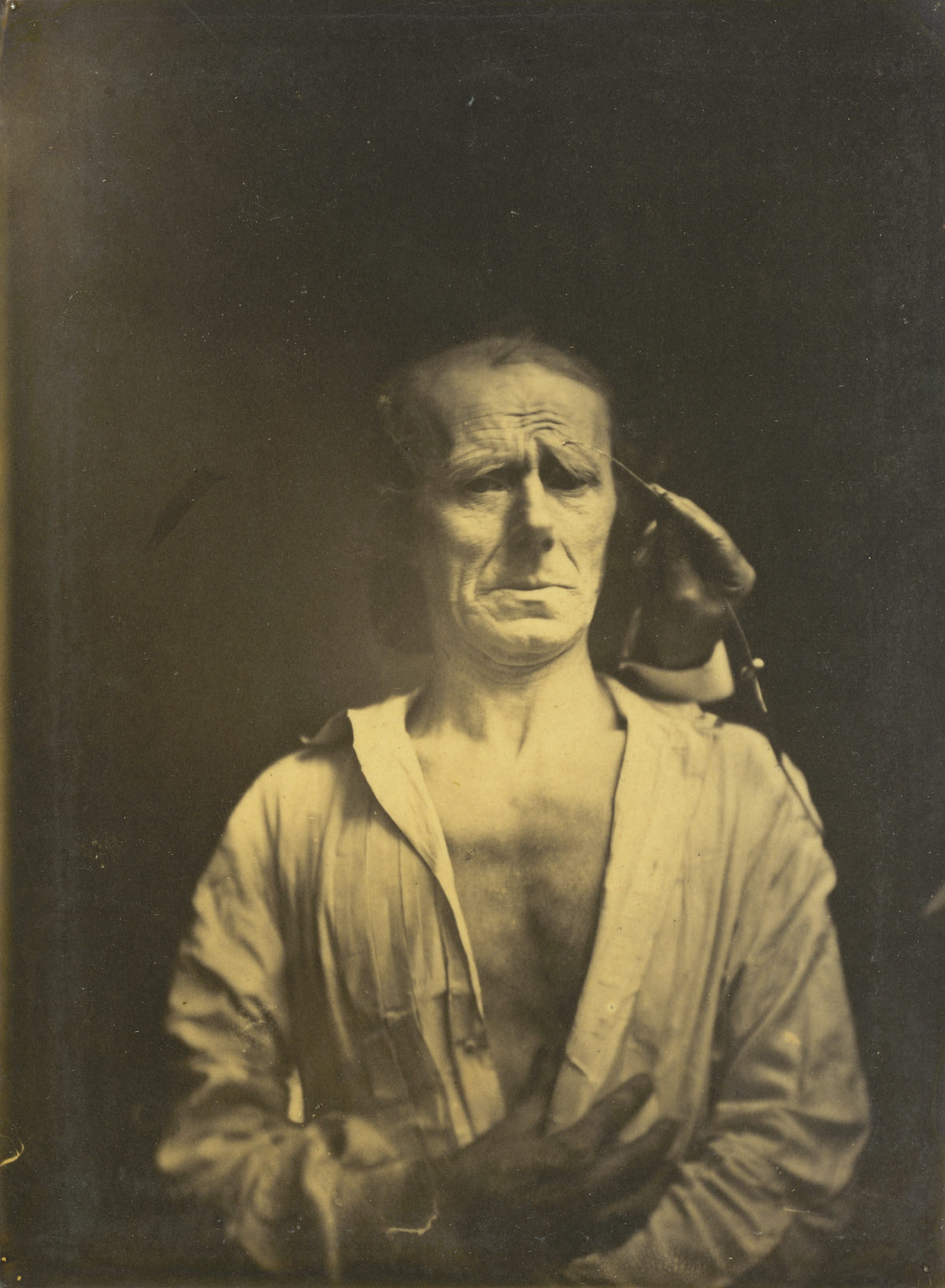
A stern, weathered face emerges from a dark backdrop, the sitter’s features shaped by hard light and deep shadow. The brow is furrowed, the mouth held tight, and yet the title—“No painful expression”—invites a second look, as if endurance itself is being measured. An open, collarless shirt and bare chest lend the portrait an unguarded honesty, while the soft focus and aged tonal range place it firmly in the realm of early photographic art.
Behind the man, a partly hidden hand reaches in with a thin instrument near the temple, a small gesture that changes the whole mood of the scene. Whether the act is medical, cosmetic, or performative isn’t stated, and the ambiguity becomes the story: a controlled face under pressure, captured at the exact moment tension might have betrayed him. The contrast between the plain clothing and the intimate intrusion adds a strange theatricality, hinting at studio experimentation or documentation rather than a simple likeness.
For readers drawn to historical photography, portraiture, and the history of artworks, this image offers a compact lesson in how much can be communicated without context. It is an examination of expression—what is shown, what is suppressed, and what a camera can demand from its subject. The result is a haunting vintage portrait that stays with you, not for spectacle, but for the quiet challenge posed by a face determined to reveal “no painful expression.”