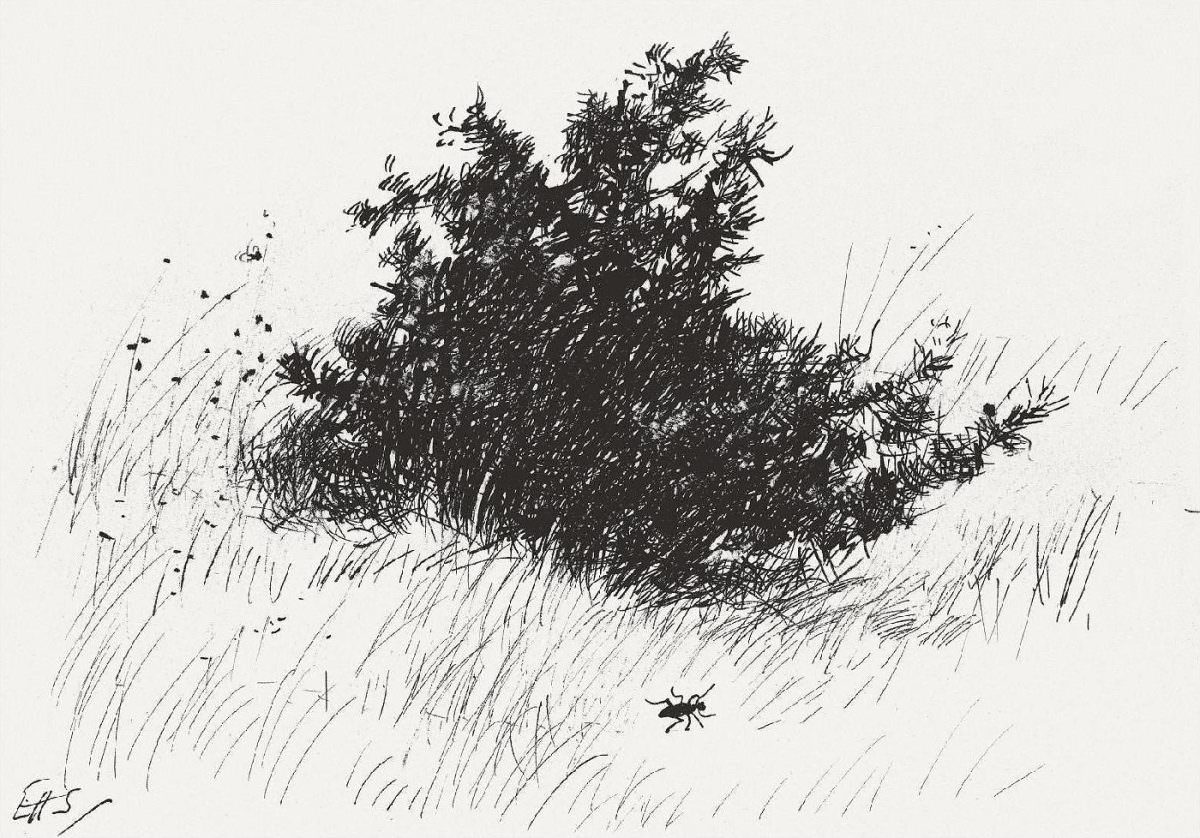
Ink lines gather into a dark, bristling thicket set against wide, airy paper, where quick strokes of grass suggest a breeze across an open field. A tiny creature—almost a footnote in the landscape—moves near the bottom of the composition, emphasizing scale and the gentle humor of being small in a big world. The artist’s initials at the corner quietly anchor the piece as an authored moment rather than mere decoration.
Ernest Howard Shepard’s illustrations for Winnie the Pooh are often remembered for their characters, yet scenes like this reveal how much atmosphere he could summon with economy and wit. The dense shrub feels alive through layered crosshatching, while the surrounding emptiness becomes its own kind of storytelling space—an invitation to imagine the Hundred Acre Wood just beyond the page. That balance of detail and restraint is part of why Shepard’s line work still reads as both classic book illustration and confident standalone art.
Readers and collectors searching for “E. H. Shepard Winnie the Pooh illustrations” will recognize the signature charm: natural textures, playful scale, and a timeless sense of English countryside calm without relying on grand spectacle. This post highlights the artistry behind the classic tale artworks, where even a simple patch of brush becomes a stage for wonder. Spend a moment with the marks and margins, and the story begins to unfold in the quiet places.