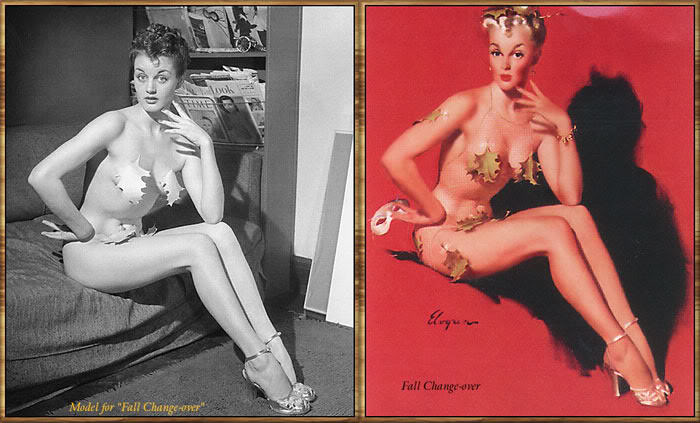
Side by side, a studio reference photo and its finished pin-up painting reveal how “real women” were transformed into effortlessly glamorous icons. On the left, the model sits on a simple couch in a practical setting, her pose carefully arranged and her expression poised, with magazines stacked in the background like a reminder of everyday life. On the right, that same pose becomes a polished illustration against a bold, flat backdrop, where lighting, color, and the illusion of perfect skin turn a working session into fantasy.
What makes this comparison so compelling is the visible hand of the artist—subtle shifts in contours, smoother transitions, and a more theatrical sense of depth that changes how the body reads at a glance. The painted version heightens contrast and drama, turning studio realism into an idealized pin-up style that feels both intimate and unattainable. Even the small decorative details and stylized highlights do more than embellish; they guide the eye and reinforce the era’s advertising-friendly concept of beauty.
Viewed today, these “before and after editing” pin-up models offer a valuable lesson in visual culture, retouching, and the long history of image manipulation. The pairing invites readers to look past the final artwork and appreciate the labor behind it: the model’s stamina, the photographer’s setup, and the illustrator’s choices that defined a classic look. For anyone interested in vintage pin-up art, mid-century illustration, or the evolution of beauty standards, this post is a reminder that the legend began in an ordinary room, one pose at a time.