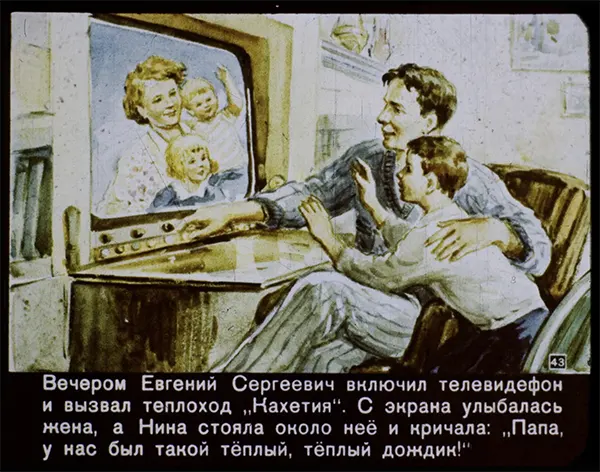
Evening light and the hush of a domestic room frame a quietly dramatic act: a father settles into an armchair, one arm around a child, reaching toward the controls of a televideo-phone. On the screen, a smiling woman appears with children gathered close, turning a routine check-in into a shared moment of warmth across distance. The scene reads like a promise that technology can shrink seas and schedules, letting family life continue even when work pulls someone away.
The title’s mention of a call to the “Kakhetiya” ship points to a maritime separation, while the illustration leans into tenderness rather than hardship. Soft, painterly lines emphasize faces and gestures—hands on a panel, bodies leaning in, eyes locked on the glowing rectangle—suggesting the novelty and wonder of video communication. It’s an artwork that blends everyday intimacy with a forward-looking fascination, capturing the feeling of being together without being in the same place.
Beneath the image, the printed Russian caption anchors the story in its original context, adding the child’s excited report about a “warm, warm little rain” and giving the moment a lived-in, conversational texture. For readers interested in Soviet-era visual culture, early visions of telephony, or the history of communication technology, this post offers a rich example of how artists imagined the future inside the home. Family, shipboard life, and screen-mediated connection converge here in a small tableau that still feels surprisingly familiar.