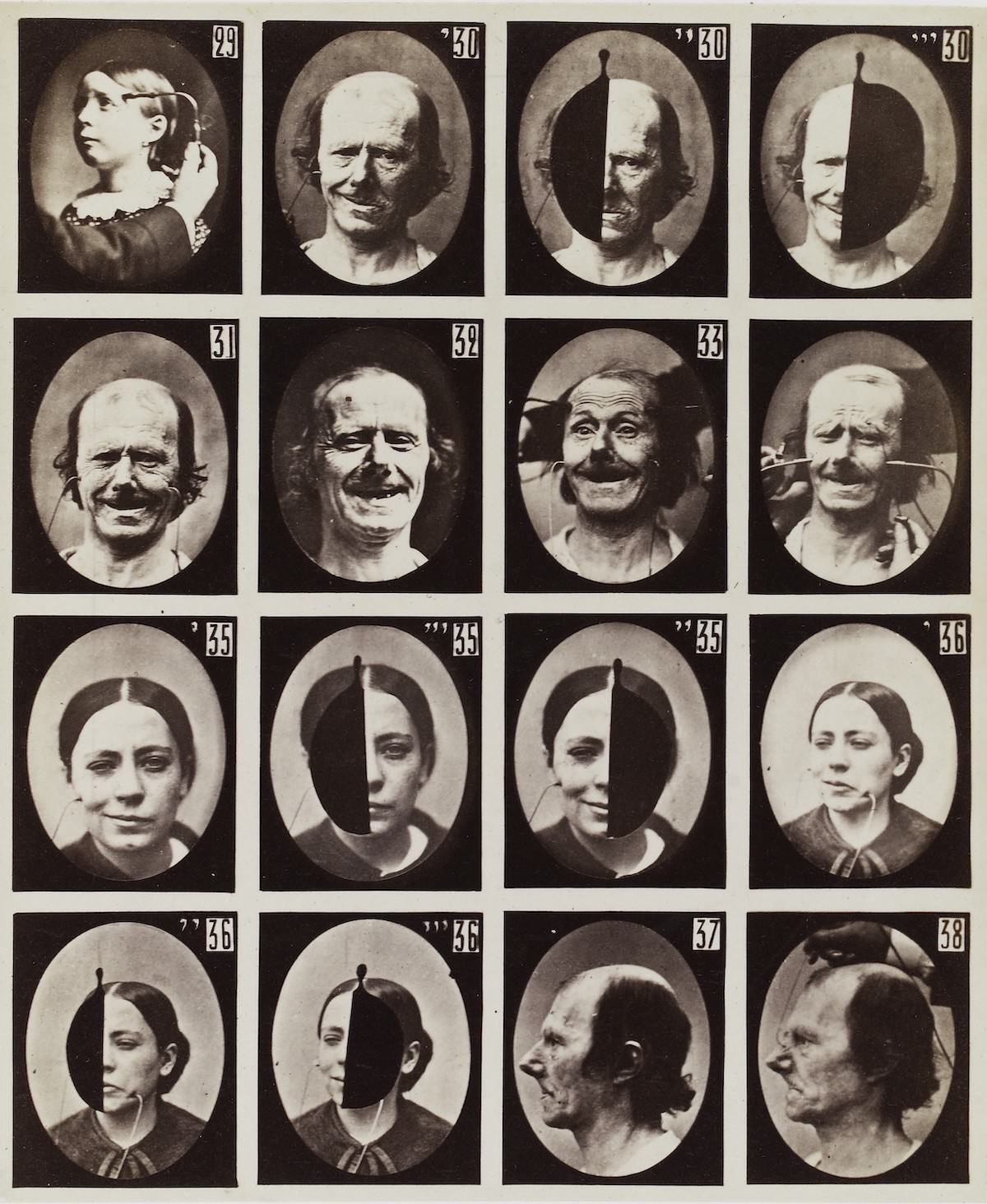
A grid of numbered oval portraits confronts the viewer with faces caught mid-expression—smiles stretched, brows tightened, and cheeks pulled into strange symmetry. Wires and small electrodes appear at the temples and corners of the mouth, hinting at an experimental setup rather than a studio sitting. The result is both clinical and theatrical, a visual argument that emotion can be mapped, measured, and reproduced.
Guillaume-Benjamin-Amand Duchenne de Boulogne’s “Mechanism of Human Physiognomy” sits at a crossroads of early photography, anatomy, and the history of ideas about the face. Several plates split the visage into light and shadow or isolate one half, inviting comparison between natural expression and induced movement. Each numbered frame reads like a catalog entry, turning fleeting feelings into a sequence that could be studied like specimens.
For modern readers, these illustrations are gripping artifacts of how science once tried to translate inner life into visible signs. They also make striking historical images for anyone interested in physiognomy, medical photography, facial expression studies, or the origins of visual documentation in neuroscience. Whether you come for the artistry or the unsettling precision, the series lingers—because it asks how much of a person can be reduced to a muscle, a gesture, or a photographed instant.