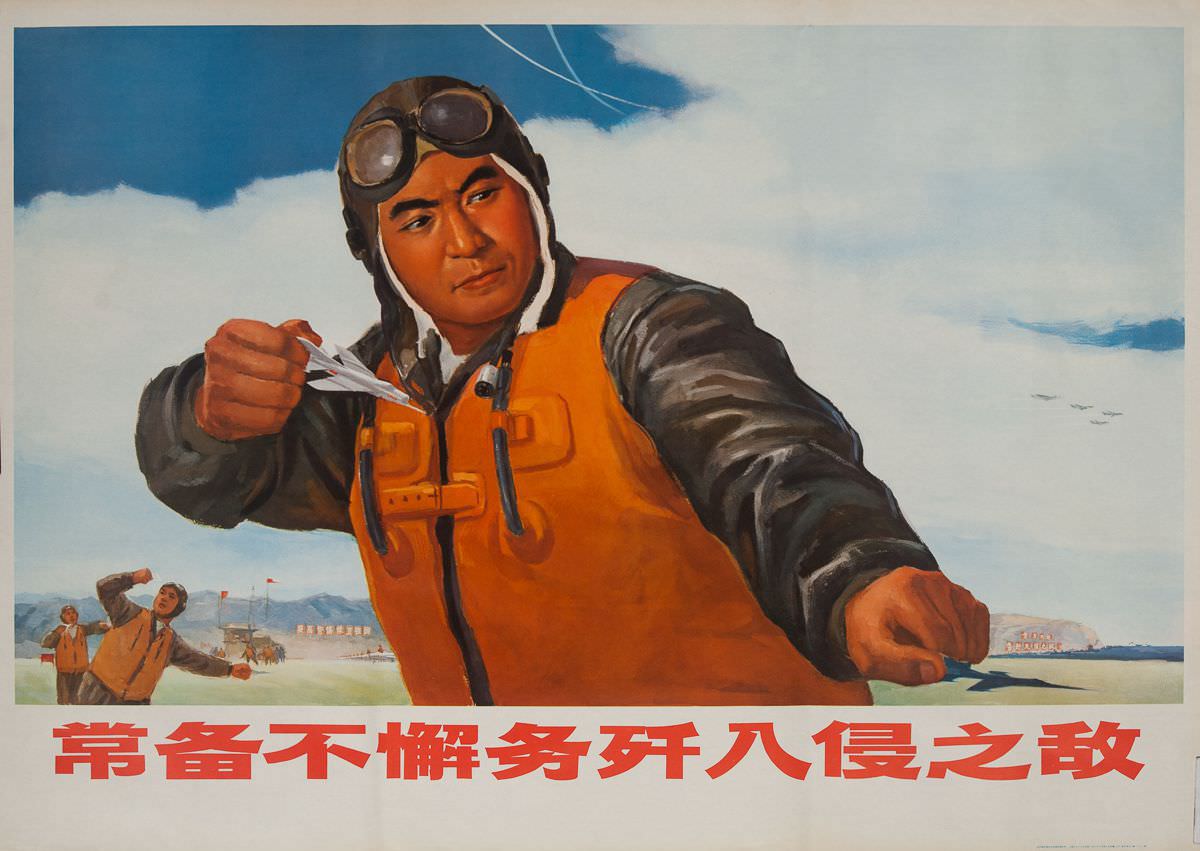
Across a wide, pale-blue sky, a single figure dominates the composition: a bundled pilot in a leather flying cap and large goggles, his bright orange life vest catching the eye like a warning flare. One gloved fist is thrust forward in a forceful gesture, while the other hand appears to grip a small aircraft model or folded paper plane, turning training into something tangible and immediate. The title, “Never Tire of Training to Destroy The Enemy, 1970,” frames the scene as a message of relentless readiness rather than a quiet portrait.
Behind the central figure, the airfield stretches into the distance with smaller trainees in similar gear, flags, and low structures softened by atmospheric perspective. A few aircraft silhouettes hover on the horizon line, reinforcing the aviation theme and giving the artwork a sense of scale and purpose. The bold red Chinese characters at the bottom function like a command shouted across a parade ground, anchoring the image in the visual language of military propaganda posters.
As a historical artwork, the piece blends heroic realism with clear instructional intent, celebrating discipline, endurance, and collective preparedness. The dramatic foreshortening of the extended arm, the crisp contrast between warm orange and cool sky tones, and the pared-down background all push attention toward the ideal of the trained combatant. For readers interested in Cold War-era political art, aviation history, or Chinese propaganda poster design, this 1970 print offers a vivid window into how training and loyalty were communicated through image and slogan.