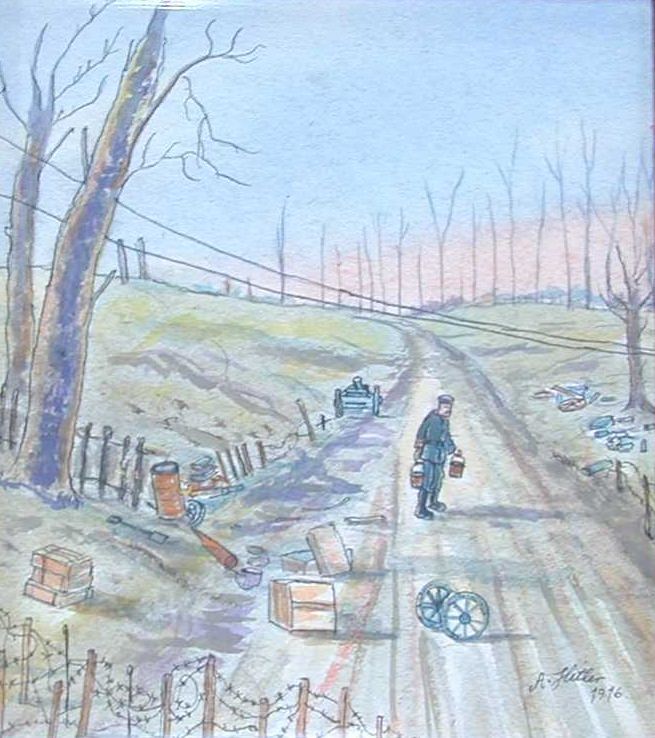
A pale road runs forward into a scarred horizon, bordered by barbed wire and the skeletal trunks of shattered trees. The landscape feels emptied out, yet the ground is cluttered with the practical debris of conflict—crates, a loose wheel, and a discarded gun—small objects that hint at bigger upheavals beyond the frame. Rendered as artwork rather than a straight documentary shot, the scene still carries the weight of a wartime front, where even open air seems tense and provisional.
Near the center, a lone figure stands in the roadway with a can in hand, paused as if listening for what cannot be seen. Ahead, a small cart sits on the track, while the road itself—rutted and muddy—pulls the eye toward the distant line where safety and danger blur together. “Road to No Man’s Land” works because it refuses spectacle; it tells its story through silence, distance, and the uneasy order of supplies left exposed.
For readers searching for World War I imagery, trench warfare landscapes, or historical wartime art, this piece offers a haunting, SEO-friendly entry point into the everyday geography of the Western Front. The soft color washes and careful linework contrast sharply with the subject, making the devastation feel both immediate and strangely calm. As a WordPress post feature, it invites reflection on how artists and witnesses translated the no-man’s-land experience into scenes that still resonate long after the guns fell quiet.