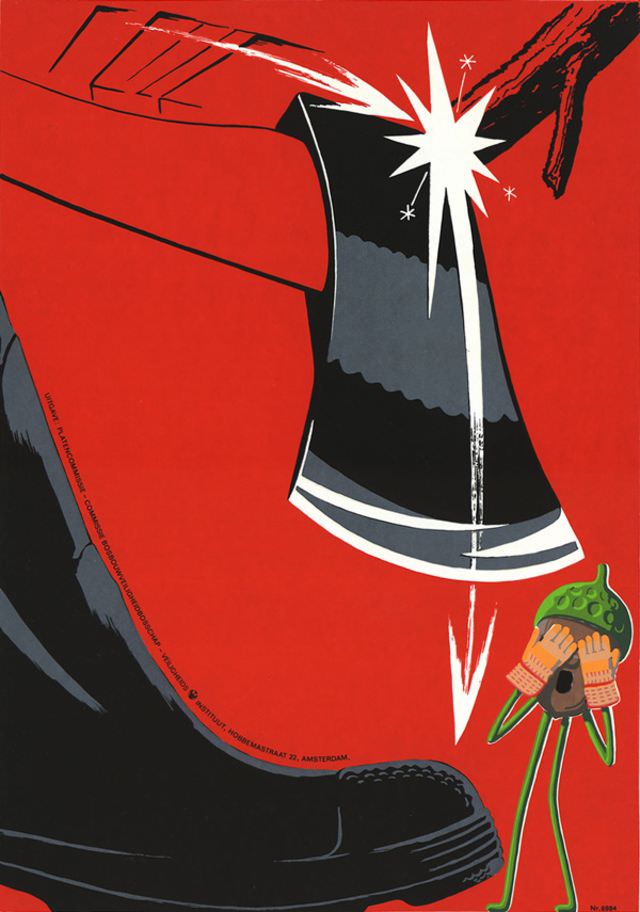
Bold fields of red dominate this 1963 artwork, where a heavy black boot and a raised axe compress the scene into a single, urgent moment. A white starburst at the axe head reads like a strike—part impact, part warning—while the simplified forms and hard edges lean into the graphic language of mid-century poster design. Even without a credited designer, the composition feels deliberate: minimal details, maximum force, and a palette chosen to stop a viewer in their tracks.
At the lower right, a small green figure with long legs covers its face, shrinking in the shadow of the larger shapes. That contrast in scale—tiny vulnerability against oversized authority—turns an otherwise abstract arrangement into a clear narrative of intimidation and fear. The slashing diagonals, cropped elements, and stark black-and-white accents heighten the sense of motion, as if the scene is unfolding just beyond the frame.
Designer unknown, 1963 invites close looking not for biographical clues, but for the way visual symbols can carry social meaning. The piece works well in conversations about political poster art, protest graphics, and modernist illustration, where reduction and exaggeration become tools of persuasion. As part of a collection of artworks, it stands as a memorable example of how a single image can suggest conflict, power, and human cost with almost no words at all.