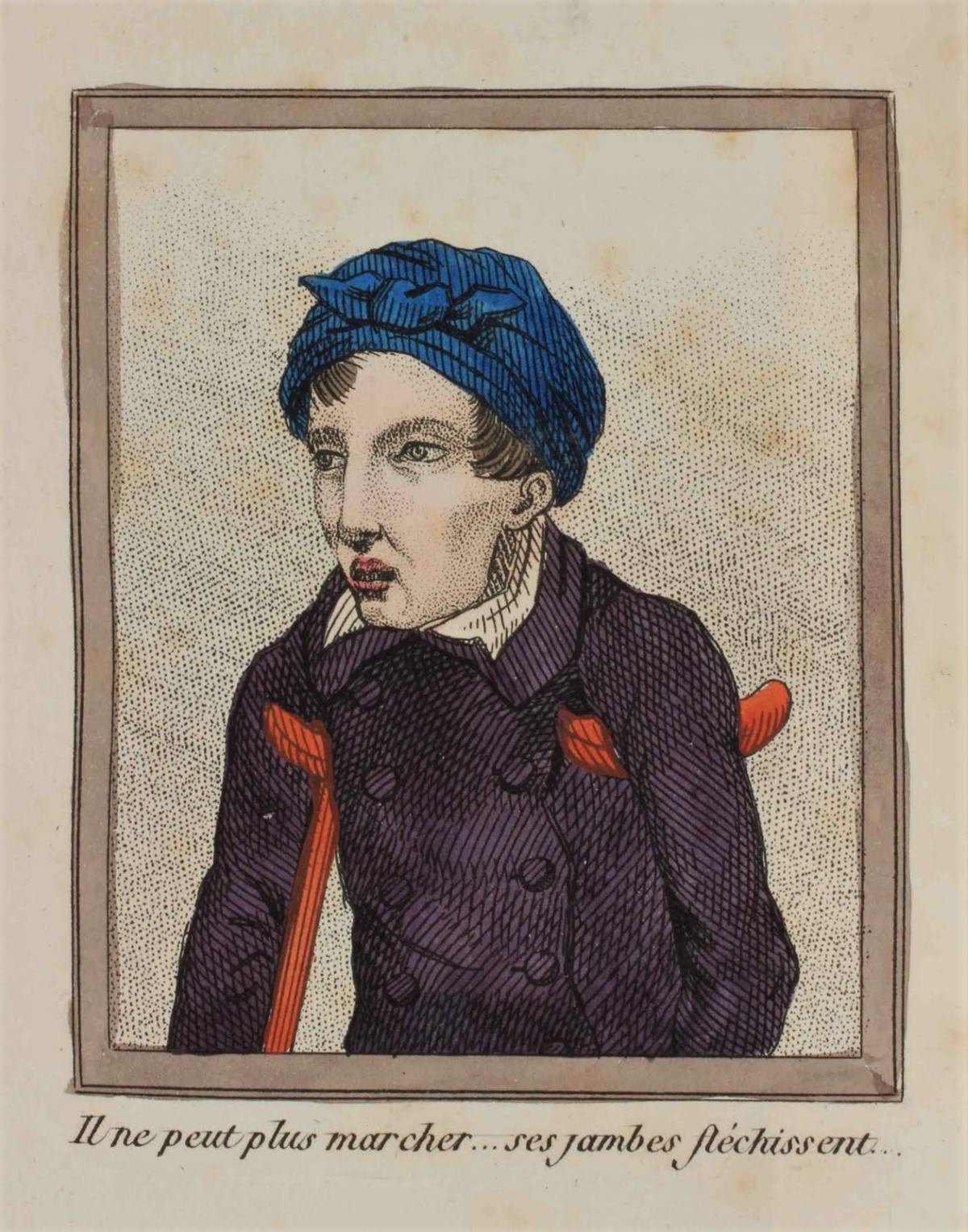
A young figure faces left in a carefully framed, hand-colored print, his expression tense and slightly open-mouthed as if caught between effort and resignation. A deep blue headwrap draws the eye first, followed by a dark, buttoned coat rendered with tight crosshatching, the artist’s linework giving the fabric weight and grit. Behind his shoulders, the curved handles of crutches rise in orange-red accents, quietly announcing the struggle named in the title.
Beneath the portrait, a French caption echoes the same bleak truth: he can no longer walk; his legs weaken and give way. The phrasing feels clinical yet intimate, a reminder that earlier centuries often taught the public about illness and disability through images like this—part observation, part moral lesson, part documentation. Instead of showing a full scene, the artist compresses the story into posture and props, letting the crutches and the strained face do the speaking.
For readers interested in historical artworks, medical history, and the visual culture of disability, this piece offers a striking example of how everyday suffering was translated into prints meant to be seen, circulated, and remembered. Its restrained background keeps attention on the subject, while the selective color highlights the elements most tied to movement and dependence. As a WordPress feature, it invites reflection on how societies once described mobility loss—and how a single portrait can still carry that weight across time.