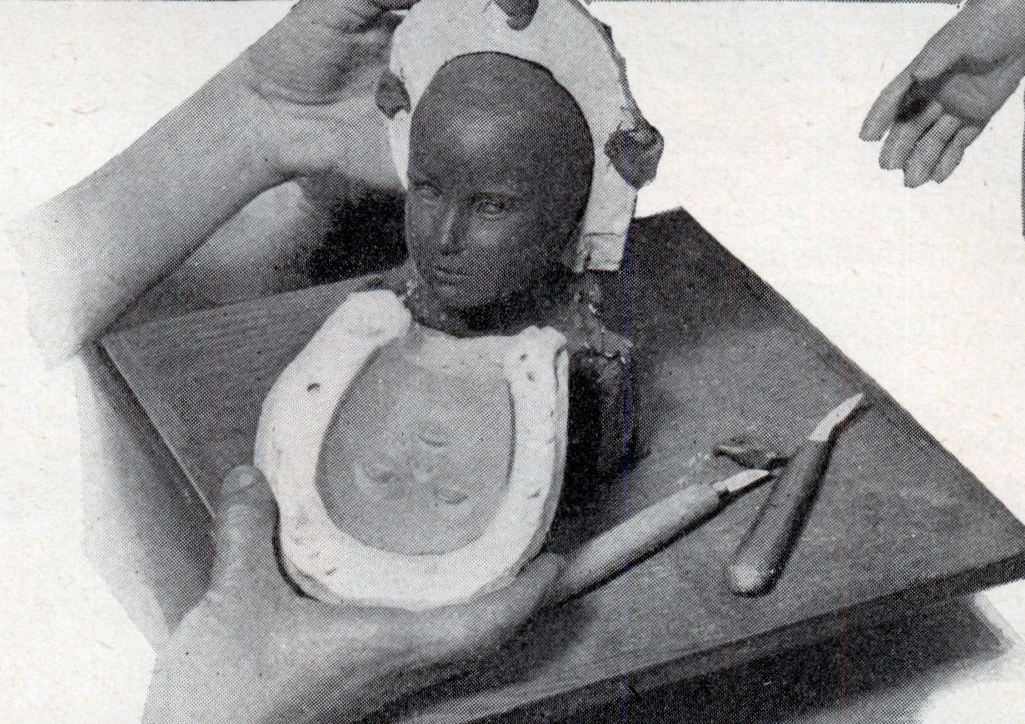
Hands hover over a small sculpted head while a pale casing is eased into place, freezing the artist’s final touches before the clay can change. The title points to the pivotal workshop moment: once the clay model is finished, it becomes the “original” used to create a plaster-of-Paris mold. In this close view, the contrast between dark clay and bright plaster makes the process legible at a glance, turning studio technique into a quiet drama of preservation.
Along the bust, the mold appears in sections—snugly fitted pieces that can be removed and reassembled—showing how artisans captured undercuts and delicate contours without damaging the sculpture. Simple tools rest on the work surface nearby, reminders that much of sculpture’s history is built on patient, manual labor rather than spectacle. Every seam and edge matters, because the mold will later determine the crispness of the cast and the fidelity of the final artwork.
For readers interested in historical art processes, this photo offers an SEO-friendly window into plaster mold making, clay modeling, and traditional casting methods used in sculpture studios. It also underscores a larger story: replication in art is rarely mechanical, but a chain of careful translations from clay to plaster to finished form. Even without a named artist or dated workshop, the scene preserves the universal language of craft—steady hands, measured pressure, and a moment when an idea becomes something that can endure.