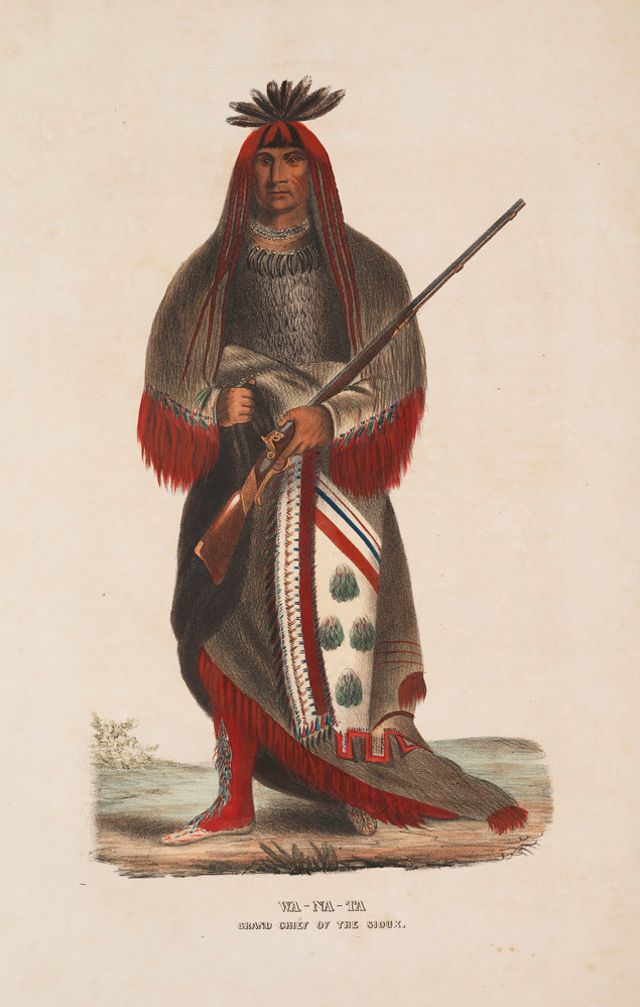
Rendered as a full-length portrait, Wa-Na-Ta is presented with a steady, direct gaze and an imposing stillness that reads like ceremony. A feathered headdress crowns long, red-tinted hair, while layered adornments at the neck and a heavy robe-like wrap create a powerful silhouette against an open, spare background. The careful hand-coloring—especially the reds and soft grays—suggests an artwork made to be both documentary and decorative, a polished representation meant for viewers far beyond the Plains.
Details of clothing and regalia draw the eye: fringed edges, patterned trim, and moccasins set off by bands of color that echo across the figure. A long firearm rests across his body, held with composure rather than drama, signaling status and the realities of an era shaped by trade, conflict, and shifting power. Beneath the figure, the printed caption “WA-NA-TA, GRAND CHIEF OF THE SIOUX” anchors the image as a named likeness, inviting readers searching for Sioux leadership, Native American portraits, and nineteenth-century prints to pause and look closer.
As with many period depictions of Indigenous leaders, the portrait sits at the crossroads of observation and interpretation, reflecting both what an artist chose to record and what audiences expected to see. The clean backdrop removes specific place and moment, turning the subject into an emblem as much as an individual, even as the craftsmanship preserves texture, posture, and presence. For collectors of historical artworks and anyone researching representations of Sioux chiefs in printed art, this image offers a striking example of how Native authority and identity were framed in widely circulated visual culture.