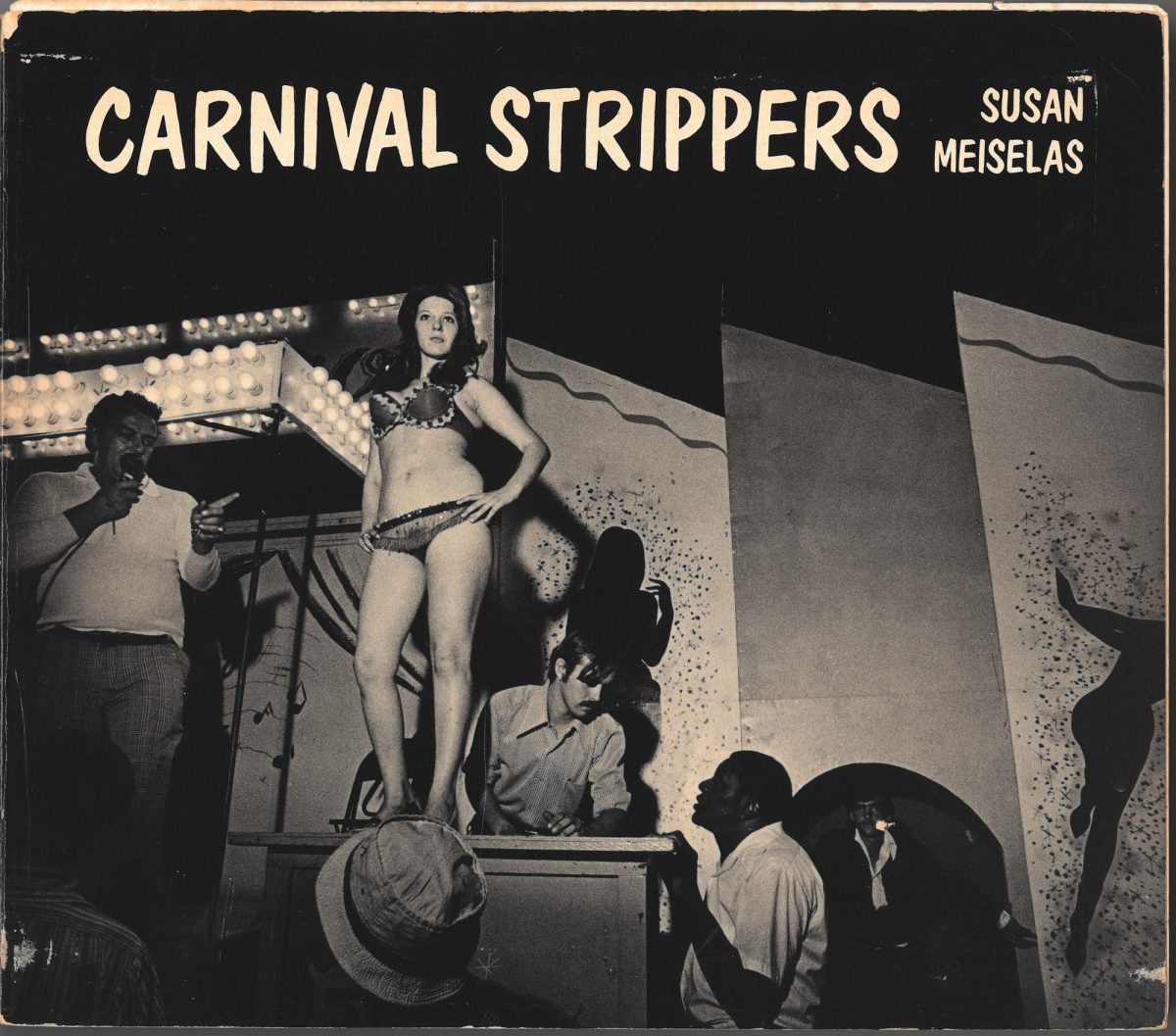
Bold lettering—“CARNIVAL STRIPPERS”—crowns the scene while “SUSAN MEISELAS” sits off to the side, turning the print itself into a kind of announcement. Below the sign, a performer stands elevated on a small platform, framed by carnival bulbs and painted panels that suggest a traveling show’s quick-assembled stagecraft. The composition balances spectacle and structure: bright lights at the left edge, dark negative space above, and a figure posed in the center as the fairground becomes both theater and workplace.
Around the platform, several onlookers and workers occupy the margins, their postures and glances hinting at the social choreography of the midway. A man at left gestures with a cigarette, while another crouches near the stage as if adjusting equipment or collecting payment; others hover in shadow, half-seen. The photo’s grain, contrast, and scuffed border feel like an artifact handled and rehung, echoing the rough-and-ready economy of temporary entertainment.
Susan Meiselas’s name on the print connects the moment to a broader documentary tradition that treats popular culture as serious historical evidence. What lingers here isn’t only the performance but the environment that makes it possible—lighting rigs, painted backdrops, tight spaces, and the uneasy blend of curiosity and labor. For readers interested in Susan Meiselas, Carnival Strippers, and the visual history of American fairs and nightlife, this image offers a textured entry point into the era’s aesthetics and attitudes.