Category: Artworks
Step into the world of timeless artworks that shaped our visual culture. Explore rare paintings, sculptures, and creative masterpieces that reveal the evolution of artistic expression through centuries.From Renaissance genius to modern minimalism, each piece tells a story of imagination, innovation, and beauty that continues to inspire artists and collectors worldwide.
-
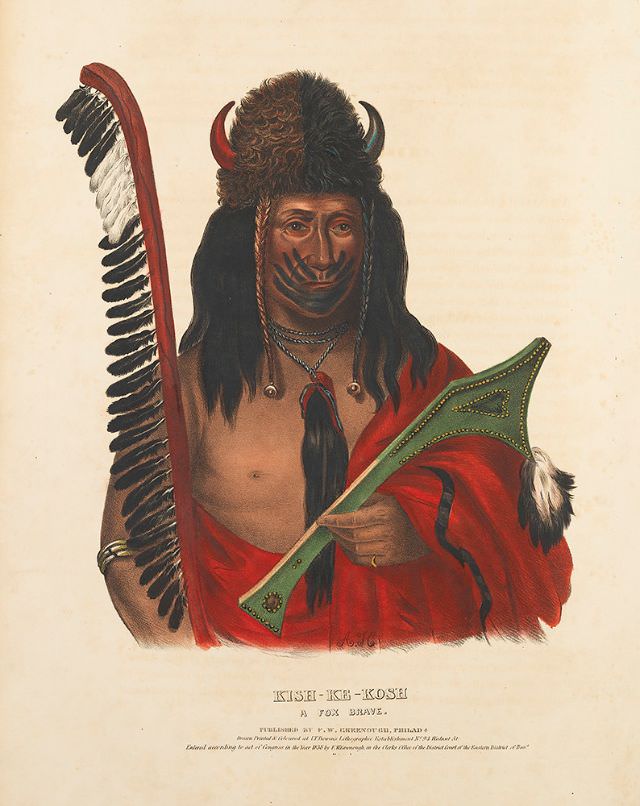
#24 Kish-Ke-Kosh, A Fox Brave
At the center of the composition stands Kish-Ke-Kosh, titled “A Fox Brave,” rendered in a finely detailed, hand-colored style that immediately evokes the world of early American portrait prints. The sitter’s calm, direct gaze is framed by a dramatic headdress with curved horns and dark hair, while bold face paint and carefully drawn jewelry add…
-
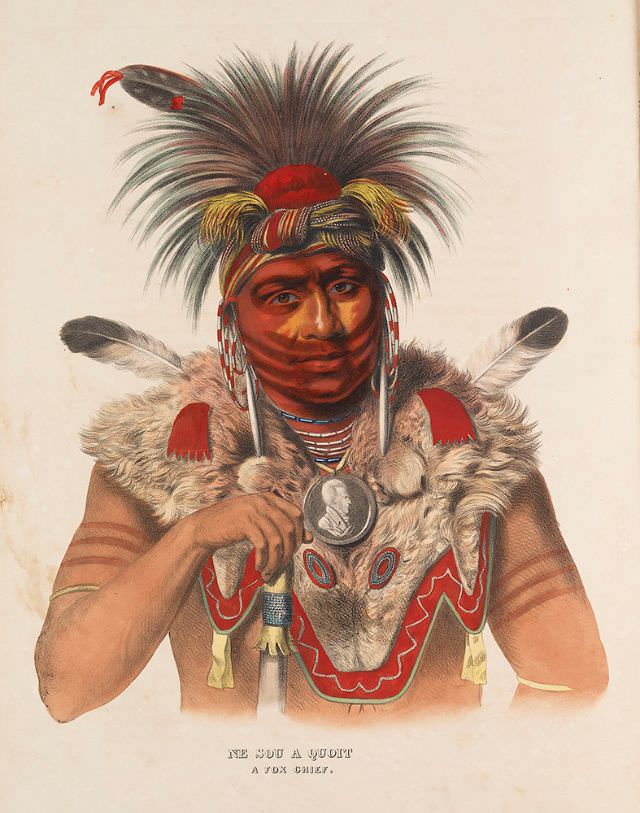
#41 Ne Sou A Quoit, A Fox Chief
Poised in a formal, front-facing portrait, Ne Sou A Quoit is presented as “A Fox Chief,” rendered with the careful attention typical of early ethnographic artworks. The composition centers on his steady gaze and dignified posture, inviting viewers to linger on the details rather than the background, which is left intentionally spare. With the title…
-
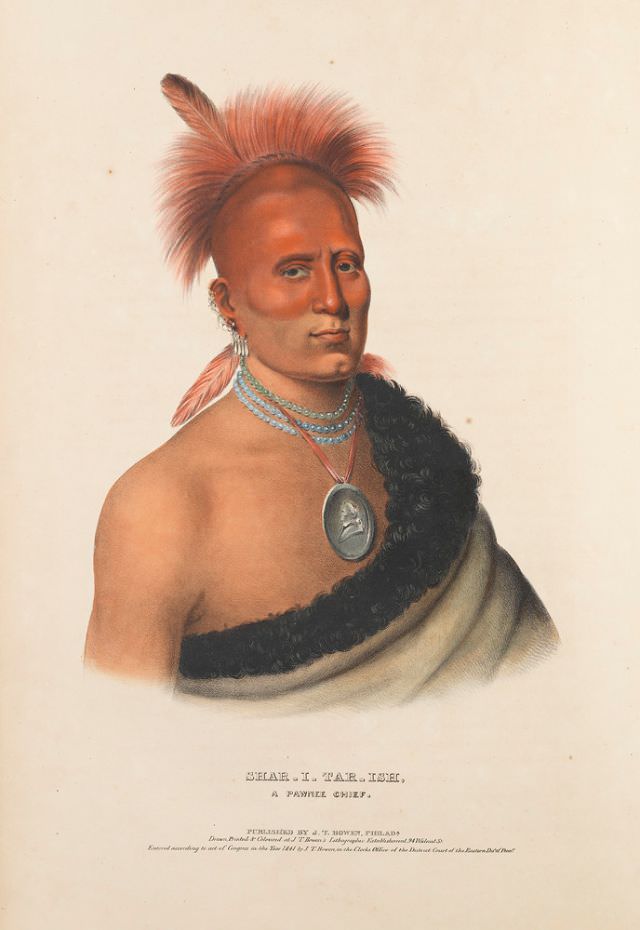
#57 Shar-I-Tar-Ish, A Pawnee Chief
Shar-I-Tar-Ish meets the viewer with a steady, composed gaze in a finely rendered portrait that reads as both artwork and historical document. The sitter’s distinctive hairstyle rises in a fan of reddish plumage, echoed by feather ornaments at the ear, while layered beadwork and a prominent medallion draw attention to the chest. A fur-edged robe…
-
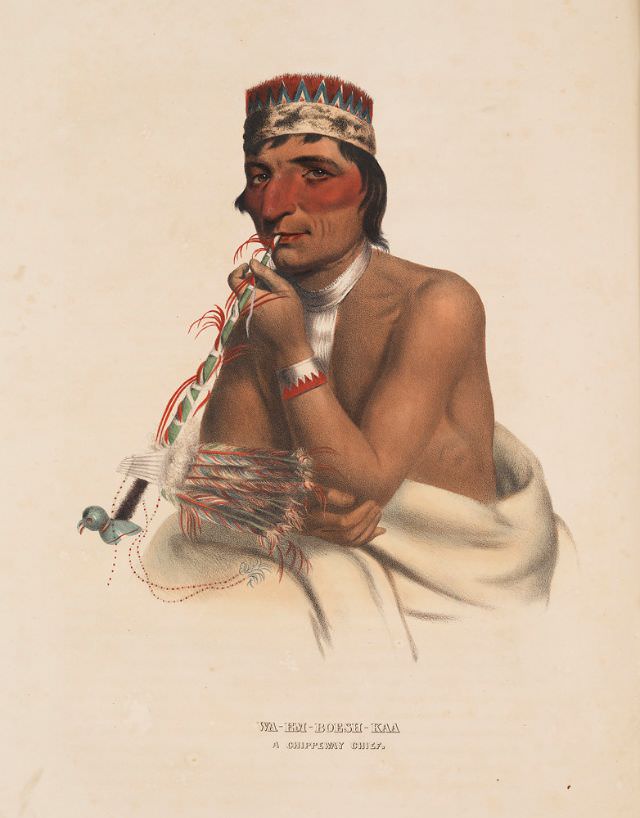
#73 Wa-Em-Boesh-Kaa, A Chippeway Chief
Wa-Em-Boesh-Kaa is presented in a carefully staged portrait that emphasizes presence over spectacle, drawing the viewer first to his steady gaze and then to the crisp detail of his dress. A patterned headband with red and blue accents frames his face, while a light wrap falls across his shoulders and torso, leaving the composition uncluttered…
-
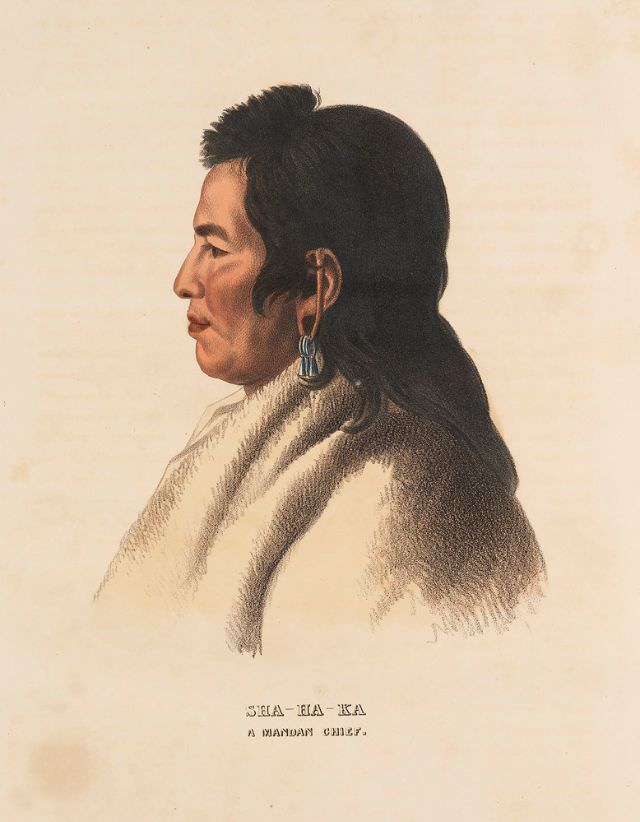
#89 Sha-Ha-Ka, A Mandan Chief
Sha-Ha-Ka is rendered in a striking side-profile portrait that emphasizes presence over ornament, inviting the viewer to linger on expression, posture, and careful detail. Long, dark hair falls behind the shoulder, while a single dangling earring and a pale robe or wrapped blanket provide quiet contrast against the softly tinted background. The inscription beneath the…
-
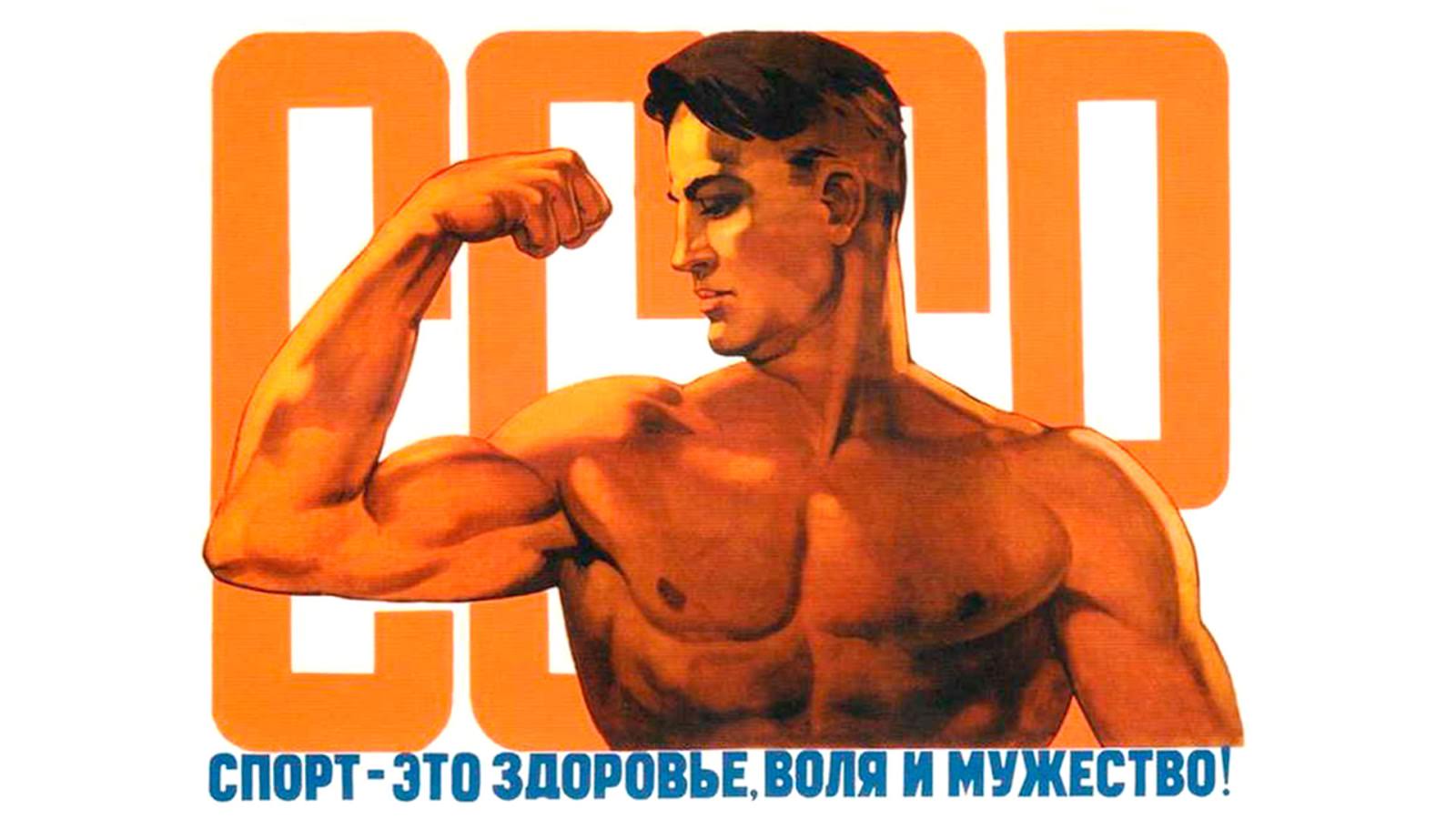
#3 Sport is health, will power and bravery!
Bold color and confident anatomy drive this vintage propaganda-style poster, where a shirtless athlete turns in profile and flexes a raised arm like a living emblem of strength. Behind him, oversized block lettering forms a graphic backdrop that amplifies the sense of scale and certainty, while the warm orange tones give the figure a sculptural,…
-
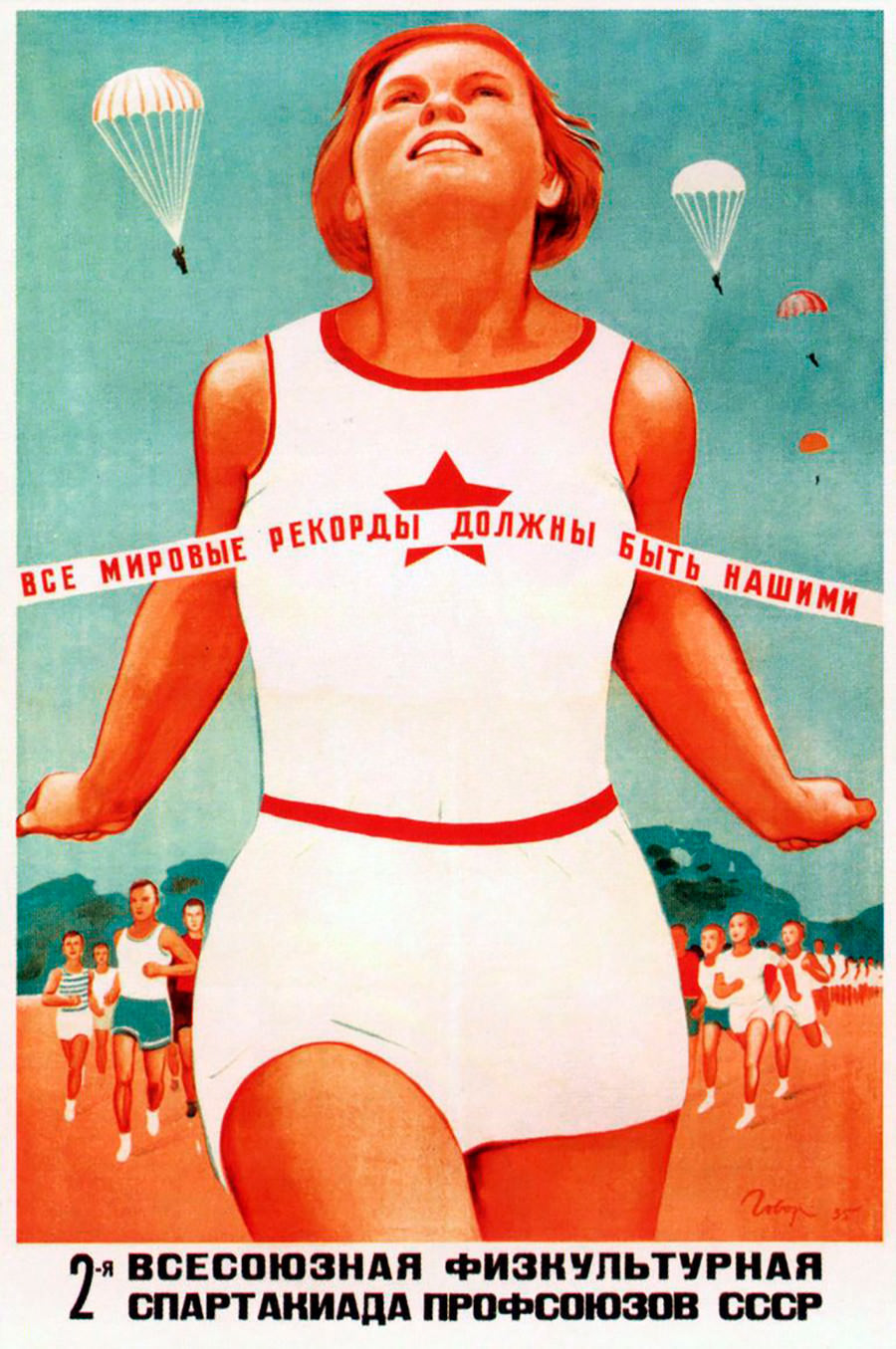
#19 We must set every world record!
A soaring runner dominates the composition, chin lifted toward a wide blue sky as parachutes drift overhead like symbols of daring and modernity. The bold Russian slogan across her chest—echoing the post title’s ambition, “We must set every world record!”—turns athletic effort into a public promise, while the red star and crisp sports kit amplify…
-
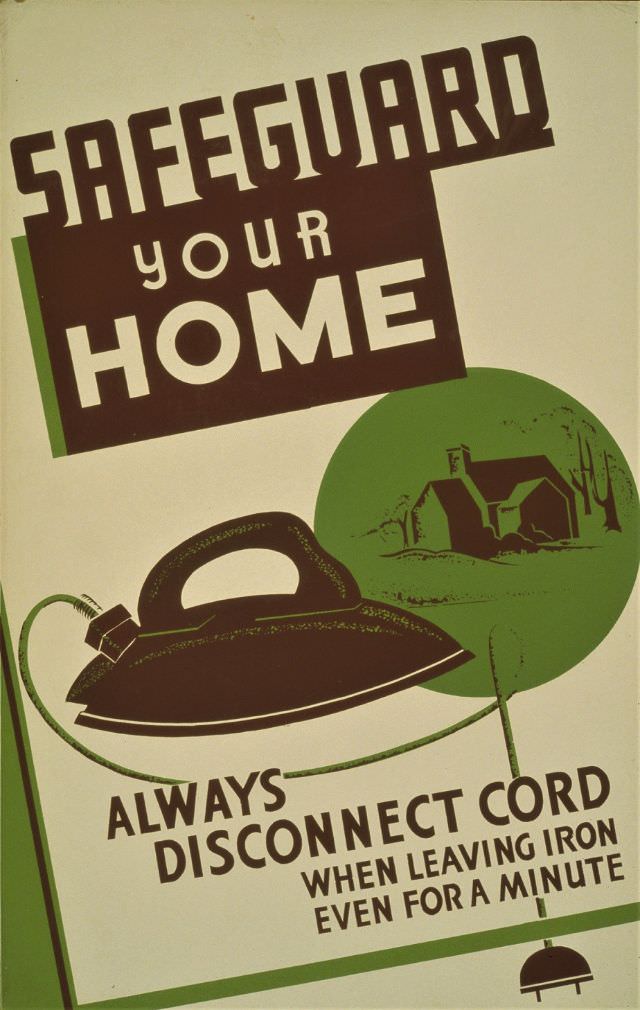
#14 A WPA poster promoting home safety, circa 1940
Bold lettering shouts “Safeguard your home,” setting the urgent, practical tone typical of WPA-era public information art around 1940. The design pairs a clean, modern layout with a limited palette and strong shapes, making the warning easy to read from a distance while still feeling stylish. At its center, an electric iron becomes the main…
-
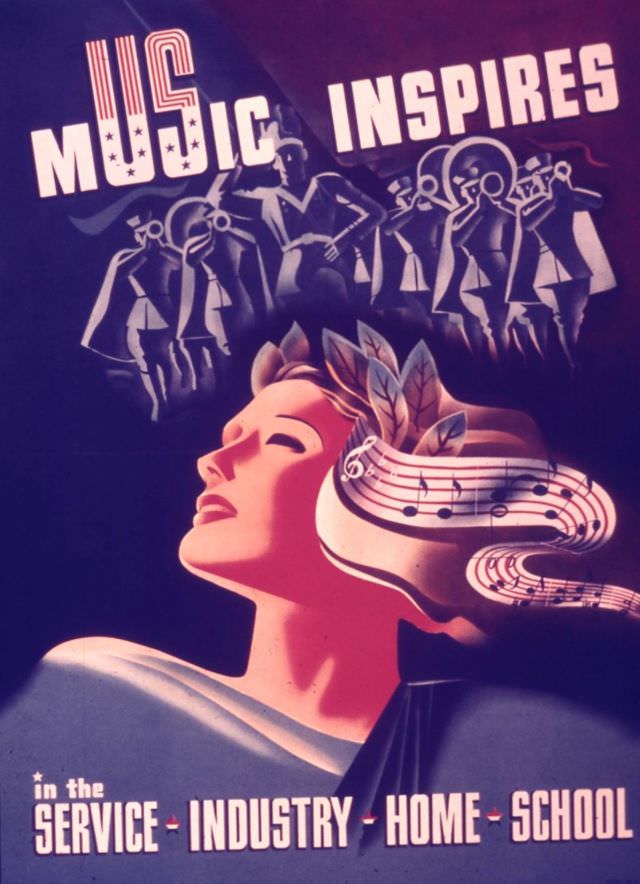
#30 A Works Progress Administration poster touting the importance of music during World War II
Bold lettering—“MUSIC INSPIRES”—dominates this Works Progress Administration-style poster, pushing the message forward like a fanfare. Against a deep, moody background, a band of silhouetted musicians lifts brass instruments, their shapes simplified into a rhythmic procession that feels both modern and urgent. The design uses high contrast and sweeping lines to make sound seem visible, turning…
-
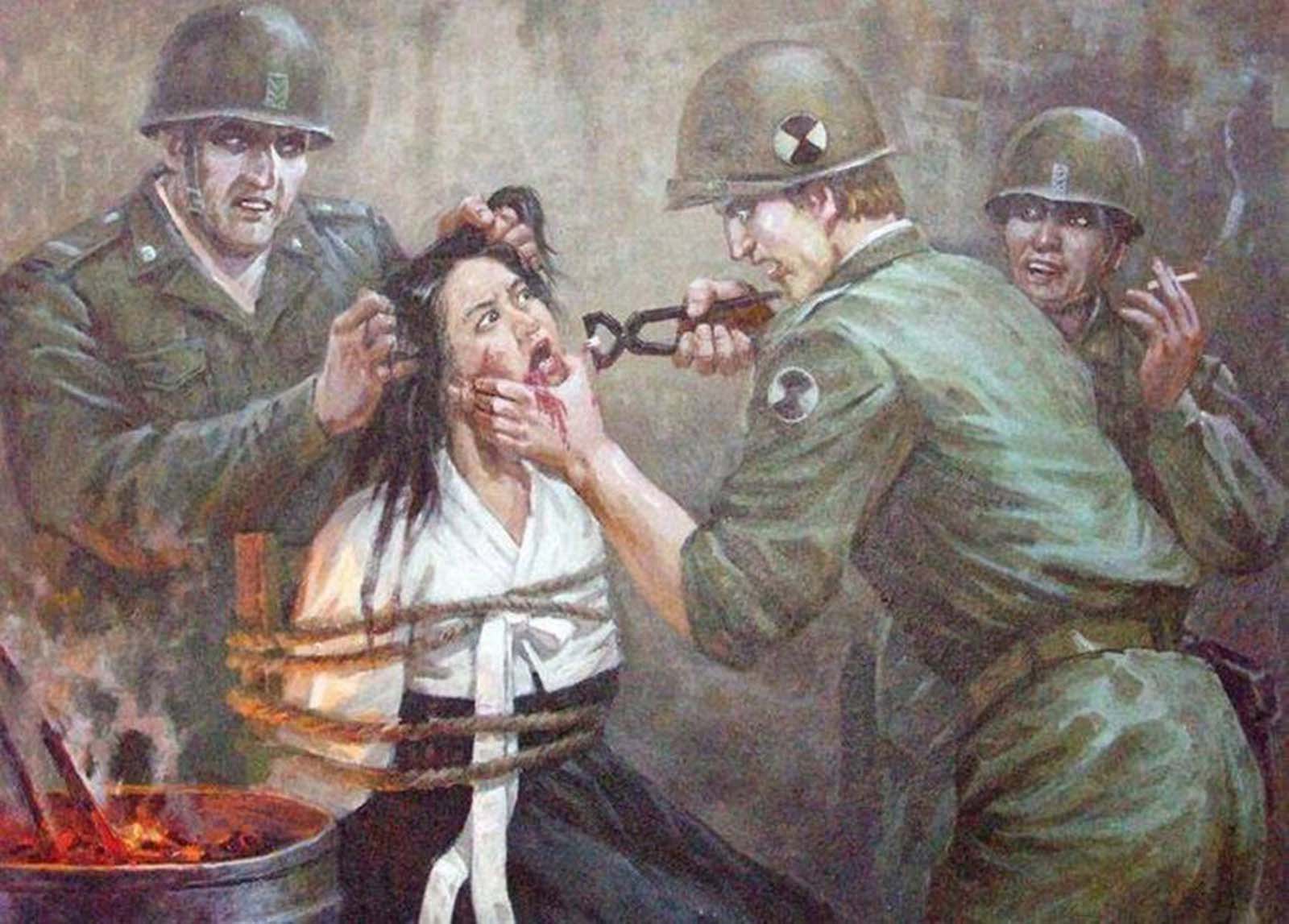
#3 One soldier yanks the teeth from a Korean woman.
A harsh, staged-looking wartime artwork confronts the viewer with a bound Korean woman as uniformed soldiers crowd in, turning her terror into a spectacle. One man grips her face while another appears to use pliers at her mouth, and a third watches with a cigarette, as if violence has become routine. Coarse rope bites across…