Category: Cover Art
Dive into a gallery of vintage cover art from books, magazines, and albums. Discover how graphic design and illustration reflected the moods of their times.
These covers capture the essence of cultural evolution — from bold propaganda to elegant minimalism.
-
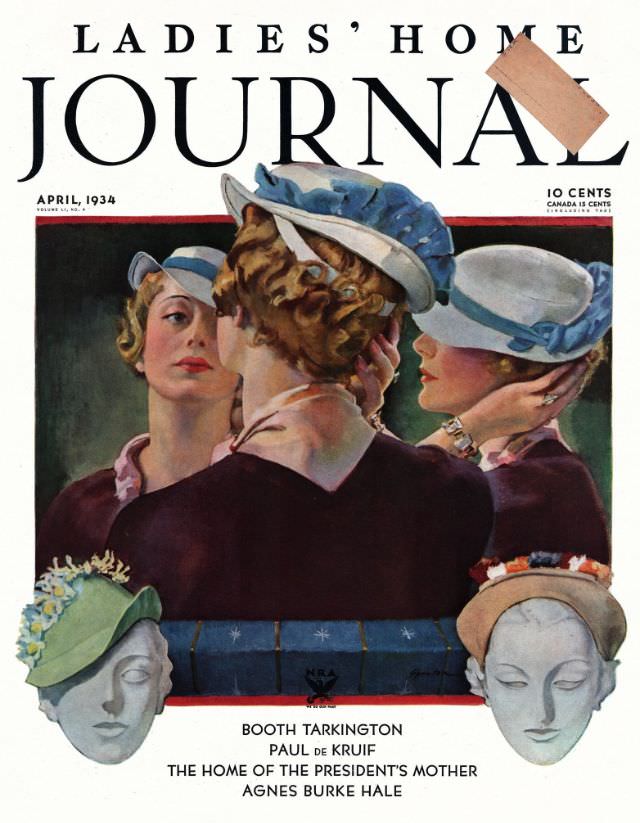
#23 Ladies’ Home Journal, April 1934
Elegance and self-scrutiny take center stage on the Ladies’ Home Journal cover for April 1934, where a stylish woman studies her reflection while adjusting a brimmed, sky-blue hat. The composition cleverly multiplies her presence—one face in the mirror, another in profile—turning a simple moment at the vanity into a small drama about appearance, poise, and…
-

#39 Ladies’ Home Journal, November 1937
Against a deep, velvety blue, the **Ladies’ Home Journal** masthead crowns a glamorous close-up portrait, its soft lighting and carefully arranged waves of hair signaling the magazine’s polished, aspirational style. The cover is clearly marked **November, 1937** with a price of **10 cents**, a small detail that instantly anchors the artwork in an era when…
-
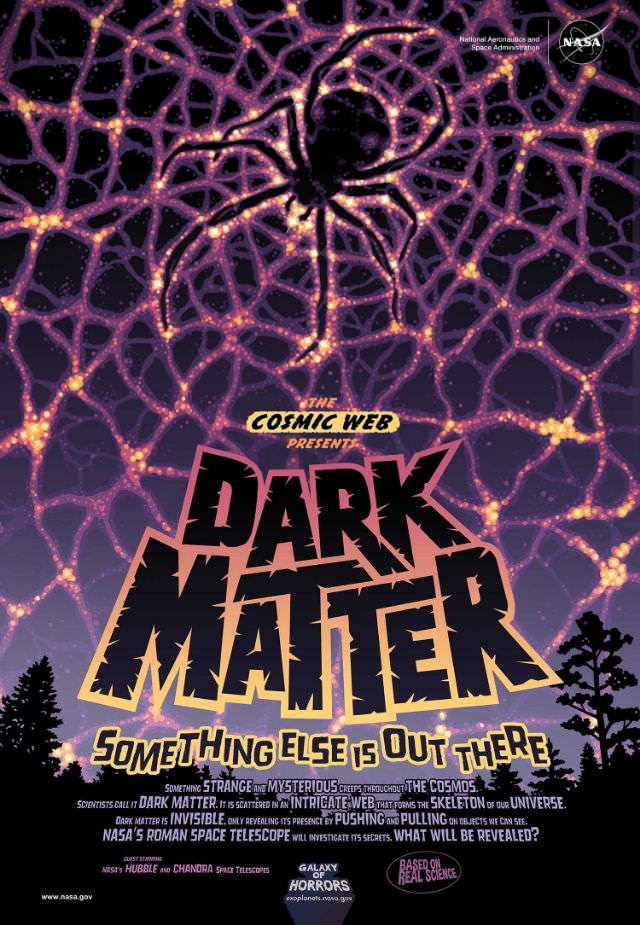
#5 Dark Matter
Against a violet sky crisscrossed by a glowing “cosmic web,” this cover art leans into the central mystery behind the post title, “Dark Matter.” Bright nodes and filaments suggest galaxies strung along invisible scaffolding, while the darkest regions feel deliberately hollow—negative space standing in for what astronomers can’t see directly. A spider motif at the…
-
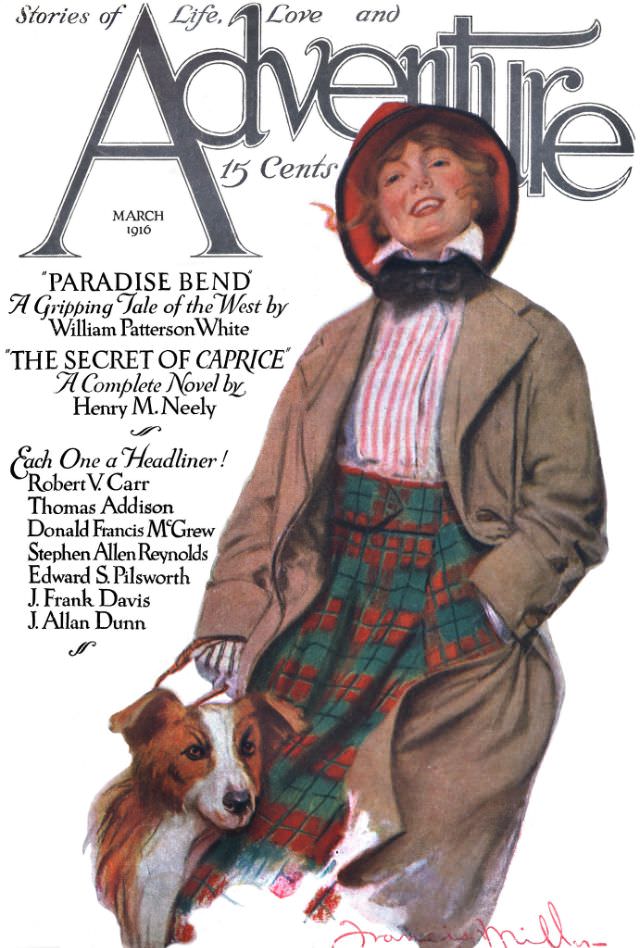
#12 Adventure cover, March 1916
Bold lettering sprawls across the top of the March 1916 issue of *Adventure*, setting the tone for a magazine that promised “Stories of Life, Love and …” at 15 cents. The cover art pairs that confident typography with an outdoor vignette: a smiling figure bundled in a long coat and broad hat, skirt patterned in…
-
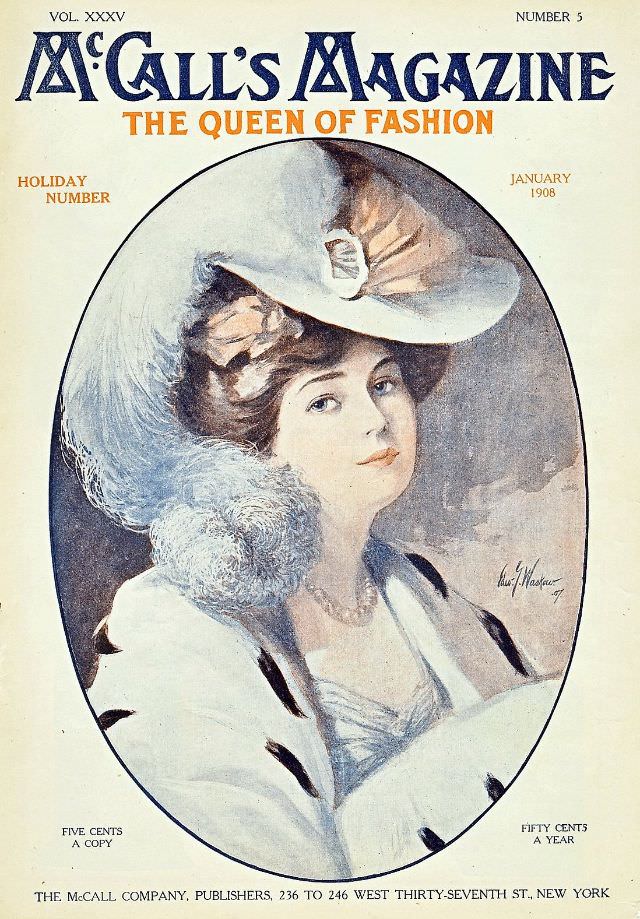
#2 McCall’s magazine cover, January 1908
Bold lettering across the top announces “McCall’s Magazine” and its confident tagline, “The Queen of Fashion,” setting an aspirational tone that feels instantly early 20th century. Marked as the Holiday Number and dated January 1908, the cover balances decorative typography with a large oval portrait that pulls the eye to the figure at its center.…
-
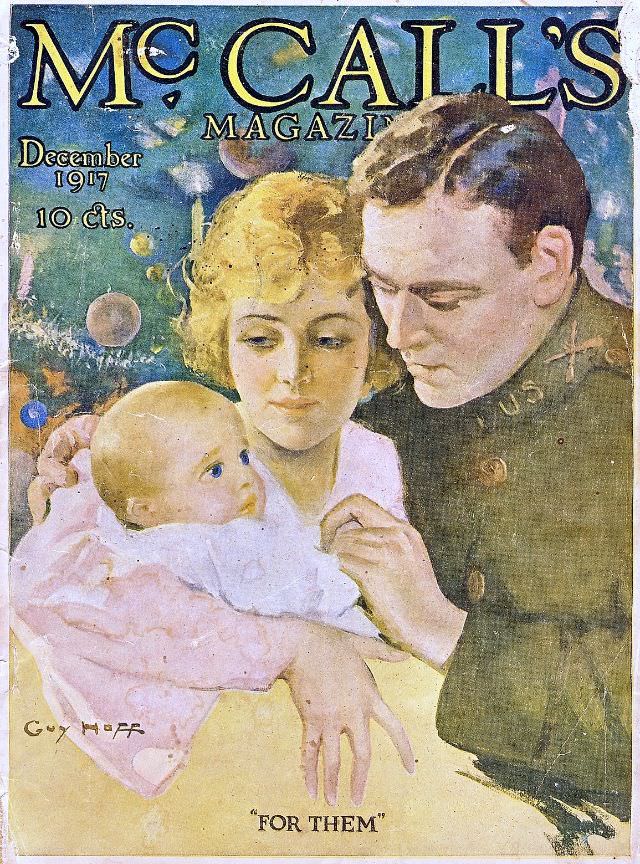
#18 McCall’s magazine cover, December 1917
Across the top, the bold masthead “McCall’s Magazine” crowns a tender December 1917 cover priced at 10 cents, immediately placing the artwork in the world of early twentieth-century American publishing. A softly painted family scene dominates the page: a mother with curled blonde hair cradles a wide-eyed baby while a uniformed man leans in close,…
-
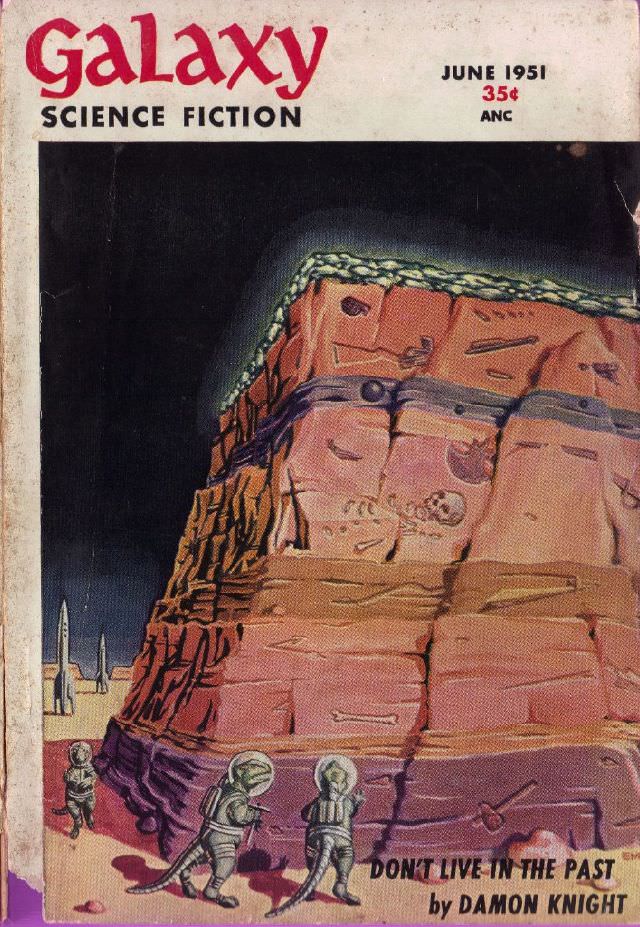
#4 Galaxy Science Fiction cover, June 1951
Bold red “Galaxy” lettering dominates the top margin, with “Science Fiction” beneath it and the issue marked June 1951 at 35¢. The worn paper, softened edges, and faint scuffs are part of the charm, reminding collectors that pulps were made to be handled, traded, and read to pieces. Even before the artwork pulls you in,…
-
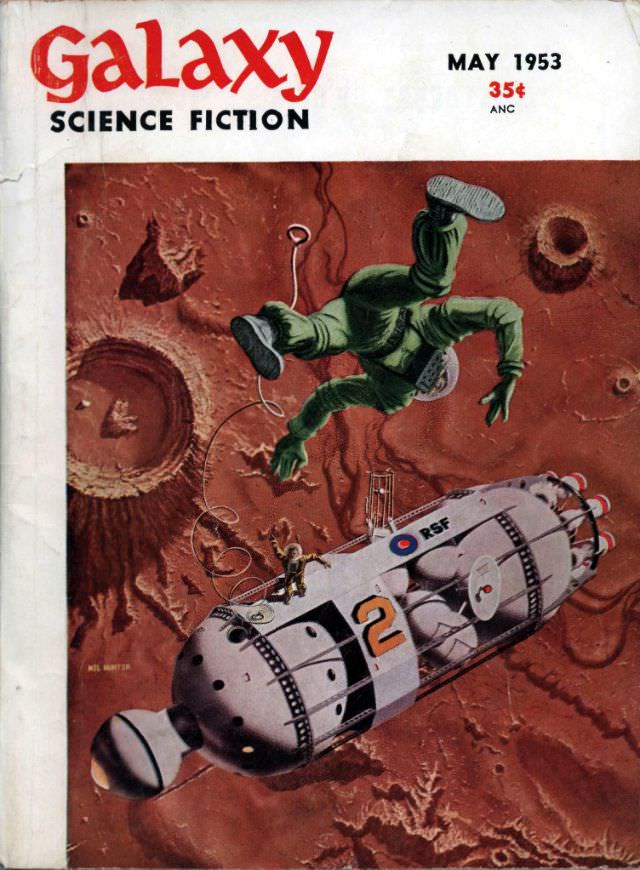
#20 Galaxy Science Fiction cover, May 1953
Bold red lettering announces “Galaxy Science Fiction,” anchoring a May 1953 cover priced at 35¢, with the kind of crisp, mid-century typography that made newsstands feel like portals. The layout balances a clean white header against a richly painted scene below, immediately signaling classic pulp magazine cover art and the optimistic era of early science…
-
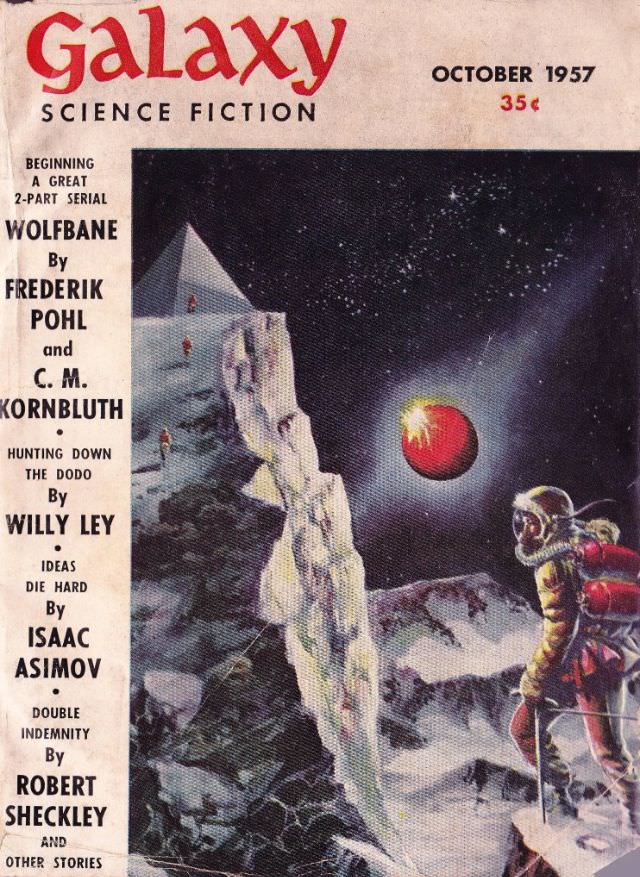
#36 Galaxy Science Fiction cover, October 1957
Bold red lettering crowns the **Galaxy Science Fiction** cover for **October 1957**, with the price marked at **35¢** and a tidy column of featured authors and story titles running down the left. The typography and layout reflect mid-century magazine design at its most confident: eye-catching, information-rich, and built to sell wonder at a glance. Even…
-
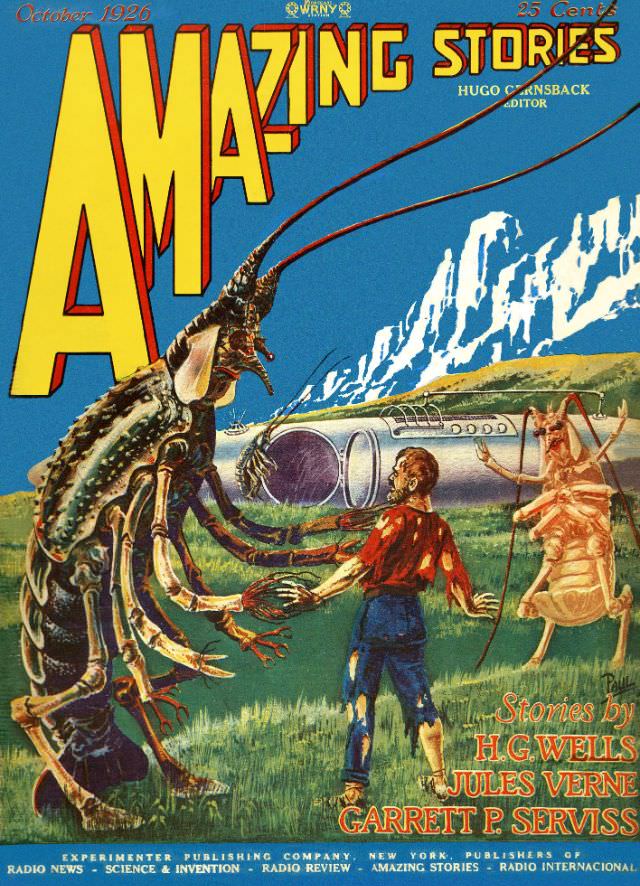
#7 Amazing Stories cover, October 1926
Bold block lettering shouts “AMAZING STORIES” across a saturated sky-blue field, instantly evoking the exuberant design language of early science fiction magazines. The cover is clearly marked October 1926, with “Hugo Gernsback” credited as editor and the price set at 25 cents—small details that anchor the artwork in the era when pulp publications were shaping…