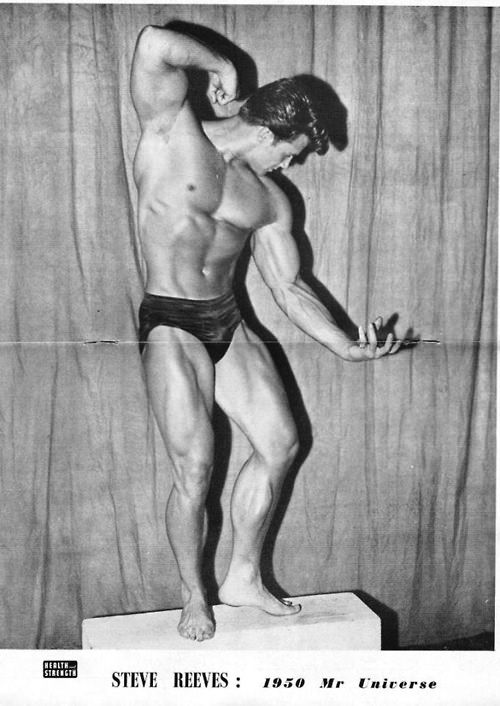
Under the stark stage lighting, Steve Reeves holds a classic bodybuilding pose that turns anatomy into theater—arm arched, torso twisted, and every line of muscle emphasized against a simple curtain backdrop. The composition feels like a studio still and a competition moment at once, with Reeves balanced on a low platform as if presented like a living statue. Even in monochrome, the photo communicates the era’s fascination with symmetry, proportion, and the idealized “classical” physique.
Reeves’ 1950 Mr. Universe title sits at the heart of mid-century physique culture, when bodybuilding was edging from niche contests into mainstream celebrity. The trunks, the curtained stage, and the formal presentation evoke a time before modern mass and hyper-definition became the standard, when judges and audiences prized a sculptural look that could be read from the back of a hall. It’s a reminder that the sport’s history is as much about aesthetics and performance as it is about training.
Collectors of celebrity memorabilia and fitness history alike will recognize why images like this remain so searchable today: they link the golden-age ideal to the broader world of entertainment. The printed caption at the bottom—“STEVE REEVES : 1950 Mr Universe”—anchors the photograph as a document, not merely a flattering portrait, and adds to its archival appeal. For WordPress readers exploring vintage bodybuilding, classic physique icons, or Mr. Universe history, this post preserves a striking snapshot of how Reeves was presented at the moment his legend was being made.