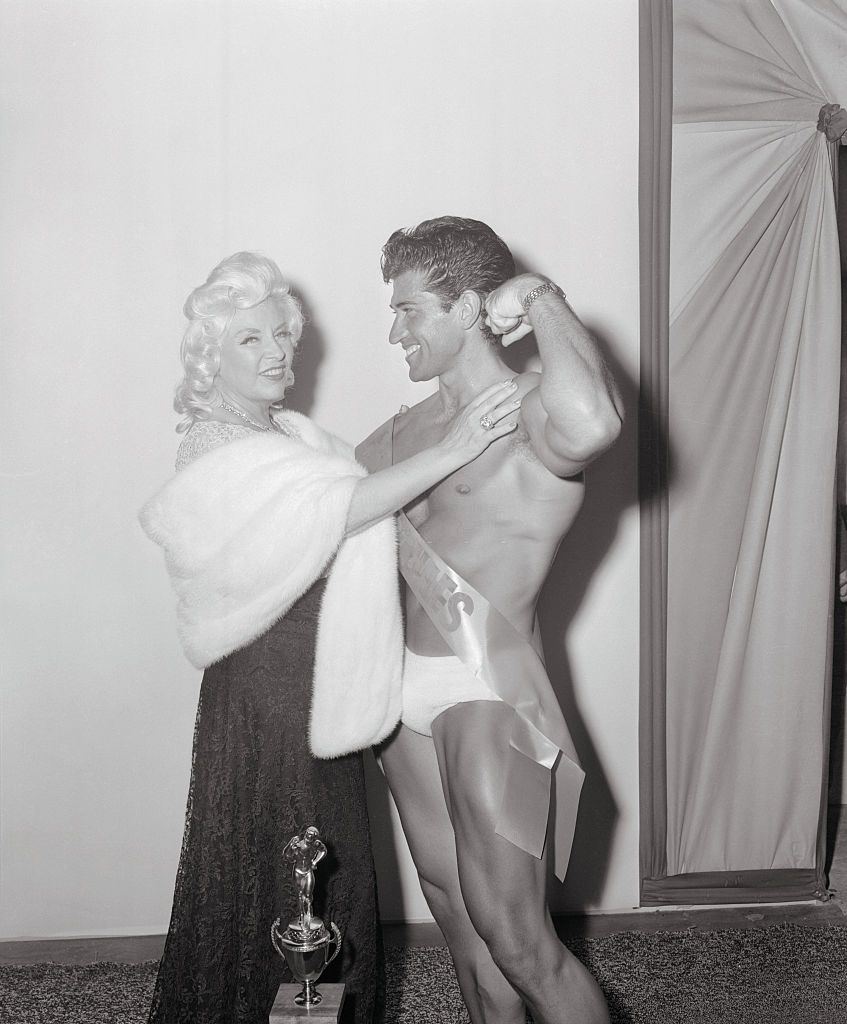
A playful moment unfolds between Steve Reeves and Mae West, pairing Hollywood’s celebrated glamour with the rising cult of mid-century physique. Reeves poses with an easy grin, sash draped across his bare torso, while West—wrapped in a pale fur stole over a dark gown—leans in with that unmistakable show-business confidence. The scene has the feel of a backstage or publicity setup, intimate in pose yet clearly meant for the cameras.
Details in the frame tell their own story: the classic studio backdrop, a heavy curtain to one side, and a small trophy placed near their feet like a punctuation mark. Reeves’ flexed arm and pageant-style ribbon hint at the era’s fascination with bodybuilding and “Mr.” titles, when strength and symmetry were becoming marketable celebrity traits. West’s styling—soft curls, jewelry, and theatrical poise—anchors the image in an older tradition of star personas built on wit, allure, and carefully crafted image-making.
As a 1950s celebrity photograph, it captures a crossroads in entertainment culture, when pin-up glamour, stage legend, and athletic showmanship could share the same spotlight. The contrast between West’s luxurious costume and Reeves’ competition-ready presentation makes the pairing memorable, almost like a visual headline. For collectors and film-history readers, it’s a crisp reminder of how publicity photography helped define fame in the postwar years—one charismatic pose at a time.