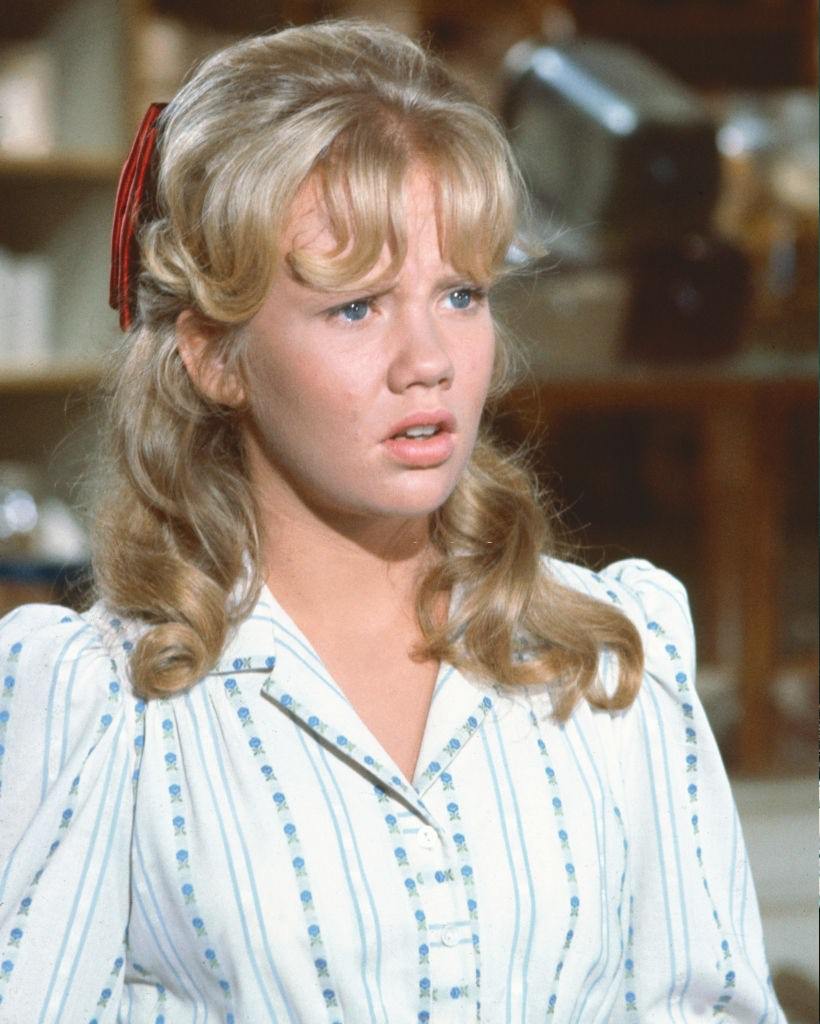
A young girl with honey-blond hair swept into soft curls and tied back with a red ribbon stares off-camera with a startled, slightly bewildered expression. Her blue eyes and parted lips suggest surprise or concern, and the striped, buttoned blouse with tiny floral trim and puffed shoulders reflects early 1960s children’s fashion and deliberate costuming to establish character at a glance.
The publicity still, issued for the family film The Parent Trap (1961), captures the kind of expressive moment studios used to sell a movie’s story and star appeal. In the era before television dominance, these color portraits were essential promotional tools, distributed to newspapers, magazines, and theater lobbies to create buzz. The framing and emotion convey both innocence and an implied narrative tension, hinting at the film’s mix of comedy and heartfelt stakes.
Modern viewers may be drawn to the image for its nostalgic charm—the soft technicolor palette, the period hairstyle, and the candid, unguarded look that became iconic of family pictures of the period. Beyond nostalgia, the still functions as a small document of studio-era publicity craft and the way young performers were presented to audiences. Including the film title and year helps place the image within its cultural moment: The Parent Trap, 1961.