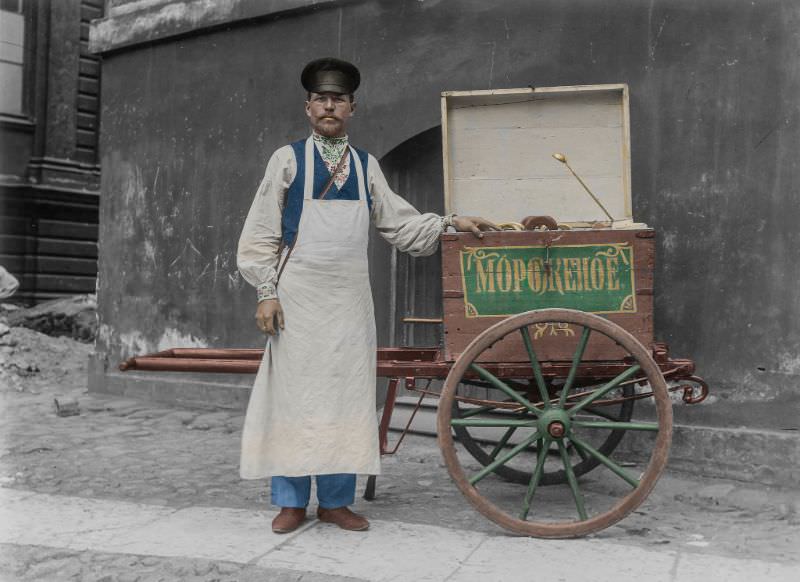
Against a plain city wall, a Russian ice cream vendor stands with the steady confidence of someone who knows his daily route by heart, one hand resting on a wooden cart built for work rather than display. His uniform-like look—cap, crisp apron, and sturdy shoes—suggests both professionalism and the practical demands of street selling in early 1900s Helsinki. The subtle colorization brings out the blues in his clothing and the weathered reds and greens of the cart, helping the scene feel immediate instead of distant.
The cart itself tells half the story, especially the bold Cyrillic lettering advertising “мороже…,” a familiar promise of frozen sweetness to passersby who could read it—or simply recognized the service by sight. A long-handled scoop lies ready inside the open lid, hinting at quick transactions on a warm day and the routines of keeping ice cream cold before modern refrigeration was commonplace. Details like the large spoked wheel and metal hardware anchor the photo in the everyday mechanics of street commerce: mobile, manual, and built to endure cobblestones.
Helsinki at the time was a crossroads city, and the presence of Russian language in public trade points to the layered realities of empire, migration, and multicultural street life. Food history often survives in grand restaurant menus, yet this quieter snapshot preserves something more intimate—how treats reached ordinary people one portion at a time. For readers searching for early 20th-century Helsinki, Russian influence in Finland, or the history of ice cream vendors, this colorized image offers a vivid doorway into the textures of a bygone street corner.