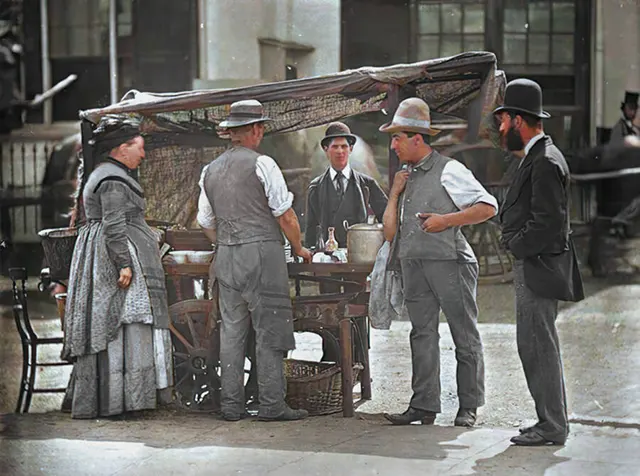
Street life in the 1890s comes alive around a makeshift shellfish stand, where a small crowd leans in close to see what’s on offer. A canvas awning and netting hang over the cart like a quick-built shelter, while baskets, tins, and a steaming pot suggest food meant to be served fast and eaten on the spot. The colorization draws the eye to worn fabrics and workaday tones, turning a fleeting moment of commerce into something tactile and immediate.
Men in vests and brimmed hats cluster at the counter, hands in pockets or resting on the cart’s edge, their attention fixed on the vendor’s tools and containers. At the side, a woman in a patterned dress stands near the action, her presence hinting at how public food stalls drew all kinds of passersby into the same tight orbit. Behind them, tall windows and a hard-edged streetscape frame the scene with an unmistakably urban feel, even if the exact city isn’t spelled out.
What lingers is the social ritual of the shellfish stand itself—part street kitchen, part neighborhood bulletin board, part quick escape from the day’s work. The details invite slow looking: the improvised setup, the practical clothing, and the calm patience of customers waiting their turn. For readers searching for 1890s street food, shellfish vendors, or everyday city history, this photo offers a richly grounded glimpse of how ordinary appetites shaped public space.