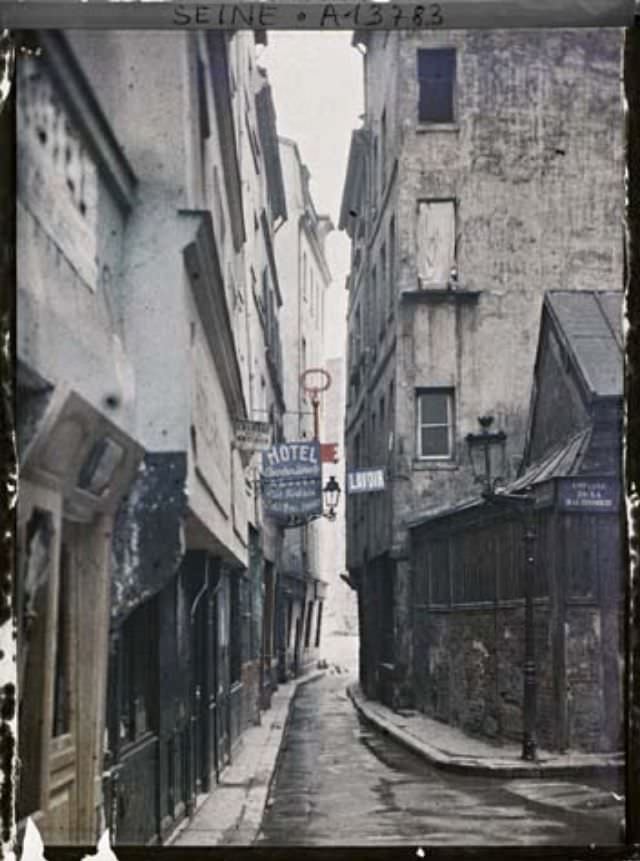
Tucked into the dense fabric of Paris’s 4th arrondissement, Georges Chevalier leads the eye down a narrow street where tall façades lean inward and the pavement funnels toward a bright slit of sky. The scene feels intimate and slightly enclosed, the kind of passage where footsteps echo and every doorway suggests a small story. A hanging hotel sign and scattered street fixtures break up the verticals, hinting at the everyday commerce that once animated this corner of old Paris.
What stands out is the texture: worn stone, patched plaster, and dark shopfronts that suggest long use and frequent change. The bend in the roadway and the uneven edges of the buildings give the view a lived-in realism, less monumental than the postcard Paris and more like a working neighborhood between the Seine’s islands and the Marais streets. Even without crowds, the place feels inhabited—defined by thresholds, windows, and the close proximity of neighbors.
The colorization adds a gentle immediacy, helping modern viewers read depth and detail in surfaces that time has softened. Subtle tones draw attention to signage, masonry, and the play of light at the far end of the lane, making the photograph feel less distant while preserving its archival character. For anyone searching for historical Paris photography, the 4th arrondissement, or Georges Chevalier’s street views, this image offers a compelling glimpse of the city’s quieter passages and the everyday architecture that framed Parisian life.