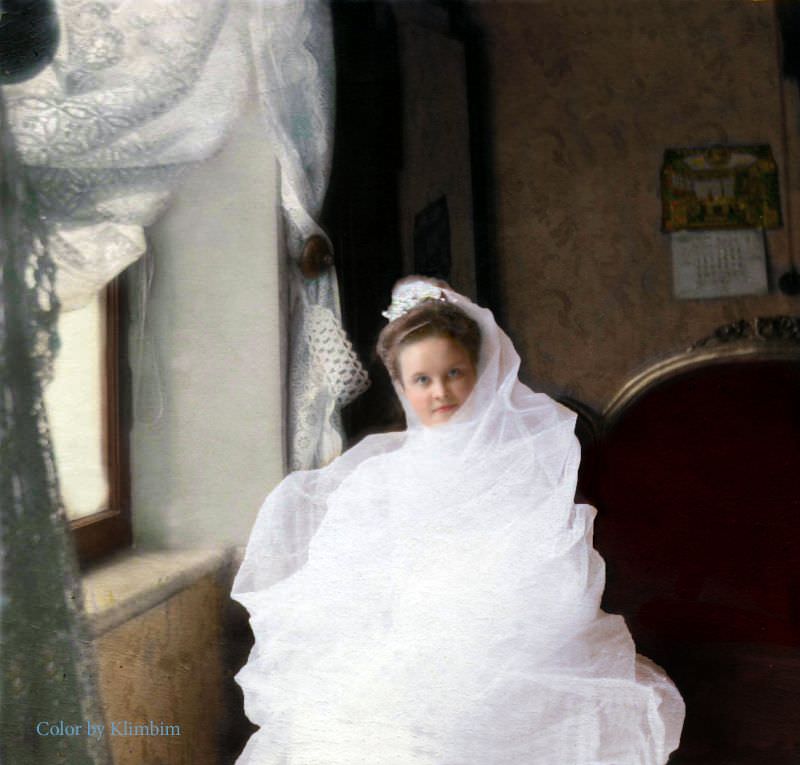
Soft daylight spills in from a nearby window, catching on layers of white tulle and the delicate sheen of a veil as a very young bride sits for a formal portrait in Russia, 1903. Her small face and steady gaze anchor the scene, while the colorization lends a striking immediacy—rosy cheeks, pale fabric, and warm, worn tones in the room behind her. The result feels less like a distant relic and more like a moment held in place.
Details around her hint at a modest interior: lace curtains gathered to one side, a deep-toned upholstered seat, and patterned wallpaper that looks lived-in rather than staged. The bridal ensemble dominates the frame, billowing into a cloud of white that emphasizes ceremony and tradition, even as her posture suggests the weight of attention and expectation. In the quiet composure of the pose, you can sense the careful pacing of early studio photography, when stillness was part of the craft.
For readers interested in Russian history and early 20th-century wedding customs, this portrait offers an intimate doorway into everyday life on the eve of enormous change. The colorized treatment helps modern eyes read texture and atmosphere—fabric against skin, shadow against plaster—without needing to imagine what the original tones might have been. As a historical photo, it invites reflection on youth, marriage, and domestic space in 1903, while remaining respectfully anonymous and timeless.