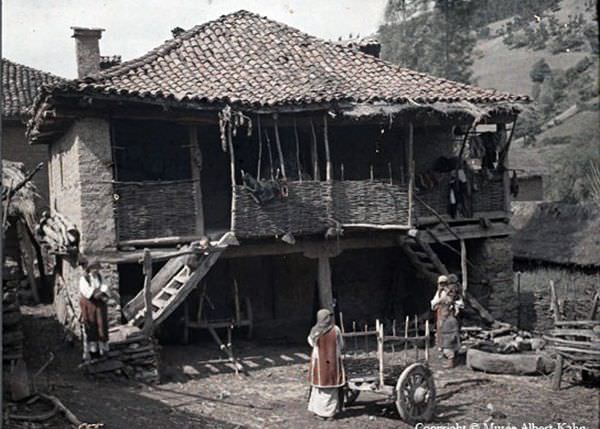
Tucked into a rocky hillside, a sturdy two-level home anchors this colorized glimpse of Macedonia in the 1900s. The heavy clay-tile roof, rough stone walls, and timber supports speak to practical building traditions shaped by weather, terrain, and available materials. A shaded balcony runs along the upper floor, screened with woven fencing that hints at everyday tasks—drying, storing, and working—kept close to the household.
At ground level, the yard feels like the true center of activity, with a simple cart and a low fence enclosing small working spaces. Several villagers stand in and around the doorway and courtyard, their clothing and head coverings offering subtle clues to rural life and custom without needing a caption to explain it. Ladders and steps connect the levels like informal pathways, emphasizing how homes were designed for movement between storage, shelter, and the open air.
Colorization adds a gentle immediacy to details that might otherwise fade into grayscale—sun-warmed plaster, weathered wood, and the muted tones of garments worn for work. For readers searching “Macedonia 1900s” or “Balkan village life,” the scene provides an intimate look at domestic architecture and the rhythms of a household economy. It’s a quiet reminder that history often lives in ordinary courtyards, where daily routines leave the most enduring traces.