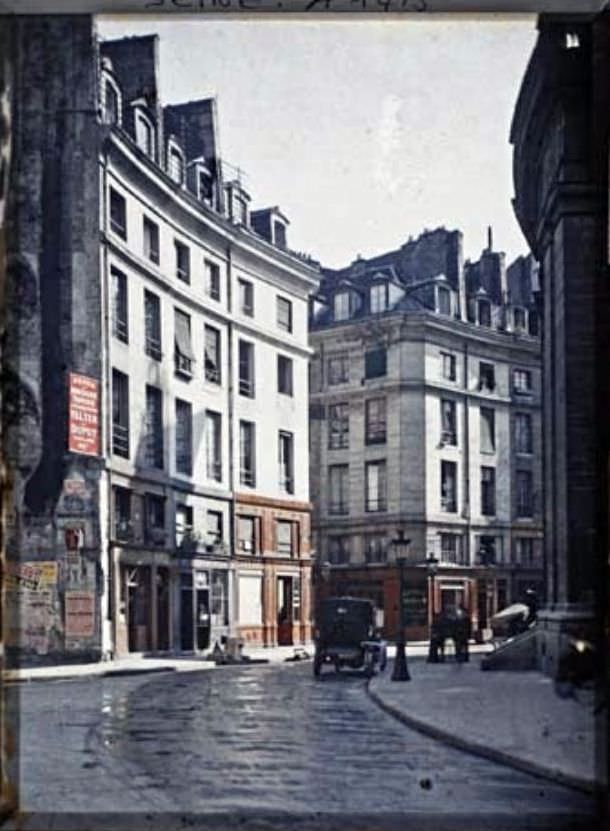
Curving façades and tall mansard roofs draw the eye into Viarmes Street, where the roadway bends around a compact cluster of stone buildings. The colorization brings out subtle contrasts—pale walls against darker rooflines, warm storefront tones at street level, and the cool wash of shadow pooling along the curb. Even without a posted date, the architecture and street furniture evoke an earlier urban rhythm, when blocks were built to be read at walking pace.
Along the ground floors, shopfronts and doorways hint at daily commerce, while small posters and notices cling to the walls like fleeting headlines. A few vehicles sit in the roadway, their boxy silhouettes anchoring the scene in a period before modern traffic reshaped city streets. Window shutters, chimneys, and dormers stack upward in neat repetition, turning an ordinary corner into an accidental study of density, design, and light.
Leon Auguste’s view feels less like a posed landmark and more like a lived-in slice of city life, captured between errands and encounters. For readers searching for a historic street scene, early urban photography, or a colorized glimpse of classic European-style architecture, “Viarmes Street” offers atmosphere in abundance. Let your attention drift from the bend in the pavement to the upper windows—each detail quietly suggests the stories that once unfolded behind them.