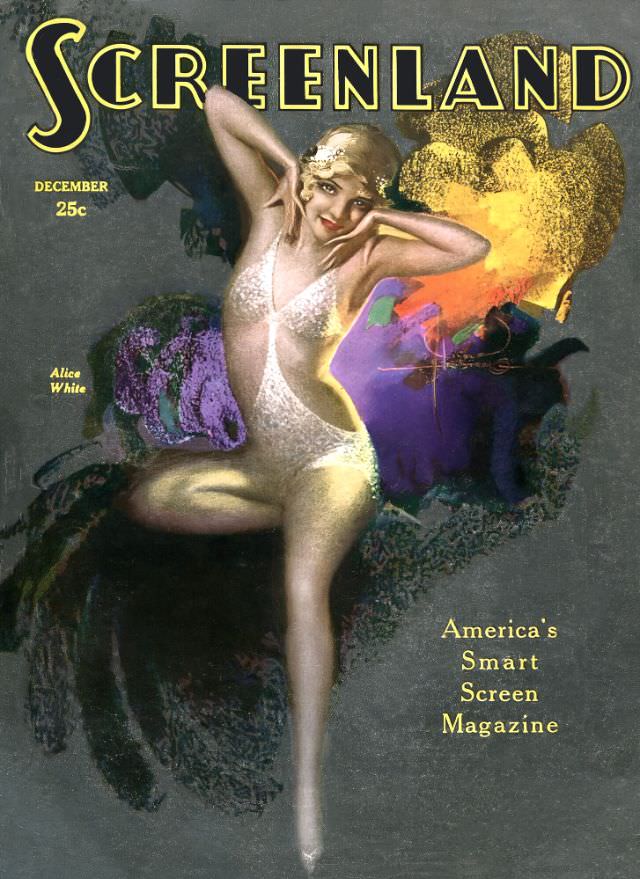
Bold lettering spells “Screenland” across the top of this December 1929 magazine cover, immediately setting the tone for late–silent era glamour on the brink of the 1930s. A shimmering figure in a pale, sequined costume strikes a theatrical pose against a dark, velvety backdrop, while painterly bursts of purple, gold, and orange add a modern, almost stage-light effect. The cover’s pricing and month marker—“December” and “25c”—anchor it firmly in the everyday world of newsstands even as the artwork promises escape.
Designed to sell the dream of the movies, the illustration leans into Art Deco elegance: elongated lines, spotlight contrast, and a sense of movement frozen mid-performance. The dancer’s confident expression and jeweled headpiece suggest revue culture and the show-business energy that fed Hollywood’s image-making machine. Even the minimal text, including the tagline “America’s Smart Screen Magazine,” works like a marquee, inviting readers into a curated world of stars, style, and studio-made fantasy.
Collectors and film-history fans will appreciate how a Screenland magazine cover like this functions as both advertising and art—ephemeral print culture that has outlasted many of the films it promoted. The saturated color treatment and dramatic composition make it a standout example of 1920s cover art, perfect for anyone researching movie magazines, vintage Hollywood memorabilia, or the visual language of celebrity in the interwar years. Seen today, it’s a vivid reminder of how the era packaged modernity, desire, and spectacle for mass audiences.